

The insurance renewal process is defined as the formal extension of an existing insurance policy for a new coverage term, requiring review and action by both the insurer and the policyholder. Whether you manage a personal auto policy, a homeowner’s policy, or a commercial trucking fleet, renewal is the mechanism that keeps your protection active and legally compliant. Missing or mishandling this process can result in coverage gaps, premium increases, or outright loss of coverage. Understanding each stage gives you control over your costs, your coverage, and your compliance.
What is the insurance renewal process, step by step?
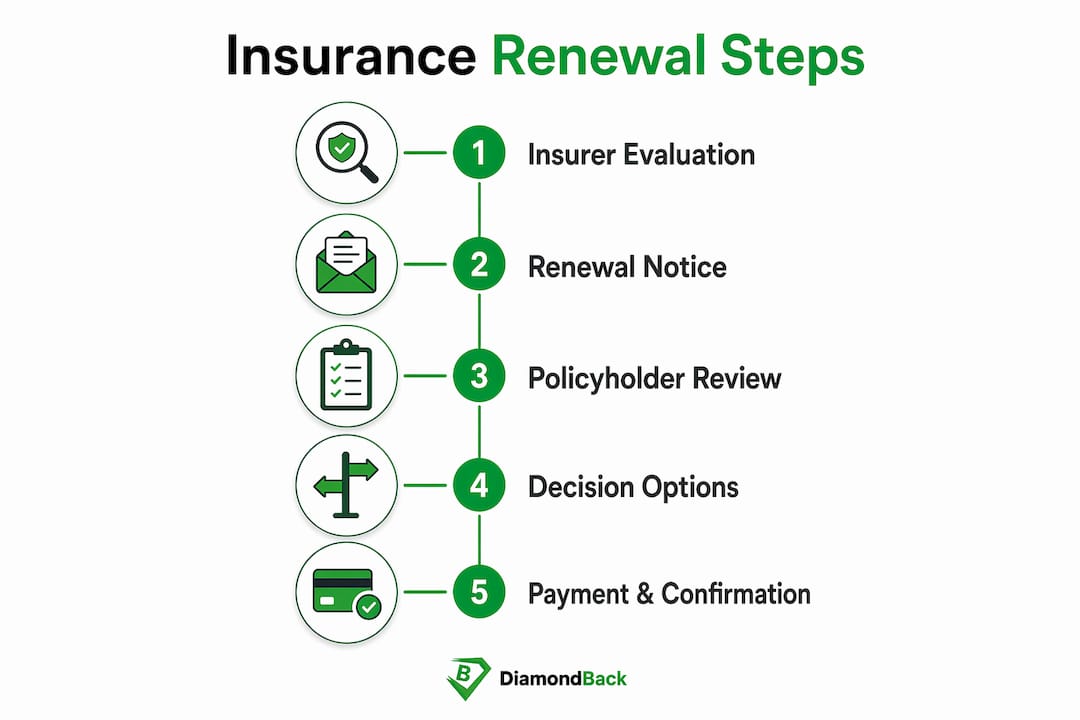
The insurance renewal process is a structured sequence of events that begins weeks before your policy expiration date and ends when you confirm payment and receive updated policy documents. Insurers do not simply extend your policy automatically in most cases. They conduct a fresh review of your risk profile before offering new terms.
Step 1: Insurer evaluation. Your insurer reassesses your risk at every renewal. This includes reviewing your claims history and exposure, checking for changes in your business operations or personal circumstances, and evaluating broader market conditions such as catastrophe trends. The result of this review determines whether your policy is renewed, modified, or declined.

Step 2: Renewal notice. Once the evaluation is complete, your insurer sends a renewal notice. Insurers typically send notices 30–60 days before expiration for personal lines policies and 60–90 days before expiration for commercial policies. This window gives you time to review the new terms and shop for alternatives if needed.
Step 3: Policyholder review. You receive the renewal packet and compare the new terms against your current policy. This is where most policyholders make their biggest mistake. Skipping this review means you may accept premium increases, reduced limits, or new exclusions without realizing it.
Step 4: Accept, modify, or shop. You have three options at this stage. You can accept the renewal as offered, request changes to coverage limits or deductibles, or obtain competing quotes and switch carriers. Policyholders can initiate renewal up to 30 days before expiration to lock in rates or update coverage before the deadline.
Step 5: Payment and confirmation. Completing payment activates the new policy term. Your insurer then issues updated documents, including a new declarations page and any revised endorsements.
Pro Tip: Set a calendar reminder 75 days before your policy expiration date. This gives you enough time to review the renewal offer, request changes, and compare quotes from competing carriers before any deadline pressure sets in.
The distinction between automatic and manual renewal matters significantly for commercial operators. Automatic renewal applies mostly to personal policies, while many commercial policies require manual renewal steps. Fleet managers and trucking business owners who assume their coverage renews automatically risk a complete lapse in protection.
What documents and timelines should you expect at renewal?
Renewal documentation is more detailed than most policyholders expect. A complete renewal packet typically includes an updated declarations page, any new endorsements, notices of coverage changes, and the full policy terms for the new period. Renewal notices must include new premium amounts, deductible changes, and any coverage exclusions or endorsements. This is legally required in most jurisdictions, so if your renewal notice lacks this detail, contact your insurer immediately.
The timeline for receiving these documents varies by policy type. Personal auto and homeowner’s policies typically generate notices 30–60 days out. Commercial trucking and fleet policies follow a longer window of 60–90 days, reflecting the greater complexity of underwriting those risks. If you have not received a renewal notice within that window, do not assume everything is on track. Contact your agent or carrier directly.
Renewal packets contain critical updated documents that may differ meaningfully from your original policy. New endorsements can expand or restrict coverage. Condition changes can shift your obligations as the insured. Reading every page is not optional if you want to avoid surprises.
Grace periods exist but carry real limitations. Many policies include a grace period of 10–30 days for payment after the official expiration date, but this is not universal. Grace periods differ by carrier and policy type. Operating a commercial vehicle during a grace period without confirmed coverage creates serious legal and financial exposure. Never rely on a grace period as a safety net for your fleet.
Missing renewal deadlines for commercial policies can result in complete loss of coverage with legal and financial repercussions. For trucking businesses, that means potential regulatory violations, voided contracts, and personal liability for any incidents during the lapse period.
How do premiums, coverage, and eligibility change at renewal?
Renewal is not a passive event for your insurer. It is a deliberate reassessment of whether they want to continue covering your risk and at what price. Insurers adjust premiums and coverage terms at renewal based on claims history, exposure changes, and broader market conditions. A single at-fault accident or a significant increase in your fleet size can shift your premium substantially.
The table below shows the most common changes policyholders encounter at renewal and what drives them.
| Change type | Common cause | What to do |
|---|---|---|
| Premium increase | Claims filed, market hardening, inflation | Compare competing quotes before accepting |
| Coverage limit reduction | Insurer risk reassessment | Request reinstatement or find alternative carrier |
| New exclusions added | Underwriting guideline changes | Review exclusions carefully; ask for explanation |
| Deductible increase | Loss history or carrier policy shift | Evaluate cost vs. risk tradeoff |
| Non-renewal notice | High claims frequency or risk appetite change | Begin shopping immediately; allow 60+ days |
One of the most persistent misconceptions in insurance is that staying with your current carrier guarantees the best rate. Loyalty discounts exist but do not guarantee best pricing. Comparing market options at every renewal cycle is the only reliable way to confirm you are paying a fair premium.
Coverage adequacy is a separate concern from price. Policyholders should review renewal coverage limits to reflect current asset values and risk exposures, not simply accept previous limits. A trucking business that added two vehicles to its fleet mid-term needs to verify those assets are fully covered at renewal. A homeowner who completed a major renovation faces the same issue.
Pro Tip: Request a coverage gap analysis from your agent at every renewal. Ask specifically whether your liability limits, cargo coverage, and physical damage limits still match your current fleet value and operational exposure.
How can you proactively manage your insurance renewal?
Active renewal management is the difference between a policy that fits your current needs and one that quietly leaves you exposed. The steps below apply to both individuals and commercial operators, though the stakes are higher for businesses with regulatory compliance requirements.
Review documents early and thoroughly. Failure to review renewal documents can result in acceptance of undesirable terms, including increased premiums or coverage gaps. Read the declarations page, every endorsement, and every attached notice before signing or paying.
Update your information. Changes in your business operations, fleet size, driver roster, or cargo types must be reported to your insurer at renewal. Outdated information can void a claim even if your policy is technically active. For fleet managers, this means verifying that every vehicle and driver is accurately listed on the new declarations page.
Compare quotes before the deadline. Use the fleet renewal window to gather competing offers. Online platforms now make it possible to compare multiple carriers in minutes rather than days. Waiting until the last week before expiration eliminates your negotiating leverage.
Communicate with your agent or broker. If any term in your renewal offer is unclear, ask for a written explanation. Agents are required to explain material changes in your policy. If your current agent cannot answer your questions clearly, that is useful information about whether you should stay with that relationship.
Avoid passive acceptance. Automatic renewal is convenient, but it is not the same as informed renewal. Treat each renewal as a formal checkpoint for your risk management program. Ask whether your coverage still reflects your actual exposure, not just whether the premium is similar to last year.
A trucking insurance questionnaire can help you organize the information your insurer needs and identify any gaps before the renewal conversation begins.
Key Takeaways
The insurance renewal process requires active review of policy terms, timelines, and coverage adequacy at every cycle to prevent lapses, premium surprises, and undetected coverage gaps.
| Point | Details |
|---|---|
| Renewal is a formal reassessment | Insurers review claims history and risk exposure before offering new terms. |
| Notice timelines vary by policy type | Personal policies receive 30–60 days notice; commercial policies receive 60–90 days. |
| Documents require careful review | Renewal packets include updated declarations pages, endorsements, and condition changes. |
| Premiums and terms can change | Claims history, market conditions, and exposure changes all affect renewal pricing. |
| Active management prevents lapses | Commercial policies often require manual renewal; passive acceptance risks coverage gaps. |
Why passive renewal is the most expensive habit in insurance
Most policyholders treat renewal like a subscription auto-charge. The notice arrives, the premium clears, and life continues. That approach works fine until it does not, and when it fails, it tends to fail at the worst possible moment.
The detail that consistently surprises people is how much changes inside a renewal packet that looks routine on the surface. A new exclusion buried in an endorsement. A liability limit that did not keep pace with inflation. A deductible that quietly doubled after a single claim. None of these changes require your explicit approval in most jurisdictions. Your silence is treated as acceptance.
For trucking and fleet operators, the consequences are sharper. Regulatory compliance in commercial transportation is not forgiving of coverage lapses. A single day without valid insurance can trigger FMCSA authority suspension, contract violations, and personal liability exposure that no grace period will fix. The renewal process is not a formality. It is a risk management checkpoint with real financial and legal weight.
My honest recommendation is to treat renewal as a scheduled business review, not a bill payment. Pull your current coverage limits. Compare them against your fleet’s current replacement value. Check whether your liability limits still meet your contract minimums. Then compare that package against at least two competing quotes. This process takes less than two hours and can save thousands of dollars annually while closing coverage gaps you did not know existed.
— Vladimir
How Diamondbackins supports your commercial renewal
Renewal season does not have to mean uncertainty. Diamondbackins gives fleet managers and trucking business owners direct access to instant quotes from multiple top-rated carriers, so you can compare renewal offers against real market alternatives in minutes.

Whether you operate in Georgia, Virginia, or anywhere across the country, Diamondbackins makes it straightforward to review your current coverage and get updated commercial trucking quotes before your renewal deadline. The platform aggregates options from leading insurers so you see competitive pricing side by side, without the back-and-forth of traditional brokers. For fleets that need fast, transparent renewal support, instant online coverage is available now.
FAQ
What is the insurance renewal process?
The insurance renewal process is the formal extension of an existing policy for a new coverage term, involving insurer risk reassessment and policyholder review of updated terms, premiums, and documentation.
How far in advance should you expect a renewal notice?
Insurers typically send renewal notices 30–60 days before expiration for personal policies and 60–90 days before expiration for commercial policies.
Does insurance renew automatically?
Automatic renewal applies mostly to personal lines policies. Many commercial policies require manual renewal steps, and missing those deadlines can result in a complete loss of coverage.
Can your premium increase at renewal?
Yes. Insurers adjust premiums at renewal based on claims history, changes in exposure, and broader market conditions. Comparing competing quotes before accepting a renewal offer is the most effective way to manage premium costs.
What documents should you review in a renewal packet?
A renewal packet should include an updated declarations page, new or revised endorsements, any notices of coverage changes, and the full policy terms. Reviewing each document carefully prevents unintended acceptance of reduced limits or new exclusions.