

Reefer breakdown coverage is an endorsement added to a motor truck cargo policy that pays for spoiled freight when a refrigeration unit fails mechanically or electrically. Most U.S. carriers pay $800 to $2,000 a year for the endorsement itself, with per-load limits between $100,000 and $250,000. If you haul anything perishable under a temperature setpoint, you need this coverage far more than you need a lower premium on your dry-van cargo policy.
TL;DR:
- Reefer breakdown coverage costs between $800 and $2,000 annually for a single refrigerated unit, with per-load limits typically ranging from $100,000 to $250,000.
- Proper documentation such as bills of lading, temperature logs, maintenance records, and photos is essential, as missing records often lead to claim denials.
- Coverage is triggered by mechanical or electrical failures during monitored loads, but exclusions include wear-and-tear, improper setpoints, and post-notification damages.
- When comparing policies, focus on load limits, deductibles, monitoring requirements, and warranty conditions rather than price alone to ensure valid claims.
- Fast and accurate claim handling depends heavily on timely notification, initial temperature downloads, and comprehensive recordkeeping, especially for high-value or sensitive loads.
Table of Contents
- What Is the Reefer Breakdown Coverage Cost Endorsement?
- What Does Reefer Breakdown Insurance Actually Cover?
- How Much Does Reefer Breakdown Coverage Cost?
- Choosing the Right Limits and Deductibles
- What to Do When a Reefer Fails Mid-Route
- How to Compare Reefer Breakdown Insurance Options
- What Actually Determines Whether a Claim Gets Paid
- Get a Reefer Breakdown Quote Without the Phone Tag
- Sources
- FAQ
What Is the Reefer Breakdown Coverage Cost Endorsement?
A standard motor truck cargo policy protects freight against collision, theft, fire, and rollover. It almost never protects against spoilage from a mechanical failure inside the trailer itself. That gap is exactly why the reefer breakdown endorsement exists, and why every rate quote for a refrigerated unit should be evaluated separately from a generic cargo number.
The endorsement pays on an actual cash value basis, meaning the insurer reimburses the market value of the product at the time of loss, not the sale price the receiver would have paid. That distinction matters when you’re hauling a load of berries versus a load of frozen protein, because the valuation math and the paperwork behind it differ sharply.
Reefer breakdown coverage pays for spoiled cargo specifically when a refrigeration unit fails, and standard cargo policies commonly exclude that failure mode by name. Brokers and shippers know this, which is why they routinely ask for proof of the endorsement before they’ll tender a temperature-sensitive load. Expect these requirements when you work with brokers or large shippers:
- A certificate of insurance naming the broker and explicitly listing the breakdown endorsement
- Bills of lading (BOLs) that document product, quantity, and required temperature range
- Shipping records that establish the condition of the load at pickup
Without that paperwork trail, even a legitimate mechanical failure can turn into a denied claim.
What Does Reefer Breakdown Insurance Actually Cover?
Coverage generally triggers on mechanical breakdown, electrical failure, or loss of power to the refrigeration unit while the unit is under load and monitored per your policy’s terms. Some policies extend to certain off-truck events, like a trailer sitting at a yard with a failed generator, but only when the endorsement specifically names that scenario.
What gets denied is often more instructive than what gets paid. Common exclusions include:
- Wear-and-tear failures tied to skipped or undocumented preventive maintenance
- Improper setpoints entered by the driver, rather than a unit malfunction
- Delay-based spoilage, where the product degraded from a late delivery rather than a temperature excursion
- Losses discovered after policy-required notification windows have closed
Most policies also carry warranty language, meaning specific conditions the policyholder must meet for coverage to apply at all, not just for a claim to be honored. These typically include maintaining service logs for the reefer unit, pulling temperature downloads after any suspected excursion, and notifying the carrier within a set window, often 24 to 48 hours. Miss one of those warranty conditions and the insurer can deny the claim regardless of whether the mechanical failure itself was covered. Missing maintenance logs and temperature downloads are the single most common reason legitimate reefer claims get denied, which makes recordkeeping as important as the coverage itself.
How Much Does Reefer Breakdown Coverage Cost?
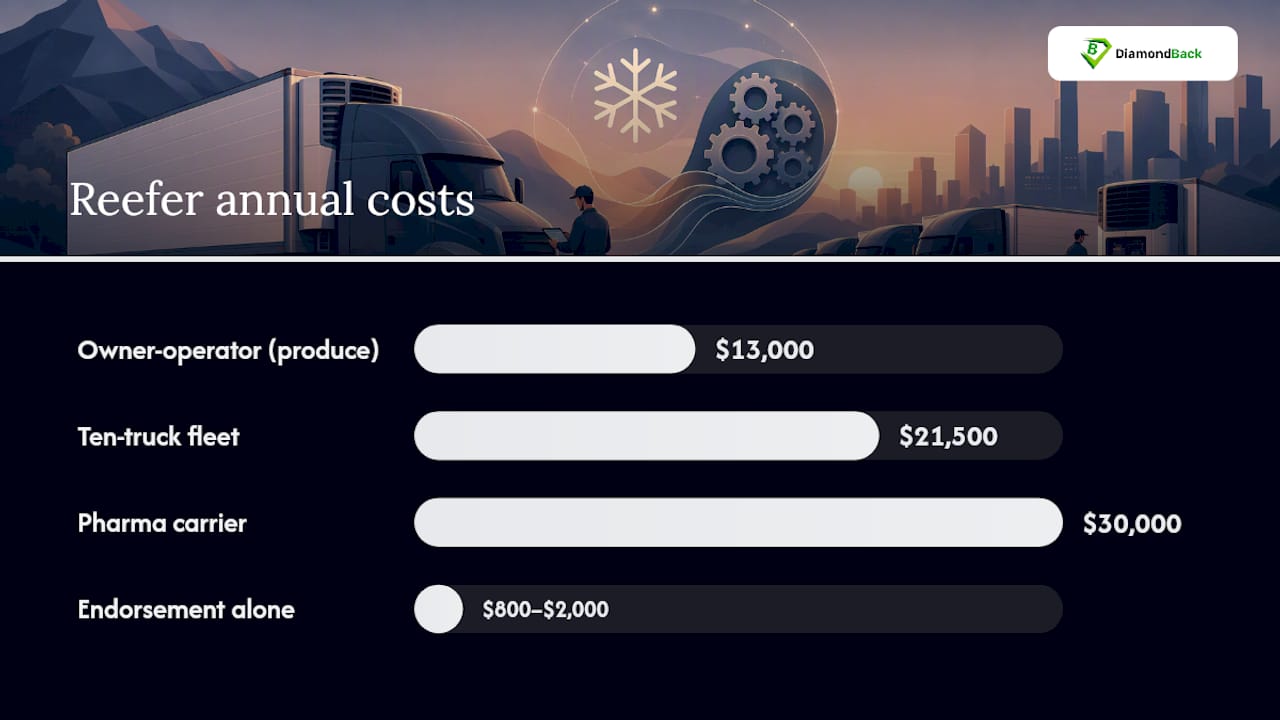
The endorsement itself, isolated from the rest of your cargo and physical damage program, typically runs $800 to $2,000 annually for a single-unit operation hauling standard commodities. That range shifts meaningfully once you factor in the full reefer insurance package. Total annual insurance for one refrigerated unit, including cargo limits and breakdown protection together, commonly lands between $13,000 and $30,000 a year, well above what a comparable dry-van unit pays. You can compare that against broader U.S. trucking insurance cost benchmarks to see how much of your premium the reefer-specific risk actually represents.
Three factors move that number more than anything else:
- Commodity sensitivity. Frozen protein and pharmaceuticals carry tighter tolerance windows and higher per-pound values than produce, so insurers rate them higher.
- Unit age. Refrigeration units older than roughly ten years often get surcharged or pushed into higher deductible tiers because failure rates climb with age.
- Claims history and monitoring. A fleet with one or two clean years and active telematics on every trailer pays less than a fleet with a recent spoilage claim and no monitoring data to show underwriters.
Pro Tip: Pull your reefer unit’s service history before you request quotes. An underwriter who sees a documented maintenance schedule going back two years will often price the risk lower than one working from a blank file, even before you mention telematics.
Picture three quick scenarios. An owner-operator hauling produce regionally in a five-year-old unit with a clean claims record sits near the bottom of the range. A ten-truck fleet mixing produce and frozen goods, with one unit past the ten-year mark, lands in the middle. A specialty carrier moving pharmaceuticals with strict chain-of-custody requirements and $250,000 per-load limits sits at the top, often paying a premium for both the tighter tolerance and the higher limit. The unit-age and claims-history factors that drive general trucking rates apply here too, just with sharper edges because spoilage losses tend to be all-or-nothing.
Choosing the Right Limits and Deductibles
Your per-load limit needs to match what you actually haul, not what you hauled last year. Many brokers now expect $250,000 in cargo coverage for high-value produce loads, and they will decline to tender freight to a carrier whose certificate shows less. If you’re still running $100,000 limits because that’s what you bought three years ago. You may be turning away loads without realizing why.
Deductibles on reefer breakdown endorsements typically run from $500 to $2,500 per occurrence, though specialty hauls sometimes carry higher bands. A few things worth weighing before you pick a number:
- A lower deductible raises your premium but protects margin on smaller, frequent spoilage events
- A higher deductible lowers premium but can wipe out a single load’s profit if a minor excursion still triggers it
- Some policies apply the deductible per load, others apply it per occurrence across multiple pallets, which changes the real cost of a partial spoilage
Watch for clauses that cap coverage by weight or by a percentage of the load rather than the full invoice value. A policy that looks competitively priced on the declarations page can leave a fleet exposed if the fine print caps payout well below what a full trailer of frozen goods is actually worth. Reviewing how much cargo coverage a trucking company actually needs before renewal is a better habit than assuming last year’s limits still fit this year’s freight mix.
What to Do When a Reefer Fails Mid-Route
The minutes after a reefer failure determine whether your claim gets paid weeks later. Work through this sequence:
- Notify your dispatcher and insurer immediately, ideally within the notification window your policy specifies, often 24 to 48 hours.
- Pull the temperature download from the unit’s data logger before you do anything else with the trailer.
- Photograph the unit, the display panel showing any error codes, and the cargo itself with time stamps.
- Gather the BOL, the required temperature range for that load, and your most recent maintenance and repair logs for the unit.
- File the claim with all of that documentation attached at once, rather than piecemeal.
Pro Tip: Keep a laminated one-page checklist of this sequence in the cab. Drivers under stress at 2 a.m. on the shoulder of I-40 skip steps, and a missed temperature download is one of the fastest ways to turn a covered loss into a denied one.
The two most common denial triggers are a missing temperature download and no record of pre-trip inspection on the unit. Both are preventable with a simple standing procedure, not expensive equipment.
How to Compare Reefer Breakdown Insurance Options
Not every quote labeled “reefer coverage” includes the same protection, so compare policies line by line rather than by premium alone. Check each of these before you sign:
- Per-load limit and whether it matches your highest-value commodity, not your average one
- Deductible amount and whether it applies per load or per occurrence
- Monitoring requirements, including whether telematics data is mandatory or simply a pricing credit
- Notification window for reporting a failure
- Exact wording on maintenance warranties and what documentation satisfies them
When you talk to an underwriter or agent, ask directly: “What temperature monitoring do you require for full coverage, and does my existing telematics system qualify?” Ask, too, what certificate wording brokers on your typical lanes will demand, since a generic certificate sometimes lacks the specific endorsement language a broker’s compliance department needs to see. Real-time telematics data showing proper setpoints and fast excursion detection can sometimes earn a negotiated premium credit, and a documented preventive maintenance program tends to smooth claims processing when a legitimate failure does occur. Partners like Rebuild Masters, which supplies refurbished starters and components for fleet maintenance, are worth knowing about since keeping components in verified working order directly supports the maintenance warranty most reefer endorsements require. Before you commit to a renewal, run through how to compare insurance quotes across a fleet efficiently so you’re weighing apples to apples rather than premium alone.
What Actually Determines Whether a Claim Gets Paid
Most fleet owners shop reefer coverage on price and limits, then get surprised when a legitimate breakdown claim gets denied over paperwork. The premium band matters less than the maintenance log you can produce on demand. Prioritize a policy’s documentation requirements and your own recordkeeping discipline over shaving a few hundred dollars off the annual rate. Industry experience shows that carriers with clean telematics and maintenance records often get better renewal terms and fewer disputed claims, year after year.
— Vladimir
Get a Reefer Breakdown Quote Without the Phone Tag
Comparing reefer breakdown coverage the traditional way means calling three or four agents, waiting days for callbacks, and hoping the quotes even use the same limits and deductibles so you can compare them fairly. Some platforms pull quotes from multiple carriers into one instant online comparison, so users can see per-load limits, deductible bands, and endorsement pricing side by side in minutes rather than days.
That speed matters most when a broker is holding a load and needs your certificate before end of day. Through Diamondbackins, you can get an instant trucking insurance quote that includes reefer breakdown endorsement options, or go straight to the trucking cargo and physical damage coverage page if you already know the limits you need. Start your quote today and get a certificate ready before your next load needs one.
Sources
For regulatory context on carrier insurance expectations, see the Federal Motor Carrier Safety Administration. For coverage mechanics and claims denial patterns, see LegalClarity’s reefer breakdown explainer and FreightWaves’ coverage guide.
This article is general information, not a substitute for advice from a qualified financial advisor. Consult a qualified financial professional about your own circumstances before acting on anything here.
- Reefer Breakdown Coverage: What’s Covered and What’s Not – LegalClarity
- Reefer Breakdown Coverage: Guide for Truckers & Fleet Owners – FreightWaves
- Reefer Truck Insurance: Coverage and Rates (2026) | Small Fleet HQ
FAQ
What Is Reefer Breakdown Coverage?
Reefer breakdown coverage is an endorsement added to a cargo policy that pays for spoiled freight when a refrigeration unit fails mechanically or electrically. Standard cargo policies typically exclude this failure mode, which is why the endorsement is purchased separately.
How Much Does Reefer Breakdown Coverage Cost?
The endorsement alone typically costs $800 to $2,000 a year for a single-unit operation, while total reefer insurance including cargo limits often runs $13,000 to $30,000 annually. Online insurance platforms can generate specific quotes based on factors like commodity, unit age, and claims history in minutes.
How Much Does a $1,000,000 Liability Insurance Policy Cost?
General liability pricing depends heavily on business type, revenue, and claims history, so there’s no single national rate for a $1 million policy. Fleet owners can get an exact figure through an instant general liability quote rather than relying on a rough estimate.
How Much Does Equipment Breakdown Coverage Cost?
Equipment breakdown coverage for a refrigeration unit is priced separately from general mechanical breakdown on tractors or trailers, and the reefer-specific endorsement typically falls in the $800 to $2,000 annual range discussed above. Pricing depends on unit age, commodity type, and whether telematics monitoring is in place.
What Documents Do I Need to File a Reefer Breakdown Claim?
Insurers generally require the bill of lading, temperature logs or telematics downloads, maintenance and repair records, and time-stamped photos of the failure. Missing the temperature download or the pre-trip inspection record is the most common reason legitimate claims get denied.