
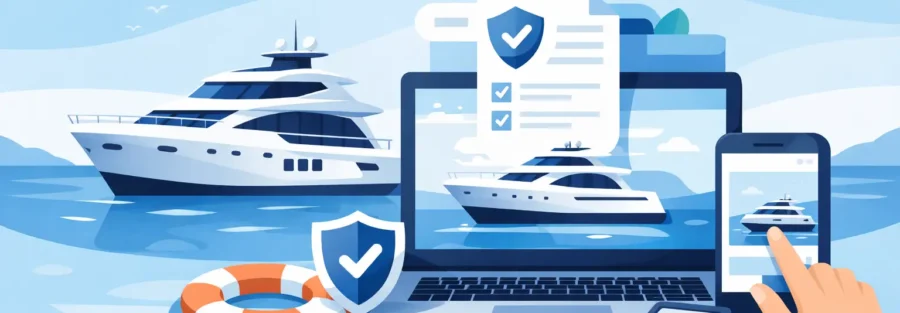
A damaged hull, a marina liability claim, or a storm loss can turn a good day on the water into an expensive one fast. Getting a yacht insurance quote online is one of the quickest ways to see your options, compare pricing, and move toward coverage without the usual back-and-forth.
For many yacht owners, the old process is the problem as much as the policy itself. Calling one insurer at a time takes time. Repeating vessel details over and over gets old. Waiting days for answers makes it harder to make a confident decision, especially if you are buying a new yacht, renewing on a deadline, or trying to satisfy lender or marina requirements.
That is why online quoting has become the better fit for a lot of buyers. It gives you speed, more visibility into pricing, and a clearer view of what different carriers are actually offering. You stay in control of the process instead of waiting for someone else to move it forward.
Why get a yacht insurance quote online?
The biggest advantage is efficiency. Instead of chasing separate insurers, you can submit your information once and review multiple offers in one place. That matters when you are balancing premium, deductibles, navigation limits, and liability protection, not just shopping for the cheapest number.
Online quoting also makes comparison easier. Two policies can look similar at first glance and still differ in important ways. One carrier may offer broader coverage for electronics and personal effects. Another may be more flexible on cruising areas. Another may price well but apply tighter restrictions based on vessel age, horsepower, storage method, or prior claims history.
That is the trade-off many buyers miss. A lower premium can be a good deal, but not if the coverage is too thin for how you actually use the yacht. The right quote is the one that matches your vessel, your risk, and your budget.
What affects your yacht insurance quote online
Insurers price yacht coverage based on both the vessel and the owner. The basics usually include year, make, model, length, value, engine type, and intended use. If your yacht is used only for private recreation, that can be viewed differently than a vessel used for charters, business activity, or frequent long-range cruising.
Your location also matters. A yacht kept in a hurricane-prone coastal area may be priced differently than one stored inland for part of the year. Marina storage, private dockage, dry stack storage, and seasonal lay-up plans can all influence the quote. Some carriers may also ask about haul-out plans during storm season.
Operator experience is another major factor. If you have years of boating history, a clean record, and prior yacht insurance, that can help. If you are a newer owner stepping into a larger or higher-value vessel, the market may be more selective. In some cases, completing a boating safety course can improve eligibility or pricing.
Claims history, credit-based insurance factors where allowed, and requested coverage limits all play a role too. Higher liability limits, lower deductibles, and expanded protections will usually raise the premium. That does not mean they are not worth it. It means you should evaluate them based on your actual exposure, not just the monthly cost.
What a strong yacht policy should include
A yacht policy is not just about physical damage. Good coverage should account for how yachts are used, where they are stored, and what can go wrong on and off the water.
Hull and machinery coverage is the starting point. This helps protect the vessel itself if it is damaged by a covered event. The details matter here. Some policies settle losses on an agreed value basis, while others may use actual cash value in certain situations. That difference can have a major impact on what you recover after a serious claim.
Liability coverage is just as important. If your yacht causes damage to another vessel, a dock, or someone is injured, liability protection can help cover the financial fallout. For many owners, this is not the place to cut corners, especially if the yacht is kept at a marina or used in busy waters.
Medical payments, uninsured boater coverage, and personal effects coverage can also be worth adding depending on how you use the vessel. Towing and assistance coverage may be useful if you cruise regularly. Fuel spill liability and wreck removal are often overlooked until they are suddenly not optional.
If you carry expensive navigation equipment, fishing gear, tenders, or custom upgrades, check how the policy handles them. Some quotes include limited protection by default. Others may require endorsements to properly cover high-value additions.
How to compare yacht insurance quotes without wasting time
Start by comparing coverage before you compare price. If one quote includes higher liability limits, agreed value settlement, broader navigation territory, and better equipment protection, it should not be judged against a bare-bones policy on premium alone.
Next, look at deductibles. A lower premium with a very high deductible may not feel like savings after a claim. Make sure the deductible is an amount you could realistically absorb.
Pay attention to exclusions and usage restrictions. Some carriers may restrict named operators, navigation areas, or weather-related use during certain months. Others may require specific safety equipment or survey documentation before binding coverage.
Service matters too. Fast quoting is valuable, but so is clarity. A good online platform should let you compare offers clearly, understand what you are buying, and complete the purchase without hidden steps or surprise fees. That is where a streamlined marketplace approach can save real time.
When online quotes work best – and when more review may be needed
For many standard private-use yachts, online quoting is the fastest path from research to purchase. If your vessel fits common underwriting guidelines and your information is straightforward, getting quotes online can be significantly easier than using a traditional offline process.
There are cases where more review may be needed. Older yachts, high-value custom vessels, boats with prior major losses, liveaboard use, commercial or charter exposure, and unusual navigation plans may require more underwriting attention. That is normal. It does not mean coverage is out of reach. It just means the quote may depend on additional documentation such as a marine survey or more detailed operating history.
The key benefit is still the same. Even when a policy needs more review, starting online helps you organize the process faster, compare available paths, and avoid wasting time with carriers that are not a fit.
Getting your yacht insurance quote online faster
You can speed up the process by having the right information ready before you start. Basic vessel specs, ownership details, prior insurance history, loss history, and storage location are usually essential. If the yacht was recently surveyed, keep that information available too.
Accuracy matters. If the vessel value, operator details, or usage plans are off, the quote may change later or create delays at purchase. It is better to spend an extra minute entering complete details than to deal with surprises after underwriting reviews the file.
If you are financing the yacht or storing it at a marina with insurance requirements, know those limits before you shop. That helps you compare quotes based on what you actually need, not what seems cheapest in the moment.
A simpler way to shop and buy
The real value of getting a yacht insurance quote online is not just speed. It is clarity. You can see options side by side, understand how coverage changes the premium, and make a decision without chasing multiple insurers one at a time.
For buyers who want a faster, more transparent process, that is a better way to shop. Platforms like Diamondback Insurance are built around that idea – compare offers, review coverage, and buy online without adding unnecessary friction.
If you are shopping for yacht coverage, keep the goal simple: find a policy that protects the vessel, fits how you use it, and gives you confidence before the next trip leaves the dock. The easier the process is, the easier it is to make a smart decision.