

Transparency in insurance is defined as the open, consistent communication of policy terms, pricing logic, exclusions, and claims procedures so consumers can make genuinely informed decisions. The role of transparency in insurance goes far beyond legal compliance. It determines whether you trust your insurer before, during, and after a claim. Regulatory bodies like Ireland’s Department of Finance and India’s IRDAI have introduced major disclosure mandates in 2026, signaling that the industry is treating openness as a standard, not a bonus. For anyone comparing coverage options, understanding what transparency looks like in practice is the difference between a policy that protects you and one that surprises you.
What is the role of transparency in insurance pricing?
Clear pricing communication is the foundation of every fair insurance relationship. When an insurer explains exactly what drives your premium, including your claims history, vehicle type, location, and coverage limits, you can compare quotes on equal footing. Without that explanation, you are comparing numbers without context.
Regulatory pressure is accelerating this shift. Over 2.2 million motor insurance policyholders in Ireland will receive Premium Summary Statements detailing pricing factors and premium history starting july 2026, as part of the Action Plan for Insurance Reform 2025–2029. That means consumers will see, in writing, why their premium changed from one year to the next. That level of disclosure sets a clear benchmark for what responsible pricing communication looks like.
India’s IRDAI has taken a parallel approach. New regulations mandate that insurers simplify health insurance language and display exclusions, waiting periods, and treatment caps at the point of purchase. The goal is to prevent surprise coverage limits from appearing only when a claim is filed. Both initiatives reflect the same core principle: pricing and coverage terms must be visible before you commit.
Pro Tip: When reviewing any quote, ask the insurer to provide a written breakdown of every factor that affects your premium. If they cannot or will not, treat that as a red flag about how they will communicate during a claim.
Even plain language policies carry hidden risks. Research shows that providing policy language alone only moderately improves consumer understanding and can sometimes reduce accuracy when broad coverage statements are mixed with limiting exclusions in the same document. Reading a policy is not enough. You need to know where to look.
How does transparency affect the insurance claims process?
The claims stage is where transparency either earns or destroys consumer trust. When an insurer communicates clearly about what to expect, including timelines, required documentation, and decision criteria, disputes drop and satisfaction rises. When that communication is absent, consumers feel blindsided, and complaints follow.

Transparency at the claims stage encompasses insurer behavior throughout the entire process, from first notice of loss to final settlement. Consumers increasingly evaluate claims acceptance rates and complaint resolution records to judge whether an insurer’s service matches its marketing. That data is publicly available in many markets, and savvy consumers use it before they ever sign a policy.
Here is a practical sequence for evaluating claims transparency before you buy:
- Ask the insurer for its claims acceptance rate by product category.
- Search the relevant state insurance commissioner’s database for complaint ratios.
- Request a sample claims timeline document showing average resolution periods.
- Confirm in writing which documents you will need to file a claim.
- Ask whether a dedicated claims contact will be assigned to your case.
These steps take less than an hour and can reveal more about an insurer’s real service quality than any marketing material. Transparency strengthens long-term sustainability by educating clients about alternatives and building trust even when it risks short-term premium loss. Insurers that operate this way tend to retain customers longer and generate fewer disputes.
Understanding how insurers shape transportation risk and cost for fleets gives commercial vehicle operators a clearer picture of what drives their claims outcomes. That knowledge makes the claims conversation far less adversarial.
Why is explainable AI changing insurance transparency?
Artificial intelligence now drives pricing and underwriting decisions at most major insurers. The problem is that many AI models operate as black boxes, producing decisions that neither consumers nor regulators can easily interpret. That opacity creates a trust gap that the industry is actively working to close.
The solution gaining traction is what industry experts call “auditable trust.” Insurers are shifting to governed AI that can explain pricing and underwriting decisions clearly to both regulators and consumers, according to SAS industry expert Franklin Manchester. The shift means that when an algorithm raises your premium, the insurer must be able to show you which variables triggered that decision.
“Explainability of AI and data is essential to maintain trust with customers, regulators, and internal teams as insurers scale AI use. Without it, even accurate decisions feel arbitrary and unfair.”
The barriers to reaching this standard are real. The insurance industry struggles with fragmented legacy systems that limit transparency. Integrated, governed workflows are needed before AI-driven decisions can be trusted and explained at scale. Many insurers are still building that infrastructure.
The competitive upside is significant. Transparency is a core competitive advantage that enables insurers to build pricing strategies that are faster and more defensible, according to AKUR8. Insurers that document and expose their AI decision logic attract consumers who want to understand what they are paying for. That is a growing segment of the market.
Key developments consumers should watch for:
- Insurers publishing their AI governance frameworks publicly
- Regulators requiring explainability reports for automated underwriting decisions
- Policy documents that include a plain-language summary of pricing variables
- Consumer rights provisions allowing you to request the factors behind your quote
The insurance market is moving beyond compliance to treat transparency as a core element of competitiveness and customer engagement. That shift benefits you directly if you know how to ask the right questions.
How to evaluate transparency when choosing insurance
Choosing a transparent insurer requires more than reading the brochure. You need a structured approach that tests the insurer’s communication quality before you are locked into a policy.
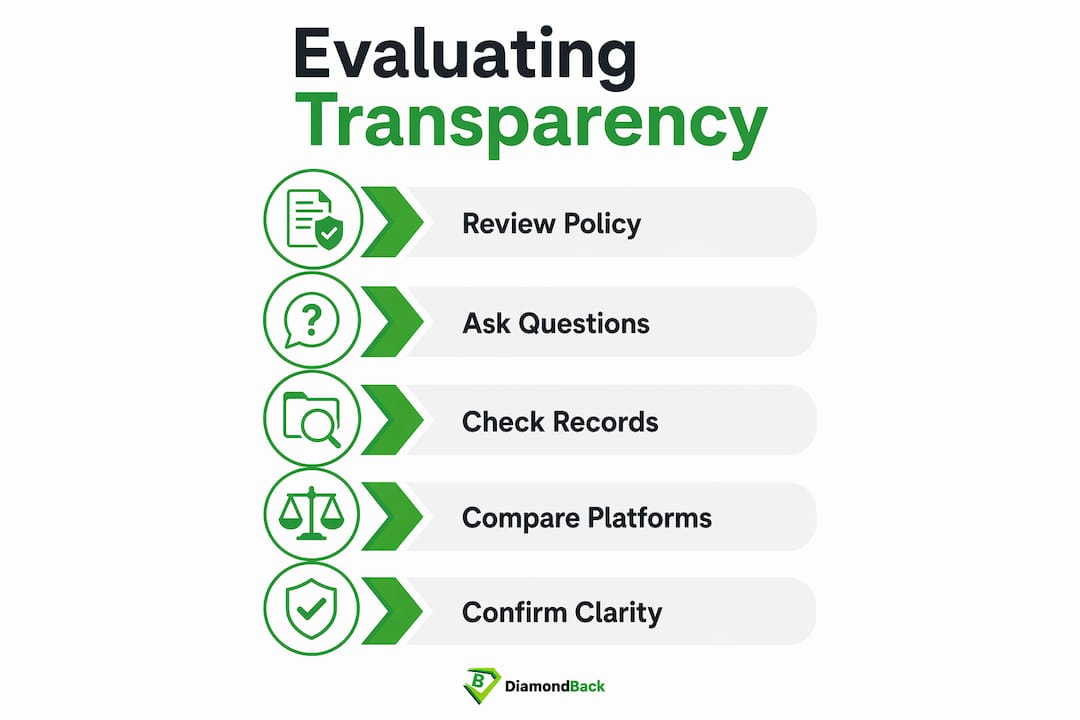
Start with the policy document itself. Consumers should focus on the Schedule of Benefits and Policy Summary pages, which present key coverage details in a legally required, readable format. These pages cut through the dense legal language and show you what is actually covered, what is excluded, and what limits apply. If those pages are missing or hard to find, the insurer is not meeting basic disclosure standards.
Next, test the insurer’s responsiveness. Ask a specific question about a coverage exclusion and measure how clearly and quickly they respond. A transparent insurer answers directly. An evasive one redirects you to the full policy document without explanation.
Research the insurer’s public record. Savvy consumers investigate claims acceptance rates and complaint resolution timelines available through public databases to assess true service reliability beyond initial quotes. State insurance commissioners publish this data, and it tells a more honest story than customer testimonials.
Use comparison platforms that include disclosure quality as a factor, not just price. Platforms that show you coverage details, exclusions, and pricing logic side by side give you a genuine basis for comparison. For commercial vehicle coverage, understanding how to choose transportation insurance that fits your operation is the practical next step after you understand what transparency requires.
Pro Tip: Before signing any policy, ask the insurer: “What are the three most common reasons a claim under this policy gets denied?” A transparent insurer answers clearly. That answer tells you exactly where to focus your review.
Also consider whether the insurer uses transparent pricing movers as a model for how clear cost communication builds consumer confidence across transportation and logistics sectors. The principle applies directly to insurance: when pricing is explained, trust follows.
Key Takeaways
Transparency in insurance is the single most reliable predictor of whether a policy will protect you or surprise you when it matters most.
| Point | Details |
|---|---|
| Pricing disclosure is now regulated | Ireland and India’s 2026 mandates require insurers to explain premium factors in writing at purchase. |
| Claims transparency builds trust | Reviewing claims acceptance rates and complaint records before buying reveals true insurer reliability. |
| Explainable AI closes the trust gap | Governed AI frameworks let consumers see which variables drive their pricing decisions. |
| Policy summaries are your first stop | The Schedule of Benefits and Policy Summary pages contain the most critical coverage details in readable form. |
| Transparency is a competitive signal | Insurers that publish clear pricing logic and AI governance frameworks attract and retain more informed consumers. |
Why I believe transparency is the industry’s most underrated asset
The conventional view treats transparency as a compliance checkbox. Regulators require certain disclosures, insurers produce them, and the obligation ends there. That framing misses the point entirely.
Transparency is the mechanism by which an insurer proves it is worth trusting. Every time a company explains a pricing decision clearly, answers a hard question directly, or publishes its claims performance data without being asked, it is making a deposit into the consumer’s trust account. Those deposits compound over time. Insurers that make them consistently retain customers through price increases, coverage changes, and difficult claims. Insurers that do not lose customers the moment a cheaper quote appears.
The harder truth is that most consumers do not demand enough transparency. They accept vague policy language, skip the exclusions section, and never ask about claims acceptance rates. That passivity costs them money and coverage when they need it most. The 2026 regulatory mandates from bodies like IRDAI and Ireland’s Department of Finance exist precisely because voluntary disclosure was not working.
My view is that consumers should treat transparency as a non-negotiable selection criterion, equal to price and coverage limits. If an insurer cannot explain why your premium is what it is, or what will happen when you file a claim, that insurer is not ready to be your partner. The market is moving in the right direction, but you do not have to wait for regulation to catch up. Ask the hard questions now, and choose the insurer that answers them.
— Vladimir
Diamondbackins puts clear coverage within reach
Diamondbackins was built on the premise that insurance should be easy to understand before you buy it. The platform aggregates quotes from multiple top insurers and presents coverage details, pricing factors, and exclusions side by side, so you can compare options without decoding dense policy documents.
For trucking and commercial vehicle operators, that clarity matters even more. A missed exclusion in a cargo policy or a misunderstood liability limit can have serious financial consequences. Diamondbackins makes those details visible upfront. Whether you need commercial trucking insurance in Georgia or want to review instant online quotes for your fleet, the platform gives you the pricing transparency and coverage clarity to make a confident decision in minutes.
FAQ
What does transparency in insurance actually mean?
Transparency in insurance means insurers openly communicate policy terms, pricing factors, exclusions, and claims procedures so consumers can make informed decisions before purchasing coverage.
Why does pricing transparency matter when comparing insurance quotes?
Pricing transparency lets you understand what drives your premium, making it possible to compare quotes accurately rather than selecting the lowest number without knowing what coverage it includes.
How can I check if an insurer handles claims transparently?
Review the insurer’s publicly available claims acceptance rate and complaint resolution data through your state insurance commissioner’s database before signing any policy.
What role does AI play in insurance transparency today?
Insurers are adopting governed, explainable AI frameworks that document which variables influence pricing decisions, giving consumers and regulators a clear view of how automated underwriting works.
What should I read first in a new insurance policy document?
Start with the Schedule of Benefits and Policy Summary pages, which present key coverage details, exclusions, and limits in a legally required, readable format designed for consumer clarity.