

Managing a fleet means juggling regulatory deadlines, shipper demands, and tight budgets all at once. One wrong coverage decision can expose your business to six-figure losses, compliance penalties, or contract cancellations. The stakes are high: a single uncovered accident involving a commercial truck can cost more than your entire annual insurance spend. This article walks you through the most critical fleet insurance coverages, what they cost, where the hidden gaps are, and how to reduce premiums without cutting corners. Whether you run three trucks or thirty, the right coverage strategy protects your business and your bottom line.
Table of Contents
- How to evaluate insurance for fleets: Key criteria
- Essential coverages every fleet needs
- Additional and specialty coverages to consider
- Cost-saving strategies for fleet insurance
- Expert tips and edge cases: Avoiding hidden insurance gaps
- What most fleet managers miss about insurance coverage
- Secure your fleet with expert insurance solutions
- Frequently asked questions
Key Takeaways
| Point | Details |
|---|---|
| Liability coverage is essential | Commercial auto liability with at least $1M limit is required by most shippers and is the legal foundation for fleet insurance. |
| Layer coverages for true protection | Physical damage, cargo, and specialty policies fill real-world risk gaps and are often demanded by lenders and clients. |
| Use telematics to reduce premiums | Deploying tools like dashcams and telematics can shave 10–40% off annual insurance costs. |
| Watch out for hidden gaps | Exclusions for certain cargo or owner-operator scenarios create costly surprises unless addressed proactively. |
| Compare and customize for savings | Shopping multiple carriers and bundling policies can dramatically reduce total cost without sacrificing protection. |
How to evaluate insurance for fleets: Key criteria
Now that you see why getting insurance right is non-negotiable, let’s clarify the main criteria for choosing the best coverages. Before you compare quotes or select policies, you need a clear framework for what your fleet actually requires.
Commercial auto liability is the foundational coverage for fleets, mandated by the FMCSA (Federal Motor Carrier Safety Administration) with defined minimums based on cargo type and vehicle weight. But regulatory minimums are rarely enough. Most shippers and brokers require at least $1,000,000 in liability coverage before they’ll award a load, even when the legal minimum is lower. Treating the FMCSA floor as your target is a common and costly mistake.
Your specific risks matter just as much as the rules. The value of your vehicles, the type of cargo you haul, and the routes your drivers travel all shape your coverage needs. A fleet hauling refrigerated produce across state lines faces very different exposures than one delivering building materials locally. Factor in your drivers’ experience levels, your FMCSA CSA (Compliance, Safety, Accountability) scores, and your claims history, because insurers weigh all of these when setting your premiums.
Cost pressure is real, but it should not drive coverage decisions alone. Small fleets typically pay between $9,000 and $20,000 per truck annually for full coverage, depending on these risk factors. Understanding what drives your costs gives you leverage to negotiate and optimize rather than simply accept whatever quote comes first.
Pro Tip: Always benchmark your current premiums against at least three competing carriers annually. Markets shift, and loyalty to a single insurer rarely translates into the best rate.
Essential coverages every fleet needs
With your selection criteria established, it’s time to look at the insurance coverages no fleet should overlook.
Liability, physical damage, and cargo are the core coverages every fleet needs, and each one serves a distinct purpose. Commercial auto liability pays for bodily injury and property damage your drivers cause to others. Most shippers set minimum requirements between $1,000,000 and $2,000,000, and with nuclear verdicts becoming more common in trucking litigation, carrying higher limits is increasingly smart business.
Physical damage coverage protects the trucks themselves. It splits into two parts: collision, which covers damage from accidents, and comprehensive, which covers theft, fire, weather, and other non-collision events. If your vehicles are financed or leased, your lender will require this coverage. Even if you own your trucks outright, replacing a $150,000 semi out of pocket is a risk few businesses can absorb.
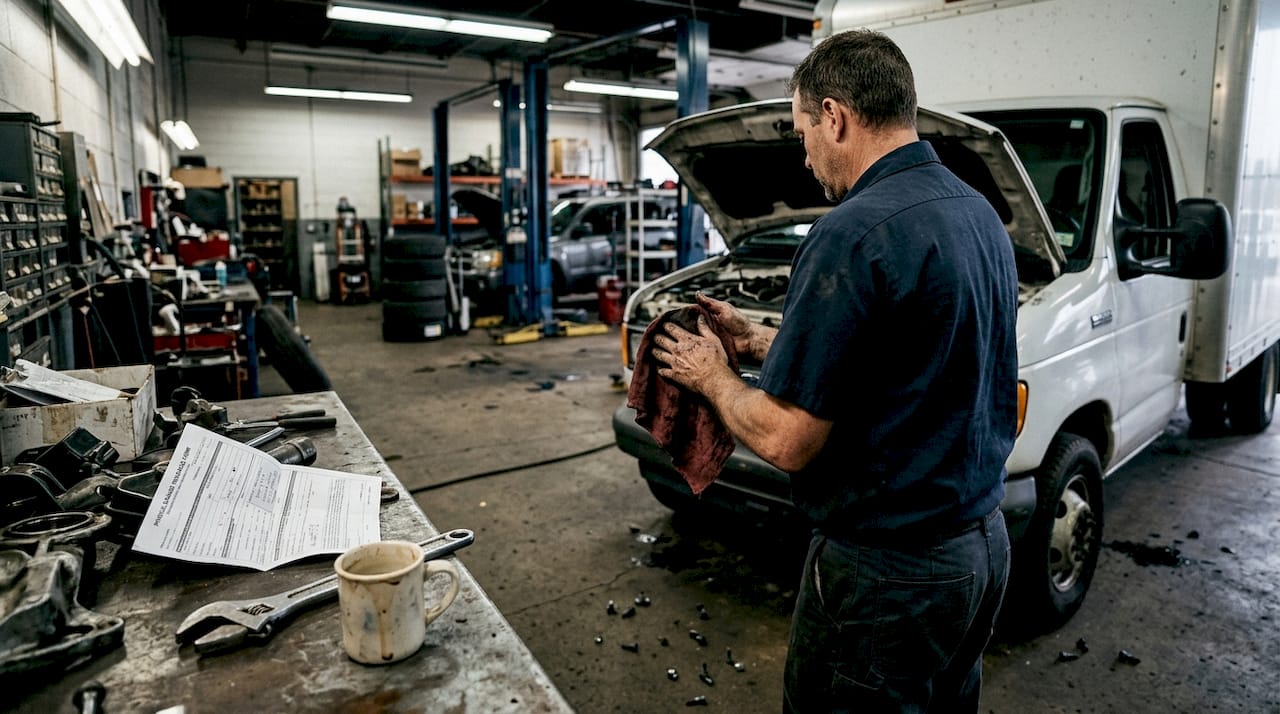
Motor truck cargo insurance covers the freight you’re hauling if it’s damaged, stolen, or destroyed in transit. Standard limits typically range from $100,000 to $250,000, though high-value loads may require higher limits or specialized riders. Shippers increasingly list minimum cargo coverage in their contracts, so this isn’t optional in practice.
Here’s a snapshot of typical annual costs per truck for each core coverage type:
| Coverage type | Typical annual cost per truck |
|---|---|
| Commercial auto liability | $5,000 to $12,000 |
| Physical damage (collision + comp) | $2,000 to $5,000 |
| Motor truck cargo | $1,000 to $3,000 |
| Full combined coverage | $9,000 to $20,000+ |
These figures reflect industry insurance benchmarks for small to mid-size fleets in 2026 and will vary based on your specific risk profile, location, and fleet size.
“Rising claim severity across the trucking industry means that underinsured fleets are one serious accident away from financial collapse. The right limits aren’t a luxury; they’re a business continuity strategy.”
Additional and specialty coverages to consider
Beyond the must-have basics, certain scenarios and business models call for additional layers of coverage.
General liability, non-trucking liability, and umbrella coverages add crucial protection for situations your primary auto policy simply won’t cover. Understanding when each applies can save you from an expensive surprise.
Non-trucking liability (NTL) fills a specific gap for owner-operators who lease to a motor carrier. When a driver uses the truck for personal purposes outside of dispatched hauls, the carrier’s primary policy typically does not apply. NTL steps in during those off-duty periods, covering liability if an accident occurs. Without it, the driver and your business may both be exposed.
General liability for fleets covers claims that arise away from the road entirely. Loading dock injuries, property damage at a customer’s facility, or a slip-and-fall at your terminal are examples where commercial auto liability provides no protection. This coverage is often overlooked by fleet operators who assume their auto policy handles everything.
Umbrella insurance extends the limits of your primary liability policies when a claim exceeds those limits. With jury awards in trucking cases reaching into the tens of millions, an umbrella policy is no longer a luxury for large carriers. Even liability insurance for small fleets can benefit from umbrella coverage, particularly when operating in high-traffic urban corridors or hauling high-value cargo.
Pro Tip: If you use owner-operators under your authority, confirm whether their personal non-trucking liability policy is active and adequate. A gap in their coverage can become your liability in a dispute.
Cost-saving strategies for fleet insurance
Even for required and recommended coverages, there are proven ways to control insurance costs without sacrificing key protections.
Telematics and dashcams are among the most powerful tools available to fleet managers today. Telematics and dashcams reduce insurance claims by up to 38% and can lower premiums by 10 to 40% depending on the insurer and your fleet’s performance data. Insurers reward fleets that demonstrate safe driving behavior with meaningful discounts, and dashcam footage also helps dispute fraudulent claims quickly.
Bundling multiple policies with a single carrier is another straightforward way to reduce costs. When your auto liability, physical damage, cargo, and general liability are all placed with one insurer, you typically qualify for multi-policy discounts and simplify your renewal process at the same time.
Larger fleets may want to explore self-insurance options or captive insurance arrangements. A captive is essentially an insurance company your business owns, allowing you to retain premiums and manage risk internally. This approach requires significant capital and expertise but can generate substantial savings for fleets with strong safety records.
Here’s a comparison of standard versus optimized premium outcomes:
| Strategy | Estimated premium impact |
|---|---|
| No telematics, single carrier | Baseline cost |
| Telematics + dashcams | 10% to 40% reduction |
| Bundled policies | 5% to 15% reduction |
| Strong CSA score + clean history | Additional 5% to 20% reduction |
To put these strategies into action, follow these steps:
- Shop at least three carriers before renewing any policy.
- Install telematics and dashcams across your fleet before your next renewal cycle.
- Review your coverage limits and how cargo types affect costs annually.
- Ask your broker about multi-policy discounts and captive options as your fleet grows.
Pro Tip: Improving your FMCSA CSA score before renewal can directly lower your premiums. Insurers check it, and a poor score signals higher risk regardless of your claims history.
Expert tips and edge cases: Avoiding hidden insurance gaps
So far, we’ve covered the core and additional coverages, but a smart fleet manager knows to look for the hidden pitfalls.
Bobtail gaps, cargo exclusions, and hazmat-specific exposures create real financial risk if left unaddressed. These aren’t rare edge cases; they’re situations that come up regularly in fleet operations and catch managers off guard.
Cargo policies routinely exclude certain freight types. Perishable goods, high-value electronics, and temperature-sensitive products often require special endorsements or separate coverage. If you haul refrigerated freight and your reefer unit breaks down causing spoilage, a standard cargo policy may not pay the claim without a specific reefer breakdown rider.
Hazardous materials transport carries its own requirements. Fleets hauling hazmat must meet specialized truck insurance risks including higher liability limits, specialized training documentation, and sometimes separate pollution liability coverage. Failing to carry the right hazmat coverage can result in FMCSA penalties and loss of operating authority, not just an uncovered claim.
Bobtail liability is another gap that affects leased owner-operators. When a driver operates the truck without a trailer and outside of a dispatch, neither the carrier’s policy nor the standard auto policy may apply. Bobtail coverage is inexpensive but critical for owner-operators who regularly move their trucks between loads.
“The cost of a single uncovered claim in trucking can easily exceed a fleet’s entire annual premium spend. Gaps that seem minor on paper become catastrophic when a serious accident happens.”
Review your policy exclusions carefully at each renewal. Ask your broker to walk through every exclusion in writing so there are no surprises when you need to file a claim.
What most fleet managers miss about insurance coverage
After reviewing all the core coverages, specialty policies, and cost-cutting strategies, it’s worth reflecting on why many fleets still get caught unprepared.
The most common mistake isn’t choosing the wrong coverage type. It’s overconfidence. Fleet managers who have gone years without a major claim often assume their current policies are adequate. They stop asking hard questions at renewal and focus almost entirely on price. Then one serious accident, one uncovered cargo loss, or one regulatory audit changes everything.
Small policy gaps compound over time. A bobtail exclusion here, an outdated liability limit there, a cargo endorsement that was never updated after switching freight types. Individually, each gap seems manageable. Together, they can expose your business to losses that no reserve fund can cover. We’ve seen fleets with otherwise strong safety records face financial ruin because their coverage didn’t reflect how their business had evolved.
Proactive communication with your broker is not optional; it’s a discipline. Your in-depth liability insights should be reviewed every time your routes change, your cargo mix shifts, or you add new drivers. The fleets that manage insurance well treat it as a living part of their risk strategy, not a box to check once a year.
Cheap insurance is expensive when it fails. The premium savings from cutting limits or skipping endorsements rarely offset even a fraction of what an uncovered claim costs.
Secure your fleet with expert insurance solutions
Ready to safeguard your entire fleet while saving on costs? Here’s an easy way to take the next step.
At Diamondback Insurance, we specialize in tailored coverage for fleets of every size, from small owner-operator setups to multi-truck commercial operations. Our platform connects you instantly with top-rated insurers so you can compare real quotes side by side and choose the coverage that fits your business, not just your budget.
Whether you need to fill a coverage gap, optimize your fleet liability solutions, or start fresh with a complete policy review, we make the process fast and transparent. Get an instant quote today and see how much you could save without compromising the protection your fleet depends on.
Frequently asked questions
What is the minimum liability insurance required for fleets in 2026?
The FMCSA minimum for general freight is $750,000, but most shippers require at least $1,000,000 in liability coverage before awarding contracts.
How much does fleet insurance typically cost per truck?
Most small fleets pay between $9,000 and $20,000 per truck annually for full coverage, depending on cargo type, routes, and driver history.
Which insurance coverages are required versus optional for fleets?
Commercial auto liability is legally required, while physical damage, cargo, and umbrella policies are often required by lenders or clients rather than by law.
What’s the best way to lower fleet insurance premiums?
Using telematics and dashcams can reduce claims and lower premiums by 10 to 40%, and comparing quotes from multiple carriers helps you maximize savings at renewal.
Are there common coverage gaps fleet managers should watch out for?
Yes. Bobtail liability gaps, cargo exclusions for hazardous materials or perishables, and insufficient umbrella limits are among the most frequently overlooked risks in fleet insurance.
Recommended
- Navigating the Waters of Protection Understanding Marine Insurance with DiamondBack Insurance – Diamondback Insurance – Solutions with Instant Online Quotes
- Set Sail with Confidence Secure Your Boat with DiamondBack Insurance – Diamondback Insurance – Solutions with Instant Online Quotes
- Chart Your Course with Confidence: The Marine Insurance Policy at DiamondBack Insurance – Diamondback Insurance – Solutions with Instant Online Quotes
- Navigating Your Coverage: The Boat Insurance Calculator by DiamondBack Insurance – Diamondback Insurance – Solutions with Instant Online Quotes