

Waiting three days for an insurance quote while your trucks sit idle is a problem no fleet manager should face in 2026. Traditional quoting workflows force you to call brokers, fax documents, and wait for callbacks that may never come on time. Modern digital platforms have changed that reality entirely. Today, you can receive tailored, accurate fleet insurance quotes in minutes by following a structured instant quote workflow. This guide walks you through every step, from gathering the right data to locking in your coverage, so you can protect your business without losing momentum.
Table of Contents
- What you need before requesting instant insurance quotes
- Step-by-step workflow for obtaining instant insurance quotes
- How telematics and dynamic pricing drive faster, cheaper coverage
- Troubleshooting: Common pitfalls and regulatory considerations
- Verifying and finalizing your instant fleet insurance coverage
- Why speedy quotes are just the beginning: The deeper value of modern workflows
- Simplify your fleet insurance with instant online solutions
- Frequently asked questions
Key Takeaways
| Point | Details |
|---|---|
| Digital foundation matters | Reliable driver, vehicle, and route data are essential for instant insurance quoting workflows. |
| Leverage telematics | Using telematics-based data can reduce fleet premiums by up to 30% while boosting safety. |
| Avoid regulatory pitfalls | Ensure FMCSA compliance and human oversight to maintain accuracy and legal standing. |
| Instant doesn’t mean careless | Always verify the final quote and coverage before accepting—accuracy matters. |
What you need before requesting instant insurance quotes
Before diving into the quoting process, you need to have the right details and systems in place. Instant quoting platforms work fast, but they depend entirely on the accuracy and completeness of the data you provide. Walking in unprepared will slow you down just as much as a traditional broker would.
Start by compiling your core fleet details: vehicle identification numbers (VINs), vehicle types, gross vehicle weight ratings, and annual mileage estimates for each unit. You also need current driver records, including license classes, years of experience, and any violations from the past three years. Route data matters too, especially if you operate across state lines or haul regulated cargo.
On the systems side, FMCSA-compliant platforms and proper telematics setup are critical for data-driven quoting. If your fleet uses electronic logging devices (ELDs) or GPS tracking, make sure that data is exportable and up to date before you start.
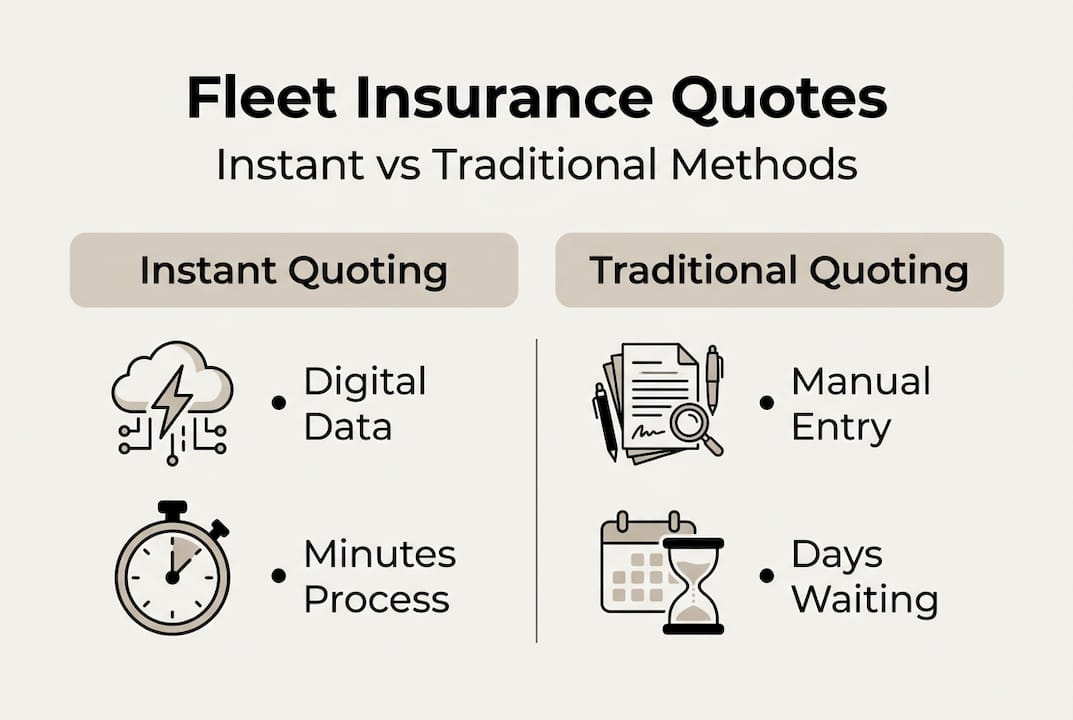
Here is a quick comparison of what instant quoting requires versus what traditional quoting typically demands:
| Requirement | Instant quoting | Traditional quoting |
|---|---|---|
| Vehicle and driver data | Digital, uploaded instantly | Faxed or emailed manually |
| Quote turnaround | Minutes | 1 to 3 business days |
| Platform compliance | FMCSA-compliant digital tool | Broker discretion |
| Telematics integration | Supported and preferred | Rarely used |
| Certificate issuance | Instant digital download | Mailed or emailed later |
Understanding general liability insurance costs before you start also helps you evaluate quotes more critically when they arrive.
Pro Tip: Use an integrated fleet management system that stores vehicle and driver records in one place. When it syncs with your quoting platform, you can cut data entry time by more than half.
Step-by-step workflow for obtaining instant insurance quotes
With your data ready, follow these steps to receive instant quotes tailored to your needs.
Step 1: Choose an FMCSA-compliant insurance platform. Look for platforms that support embedded quote capabilities and allow you to compare multiple carriers side by side. Not all online tools are built equal, so verify compliance before entering sensitive business data.
Step 2: Upload or confirm your vehicle, driver, and route data. Most platforms let you import data directly from your fleet management system or ELD provider. If telematics data is available, upload it here.
Embedded APIs and digital platforms make it possible to generate instant quotes, including per-trip cargo coverage up to $2 million.
Step 3: Review your coverage options. Once quotes populate, compare them carefully. Pay attention to liability limits, deductibles, and endorsements. Decide whether a per-trip plan or an annual policy better fits your operation. Per-trip cargo insurance is ideal for fleets with variable loads or seasonal demand.
Step 4: Select your coverage and bind the policy. Once you choose, most platforms let you bind coverage immediately. No waiting, no callbacks.
Step 5: Download your certificate of insurance. Your instant certificate serves as legal proof of coverage for brokers, shippers, and compliance audits. Store it digitally and share it with the right stakeholders right away.
For more guidance on integrating instant quote tools into your existing workflow, reviewing platform-specific setup guides is a smart next move.
Pro Tip: Run a test quote with sample data before your actual renewal date. This helps you spot any data gaps or platform issues before they cost you time.
How telematics and dynamic pricing drive faster, cheaper coverage
Instant quotes become even more valuable when you leverage telematics data and dynamic premium models.
Telematics refers to the technology that collects real-time data from your vehicles, including speed, hard braking events, rapid acceleration, idle time, and route patterns. Dynamic pricing, also called usage-based insurance (UBI), uses that data to calculate premiums based on actual driving behavior rather than broad statistical averages. Safe fleets get rewarded with lower rates. Risky behavior gets priced accordingly.
The data points that matter most to insurers include:
- Speeding frequency and severity
- Hard braking and rapid acceleration events
- Hours of service compliance
- Night driving exposure
- Route risk levels (urban versus highway)
Telematics-driven insurance is reshaping how premiums are calculated across the trucking sector. Fleets using telematics data in their quoting process have seen 15 to 30% premium savings and a 38% reduction in accident rates by rewarding safe driving behavior.
“Usage-based insurance only works when the data is accurate, consistent, and collected with driver privacy in mind. Fleets that invest in quality telematics infrastructure see the best results both in safety outcomes and in the quotes they receive.”
The tradeoff is real. Telematics requires upfront investment in hardware and data management. Some drivers push back on monitoring. But for most fleets, the premium savings and safety improvements justify the cost within the first policy year.
Troubleshooting: Common pitfalls and regulatory considerations
Even the best instant quote systems can run into trouble, so here is how to steer clear of the most common problems.
The first pitfall is poor data quality. If your vehicle records are outdated or your driver files are incomplete, the quotes you receive will be inaccurate. Garbage in, garbage out. Audit your data before every renewal cycle, not just when something goes wrong.
The second issue is regulatory non-compliance. Regulatory hurdles and privacy concerns continue to slow the full adoption of instant and AI-driven quoting workflows across the industry. State-specific rules vary widely, and what is compliant in one jurisdiction may not be in another. Always verify that your chosen platform meets the requirements for every state where your fleet operates.
The third challenge is skipping human review. Automation is powerful, but it is not infallible.
“Never finalize a policy without having a qualified person review the coverage terms. Automated systems can miss endorsements, misclassify vehicle types, or apply incorrect liability limits. A quick human review protects you from costly gaps.”
For practical guidance on FMCSA-compliant system tips and staying current with platform requirements, reviewing compliance resources regularly is time well spent.
Pro Tip: Schedule a quarterly audit of both your platform’s compliance status and your data inputs. Regulations change, and so does your fleet. Staying current on both fronts keeps your quotes accurate and your coverage valid.
Verifying and finalizing your instant fleet insurance coverage
With everything in place, complete the process by verifying and locking in your coverage.

Before you accept any quote and bind a policy, work through this checklist:
Policy terms and limits: Confirm that liability limits meet both your contractual obligations and state minimums. Check that cargo coverage limits match the value of your typical loads.
Endorsements: Review any add-ons or exclusions carefully. Common endorsements for trucking fleets include hired and non-owned auto, refrigerated cargo, and bobtail coverage.
Certificate details: Verify that the certificate of insurance lists the correct named insured, policy number, effective dates, and coverage types. Errors on certificates can cause serious compliance problems during audits or cargo claims.
Instant certificates and clear records are a core feature of modern embedded quoting solutions. Once your certificate is issued, download it immediately and store it in a secure, accessible location. Share copies with your dispatchers, safety managers, and any brokers or shippers who require proof of coverage.
For tips on checking certificate accuracy before sharing with third parties, a quick review checklist can save you from costly mistakes.
Step-by-step for certificate management:
- Download the certificate immediately after binding.
- Save it in your fleet management system under the relevant vehicle or policy file.
- Email copies to all required stakeholders within 24 hours.
- Set a calendar reminder 60 days before the policy expires to begin the renewal process.
Pro Tip: Review your coverage and quoting workflow every time you add or remove vehicles from your fleet. Even small changes in fleet composition can affect your liability exposure and premium calculations significantly.
Why speedy quotes are just the beginning: The deeper value of modern workflows
Here is an opinion that many in the industry are not saying loudly enough: getting an instant quote is table stakes now. The fleets that will truly pull ahead are the ones treating insurance as a strategic management tool, not just an annual checkbox.
Most fleet operators celebrate the speed of instant quoting and then go back to managing insurance the same way they always have. That is a missed opportunity. The data flowing through your telematics system, your loss history, your route patterns, all of that is intelligence. When you connect it to your affordable online insurance options and review it regularly, you start to see patterns that inform hiring decisions, route planning, and safety training investments.
Insurance stops being a cost center and starts being a feedback loop. The fleets that understand this will consistently outperform those that treat coverage as a commodity. Instant quoting opened the door. Walking through it strategically is what actually builds competitive advantage.
Simplify your fleet insurance with instant online solutions
Ready to put your new workflow to work for you? Here is the easiest way to get started.
DiamondBack Insurance is built specifically for trucking and fleet businesses that need fast, accurate, and tailored coverage without the back-and-forth of traditional brokers. The platform aggregates quotes from multiple top-rated insurers so you can compare options and bind coverage in minutes.
Whether you are setting up your first instant quote workflow or optimizing an existing one, instant online insurance solutions from DiamondBack make the process straightforward. Protect your fleet, stay compliant, and save time starting today. Get an instant quote and see how fast modern fleet insurance can actually be.
Frequently asked questions
What information do I need to get an instant fleet insurance quote?
You need your company details, vehicle and driver information, route data, and digital access to your management system or telematics platform. FMCSA-compliant platforms and proper telematics setup are critical for accurate, data-driven results.
How does telematics impact my insurance quote?
Telematics enables real-time risk assessment that can lead to 15 to 30% premium savings for safe fleets and reduce accident rates by 38%. The more consistent and accurate your data, the better your quote outcome.
Are instant online quotes as accurate as traditional quotes?
Yes, when input data is accurate and systems are FMCSA-compliant, instant quotes can match or exceed traditional methods in accuracy. Embedded APIs and digital platforms make this level of precision possible in real time.
What are the main challenges with adopting instant quote workflows?
State regulations, data privacy, and ensuring platform compliance are the primary challenges. Regulatory hurdles and privacy concerns continue to slow full adoption across the industry.
Can I get cargo coverage instantly with these new workflows?
Yes, embedded insurance solutions let you secure per-trip cargo coverage up to $2 million within seconds, making them ideal for fleets with variable or high-value loads.
Recommended
- Simplifying Your Boat Insurance Estimate with DiamondBack Insurance – Diamondback Insurance – Solutions with Instant Online Quotes
- Chart Your Course with Confidence: The Marine Insurance Policy at DiamondBack Insurance – Diamondback Insurance – Solutions with Instant Online Quotes
- Online Instant Quotes & Affordable Coverage
- Navigating the Seas with Confidence: Marine Insurance for Your Cargo – Diamondback Insurance – Solutions with Instant Online Quotes