

Service truck coverage is defined as a coordinated set of insurance policies designed to protect service vehicles, their operators, mounted equipment, and business liability across all phases of operation. Fleet managers and small business owners in transportation face a layered risk profile that no single policy can address. A complete service truck insurance program combines commercial auto, hired and non-owned auto (HNOA), and inland marine coverage at minimum. Understanding each layer prevents costly gaps and claim denials before they happen.
1. Types of service truck coverage: the complete breakdown
The types of service truck coverage your operation needs depend on what you own, what you haul, and how your drivers operate day to day. Service truck insurance is not a single product. It is an assembly of specific policies tailored to your risk profile, whether you run contractor pickups or heavy-duty mobile repair rigs.
A layered coverage program for service trucks typically includes owned commercial auto for vehicles, HNOA for liability on non-owned vehicles, inland marine for portable tools, and optionally umbrella liability to raise limits. Each layer addresses a distinct exposure. Leaving any one out creates a gap that an insurer will not fill at claim time.
2. Commercial auto insurance: the foundational coverage
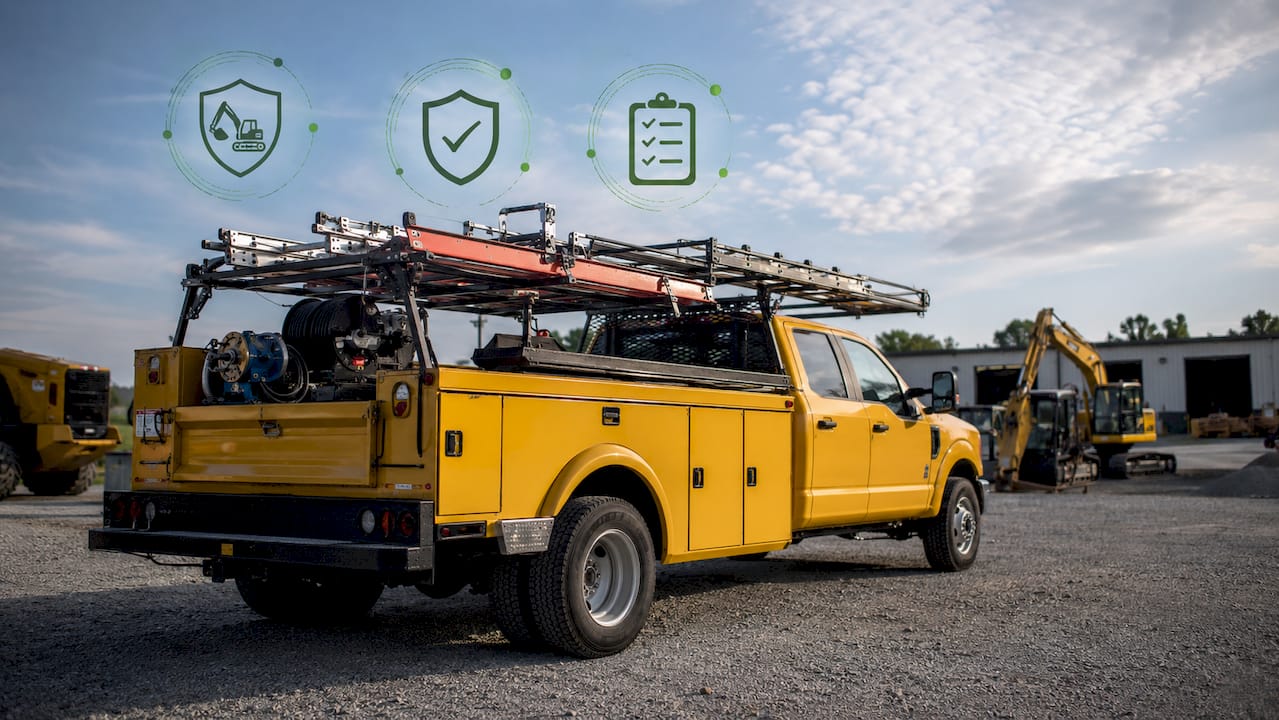
Commercial auto insurance covers the vehicle itself and any permanently attached equipment, along with liability for bodily injury and property damage caused during operation. This is the starting point for every service truck fleet, regardless of size. Premiums vary significantly by vehicle type, with contractor pickups carrying lower costs and heavy-duty trucks carrying higher premiums due to greater loss severity and operational intensity.
What commercial auto covers:
- The truck chassis and cab
- Permanently mounted equipment such as service bodies, cranes, and compressors
- Bodily injury and property damage liability
- Collision and comprehensive physical damage to owned vehicles
- Medical payments for the driver
What commercial auto does not cover:
- Portable tools and diagnostic equipment stored in the truck
- Cargo or materials being transported
- Vehicles your employees rent or own personally
Pro Tip: Always verify that your vehicle is classified correctly at underwriting. A truck with a mounted welder or hydraulic crane must be declared with full upfitting details. Misclassification leads to claim denials that leave you paying out of pocket for equipment the insurer never knew existed.
3. Hired and non-owned auto (HNOA) coverage: filling liability gaps
HNOA coverage protects your business when employees use rented, leased, borrowed, or personally owned vehicles for work purposes. Commercial auto only covers vehicles your company owns. The moment a technician drives a rented pickup to a job site, your commercial auto policy stops protecting you from liability.
HNOA covers the liability your business faces if that employee causes an accident. It does not pay for physical damage to the rented or personal vehicle itself. That distinction matters because many fleet managers assume rental damage is included, and it is not.
Common situations where HNOA is essential:
- A technician rents a truck to haul parts when the company vehicle is in the shop
- An employee uses a personal pickup to respond to an emergency service call
- A manager drives a leased vehicle not listed on the commercial auto policy
- A subcontractor uses their own van to complete a job under your business name
HNOA coordinates with your commercial auto policy to close the liability gap on non-owned vehicles. Together, these two coverages address the full range of vehicles your team may operate on any given workday. For additional context on liability protections outside direct truck operation, the Diamondbackins guide on non-trucking liability offers useful detail.
4. Inland marine insurance: protecting tools and equipment on the move
Inland marine insurance covers portable tools, diagnostic equipment, and materials that your technicians carry on service trucks. Commercial auto excludes these assets entirely. A socket set, a hydraulic torque wrench, or a $15,000 diesel diagnostic scanner sitting in your truck bed has zero protection under a standard commercial auto policy.
The risks inland marine addresses include theft from a job site, accidental damage during transport, and mysterious disappearance, which is the industry term for loss without a clear cause. Theft from service trucks is a persistent problem across the transportation industry, and a single incident can wipe out thousands of dollars in specialized tools.
Typical items scheduled under inland marine for service trucks:
- Hand tools and power tools
- Electronic diagnostic equipment
- Welding machines and cutting equipment
- Hydraulic tools and specialty lifting devices
- Materials and parts in transit to job sites
Failure to schedule tools correctly under an inland marine policy can result in total claim denial when theft or damage occurs. Insurers require a detailed schedule of covered items with accurate valuations at the time of underwriting. For fleet owners carrying equipment in transit between locations, this coverage is the only policy that protects those assets.
Pro Tip: Conduct a full equipment inventory at least once per year and update your inland marine schedule before renewal. Undervaluing tools by even 20% can reduce your payout proportionally in a partial loss claim.
5. Garage liability, garagekeepers, and completed operations coverage
Mobile service truck operators who repair customer vehicles need three additional coverages that most fleet managers overlook. Specialized mobile repair insurance is available in 38–42 states and addresses the specific risks of handling customer property and performing work that carries post-service liability.
Garage liability covers your business operations against bodily injury and property damage claims arising from your service activities. If a customer trips over your equipment at a job site, or if your technician damages a third party’s property while working, garage liability responds.
Garagekeepers coverage protects customer vehicles while they are in your custody, control, or care. Garagekeepers coverage is structured off-premises for mobile mechanics, meaning it follows your technician to the customer’s location rather than applying only at a fixed shop. If a customer’s truck is damaged while your team is working on it in a parking lot, garagekeepers pays for that damage.
Completed operations coverage protects you after the job is done. If a repair you performed fails and causes an accident or injury days later, completed operations covers the resulting liability. This is the coverage that mobile diesel mechanics and field service operators most frequently skip, and it is the one that generates the largest post-service claims.
6. Commercial auto vs. commercial truck insurance: which fits your service vehicle?
The distinction between commercial auto and commercial truck insurance depends on vehicle weight, use case, and regulatory requirements. Light-duty service vehicles, such as contractor pickups and cargo vans under a certain gross vehicle weight rating, typically fall under commercial auto policies. Heavy-duty trucks used for for-hire hauling or operating under federal motor carrier authority require commercial truck insurance with regulatory filings.
| Feature | Commercial auto | Commercial truck |
|---|---|---|
| Vehicle weight class | Light to medium duty | Heavy duty, Class 6–8 |
| Primary use | Service, repair, contracting | For-hire hauling, freight |
| Regulatory filings | Generally not required | FMCSA filings often required |
| Cargo coverage | Not included | Available as separate endorsement |
| Liability limits | Standard commercial limits | Higher limits, often mandated |
| Premium range | Lower, based on vehicle type | Higher, based on cargo and routes |
Misclassification of vehicles leads to inadequate coverage and claim denials. A heavy-duty service truck operating under a commercial auto policy may face a denied claim if the insurer determines the vehicle should have been written under a commercial truck form. Review your fleet’s weight class and operational profile with your insurer every year, especially when you add new vehicles or change service territories.
Choosing the right classification also affects your premium directly. Placing a light-duty service van under a commercial truck policy means paying for coverage features you do not need. Placing a heavy-duty rig under a commercial auto policy means carrying limits that will not hold up in a serious loss. Getting this right is one of the most common insurance mistakes fleet managers make.
Key takeaways
A complete service truck insurance program requires multiple coordinated policies, not a single product, to protect vehicles, equipment, and operational liability.
| Point | Details |
|---|---|
| Commercial auto is the foundation | It covers owned vehicles and attached equipment, but excludes portable tools and non-owned vehicles. |
| HNOA closes the non-owned vehicle gap | Add HNOA whenever employees use rented or personal vehicles for business purposes. |
| Inland marine protects your tools | Schedule all portable tools and diagnostic equipment separately to avoid total claim denial. |
| Garage and garagekeepers are often missed | Mobile mechanics need both to cover operational liability and customer vehicle custody. |
| Vehicle classification drives coverage | Misclassifying a heavy-duty truck under a commercial auto policy leads to denied claims. |
What I’ve learned from years of watching service truck claims go wrong
Most service truck operators come to me thinking they have solid coverage. They have a commercial auto policy, they pay their premiums on time, and they assume they are protected. The hard truth is that commercial auto alone covers maybe half of the real exposures a service truck operation faces on any given day.
The biggest misconception I see is treating service truck insurance as a single product you buy once and forget. It is not. It is a set of coordinated layers, and the gaps between those layers are exactly where claims fall apart. A technician’s $12,000 diagnostic scanner gets stolen from a job site, and the fleet manager finds out the hard way that commercial auto never covered it. A customer’s vehicle gets damaged during an on-site repair, and there is no garagekeepers policy to respond.
Vehicle classification errors are the second most common problem. Fleet managers add a new heavy-duty truck to an existing commercial auto policy without flagging the upfitting. The insurer pays out for the chassis at claim time and nothing more. The service body, the crane, and the compressor are all uninsured because they were never declared.
My advice to every fleet manager and small business owner reading this: review your coverage layers at least once per year, before renewal. Confirm that every vehicle is correctly classified, every piece of equipment is scheduled, and every operational risk has a policy responding to it. The fleet manager insurance guide at Diamondbackins is a practical starting point if you want a structured checklist for that review. Specialized advice pays for itself the first time a claim comes in and actually gets paid.
— Vladimir
How Diamondbackins helps you secure the right coverage fast
Getting the right mix of service truck insurance options used to mean calling multiple brokers, waiting days for quotes, and comparing policies that were hard to read side by side. Diamondbackins changes that process entirely.
The platform aggregates quotes from multiple top insurers in minutes, giving fleet managers and small business owners a clear comparison of coverage types, limits, and premiums in one place. You can save on fleet costs by reviewing multiple offers at once rather than accepting the first quote you receive. Diamondbackins specializes in commercial vehicle and trucking coverage, so the options you see are built for your operational reality, not generic auto policies repurposed for trucks. If you are ready to review your coverage layers, get a truck insurance quote directly through the platform today.
FAQ
What is service truck coverage?
Service truck coverage is a coordinated set of insurance policies that protects service vehicles, their operators, mounted and portable equipment, and business liability. No single policy covers all these exposures, so a layered program is required.
Does commercial auto cover tools in my service truck?
Commercial auto covers permanently attached equipment but not portable tools. Inland marine insurance is the correct policy for hand tools, diagnostic equipment, and other mobile assets your technicians carry.
When do I need HNOA coverage for my fleet?
You need HNOA coverage any time an employee uses a rented, leased, or personally owned vehicle for business purposes. HNOA covers your business liability in those situations, which commercial auto does not.
What is the difference between garage liability and garagekeepers coverage?
Garage liability covers bodily injury and property damage arising from your service operations. Garagekeepers coverage specifically protects customer vehicles while they are in your custody or care during a repair.
How do I know if my truck needs commercial auto or commercial truck insurance?
Vehicle weight class and operational use determine the correct policy. Light-duty service vehicles generally fall under commercial auto, while heavy-duty trucks used for for-hire hauling or operating under federal authority require commercial truck insurance with appropriate regulatory filings.