

Choosing the wrong liability coverage for your trucking or transportation business is not just a paperwork problem. It can mean suspended operating authority, rejected loads, or a single lawsuit that wipes out years of profit. With legal awards climbing and broker requirements tightening, fleet managers and owner-operators face real financial exposure when their coverage mix does not match their actual risk. This article breaks down every major type of liability coverage, compares costs and requirements side by side, and gives you a clear framework to build the right protection for your operation, whether you run one truck or a full fleet.
Table of Contents
- Key factors in selecting liability coverage
- Primary liability, bobtail, and general liability coverage
- Umbrella, hired/non-owned auto, and uninsured motorist policies
- Coverage comparison: Finding the right mix for your business
- What most fleet managers miss about liability coverage
- Protect your trucks, protect your business
- Frequently asked questions
Key Takeaways
| Point | Details |
|---|---|
| Know your requirements | FMCSA and broker minimums differ, so always check both before buying liability coverage. |
| Combine coverages | No single policy covers all risks — use primary, bobtail, general liability, and umbrella as needed. |
| Watch for gaps | Understand what’s excluded, like own-vehicle and cargo damage, and fill the gaps with proper policies. |
| Safety lowers costs | Using telematics and maintaining a strong safety record can help reduce your liability insurance premiums. |
| Documentation matters | Proper filings and paperwork are just as vital as policy limits for uninterrupted operations. |
Key factors in selecting liability coverage
Before you compare policy types, you need a clear picture of what your operation actually requires. The Federal Motor Carrier Safety Administration (FMCSA) sets the legal floor for interstate carriers. FMCSA mandates minimums of $750,000 for general freight, $1 million for oil transport, and $5 million for hazardous materials. These numbers are not suggestions. Operating below them puts your authority at risk immediately.
The challenge is that legal minimums are rarely enough in practice. Most freight brokers and shippers require at least $1 million in primary liability before they will assign a load. Some specialized contracts push that requirement even higher. If your coverage does not meet their threshold, you lose the contract, plain and simple.
The legal environment is also shifting fast. Nuclear verdicts above $10M are now a regular feature of trucking litigation, driving up premiums and pushing insurers to tighten underwriting standards. A verdict that exceeds your policy limits becomes your personal financial liability. That reality alone should push you toward higher limits than the bare minimum.
When you evaluate coverage, consider your fleet size, the type of cargo you haul, the routes you operate, and the contract requirements of your key clients. If you want to understand how liability insurance for LLCs applies to your business structure, that context matters too. Reviewing understanding liability for your business before committing to a policy is a smart first step.
Pro Tip: Installing dashcams, electronic logging devices, and collision avoidance systems can meaningfully lower your premiums. Insurers reward documented safety practices with better rates, sometimes cutting costs by 10 to 15 percent.
Primary liability, bobtail, and general liability coverage
Having established the selection factors, let’s clarify the core coverage types every fleet manager needs to evaluate.
Primary liability insurance is the foundational commercial vehicle coverage required for all interstate carriers. It pays for bodily injury and property damage you cause to third parties while your truck is under dispatch. Without it, you cannot legally operate across state lines. Costs vary widely based on cargo type, driver history, and routes, but owner-operators typically pay between $5,000 and $15,000 per year for a single truck.
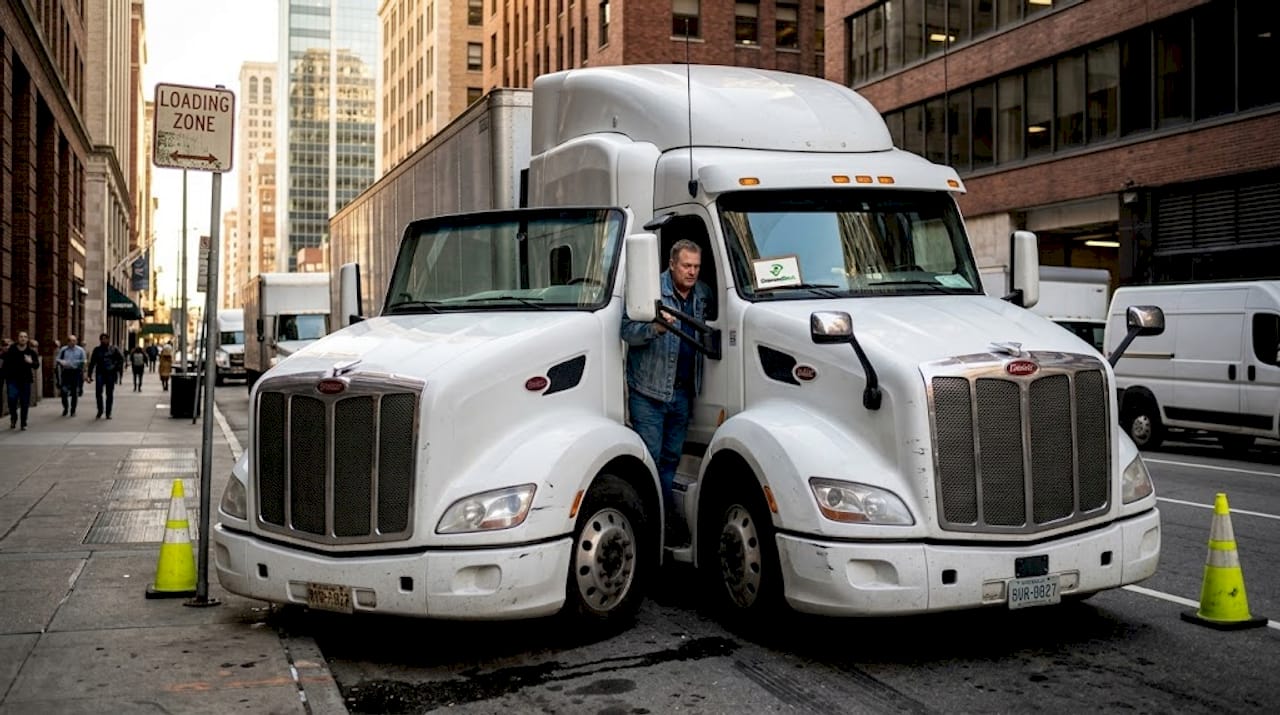
Bobtail and non-trucking liability (NTL) cover your truck when it is not under dispatch. Think deadheading back after a delivery, personal errands, or driving to a maintenance shop. These scenarios fall outside your primary policy, leaving you exposed without bobtail coverage. The cost is relatively low at $400 to $800 per year, making it an easy add for owner-operators leased to a carrier.
General liability covers risks that have nothing to do with your vehicle. A customer slips in your loading area. A driver damages property at a delivery site that is not directly related to vehicle operation. These claims fall outside auto liability entirely. Understanding what general liability covers helps you avoid the gap between your vehicle policy and your broader business exposure.
| Coverage type | What it covers | Average annual cost | Required? |
|---|---|---|---|
| Primary liability | Third-party injury/property damage under dispatch | $5,000 to $15,000 per truck | Yes, FMCSA mandated |
| Bobtail/NTL | Off-dispatch vehicle operation | $400 to $800 per truck | Often required by carriers |
| General liability | Non-vehicle business risks | $500 to $2,000 per year | Recommended |
Pro Tip: Match your bobtail policy to your hauling status carefully. If your primary carrier’s policy covers you during all operations, you may be paying for duplicate coverage. Confirm the exact dispatch definition in both policies before purchasing.
Umbrella, hired/non-owned auto, and uninsured motorist policies
Beyond the basics, modern trucking businesses often need more than state minimums. Here is what adds real protection when a major claim hits.
Umbrella and excess liability coverage sits above your primary policy and activates when a claim exceeds your base limits. Given the current environment of multi-million dollar verdicts, this coverage is no longer optional for serious operations. Expect to pay $3,000 to $8,000 per $1 million in additional coverage. For a fleet handling high-value freight or operating in high-traffic corridors, the math is straightforward.
Hired and non-owned auto (HNOA) coverage protects your business when employees use rented vehicles or their personal vehicles for work purposes. If a driver rents a truck for a short haul or uses a personal pickup for a business errand and causes an accident, your standard commercial policy likely will not respond. HNOA fills that gap cleanly.
Uninsured and underinsured motorist coverage costs $200 to $500 per vehicle per year and covers your losses when the at-fault driver carries no insurance or insufficient limits. With roughly one in eight drivers on U.S. roads uninsured, this risk is real and consistent. For fleet managers, the exposure multiplies with every truck on the road.
Building layered protection means stacking these policies intentionally. Your primary liability handles the baseline. Umbrella coverage handles catastrophic verdicts. HNOA covers operational gaps. Uninsured motorist coverage protects you when the other party cannot pay. Each layer serves a specific purpose, and removing any one of them creates a gap that a single incident can exploit.
Pro Tip: Review your umbrella policy trigger carefully. Some excess policies require your underlying coverage to be exhausted before activating. Knowing that threshold prevents surprises during a claim.
Coverage comparison: Finding the right mix for your business
Now that you understand individual components, let’s see how they stack up and how to choose the right bundle.
| Coverage type | Cost range | Who needs it | Scenario example |
|---|---|---|---|
| Primary liability | $5K to $15K/truck/year | All interstate carriers | Truck causes accident while delivering freight |
| Bobtail/NTL | $400 to $800/truck/year | Owner-operators leased to carriers | Driver runs personal errand after delivery |
| General liability | $500 to $2K/year | All trucking businesses | Customer injured at your terminal |
| Umbrella/excess | $3K to $8K per $1M | Fleets, high-value cargo operators | Verdict exceeds primary policy limit |
| HNOA | $500 to $1.5K/year | Businesses using rented/employee vehicles | Employee uses personal truck for business run |
| Uninsured motorist | $200 to $500/vehicle/year | All fleets and owner-operators | Hit by uninsured driver on interstate |
Small fleets of 2 to 5 trucks can expect total annual insurance costs of $15,000 to $40,000 depending on cargo class, routes, and driver records. Owner-operators leased to a carrier typically need primary liability, bobtail, and occupational accident coverage at minimum. Independent operators running their own authority need the full stack, including cargo insurance and general liability.
It is also worth noting that primary liability does not cover your own vehicle damage, employee injuries, or cargo loss. Those require physical damage, occupational accident, and motor truck cargo policies respectively. If you haul goods over water, you may also want to review marine transit coverage for added protection.
For general liability for small business owners in transportation, the review process should follow these steps. First, audit your current policies for gaps against your actual operations. Second, confirm your limits meet both FMCSA requirements and your broker or shipper contracts. Third, assess your exposure to nuclear verdicts based on cargo type and routes. Fourth, add supplemental coverages like umbrella and HNOA where gaps exist. Fifth, review annually as your fleet size, cargo mix, and contracts change.
“The biggest liability gaps we see are not from missing policies, but from policies that do not match the actual operation. A driver off dispatch with no bobtail coverage, or a fleet with $750K limits and a broker requiring $1M, are the scenarios that create real financial pain.” — Commercial trucking insurance specialist
What most fleet managers miss about liability coverage
Most coverage guides focus on policy types and premium costs. What they rarely address is the operational reality that sits between having a policy and being truly protected.
A lapse in coverage triggers an immediate suspension of your operating authority through the FMCSA. Your insurer is required to file proof of coverage on your behalf, and the moment that filing lapses, your authority goes dark. You cannot legally move freight. That is not just a compliance issue. It is a cash flow crisis.
The MCS-90 endorsement, which is the FMCSA-required form attached to your primary liability policy, is another detail that trips up operators. It guarantees payment to injured parties even when the policy might otherwise deny a claim. Knowing it exists and confirming it is properly attached to your policy is not optional. It is a basic operational safeguard.
We also see businesses that carry adequate limits but fail to update their filings after adding trucks, changing cargo classes, or switching carriers. The policy exists. The protection does not fully apply. Understanding LLC liability insurance explained in the context of your business structure adds another layer of clarity here. Coverage is only as good as the paperwork that supports it.
Protect your trucks, protect your business
Understanding your liability coverage options is the first step. Acting on that knowledge is what actually protects your business, your drivers, and your cash flow.
At Diamondback Insurance, we specialize in trucking and transportation coverage, connecting you with multiple top-rated insurers in minutes through our fully online platform. Whether you run a single truck or manage a growing fleet, you can get a liability insurance quote instantly and compare your options side by side. No waiting, no back-and-forth with brokers. If you are also looking at broader coverage for your operation, our resources on insurance for small businesses can help you build a complete protection plan tailored to your needs.
Frequently asked questions
What is the difference between primary liability and general liability?
Primary and general liability serve completely different claim types. Primary liability covers damages your vehicle causes to others while under dispatch, while general liability covers non-vehicle claims like a slip-and-fall at your facility or property damage unrelated to truck operation.
How much primary liability insurance do I need for my trucking business?
FMCSA minimums start at $750,000 for general freight carriers, but most freight brokers and shippers require at least $1 million in primary liability before awarding loads, making $1 million the practical standard for most operations.
When is bobtail or non-trucking liability required?
Bobtail/NTL is required whenever you operate your truck outside of an active dispatch, including personal use, deadheading, or driving to a maintenance location, since your primary policy does not cover those situations.
What is a nuclear verdict and how does it impact my insurance?
A nuclear verdict is a jury award exceeding $10 million, and their increasing frequency in trucking cases is directly driving up premiums, reducing carrier options, and pushing underwriters to demand higher safety standards before offering coverage.
Does my liability insurance cover my own vehicle or cargo?
No. Liability insurance exclusions mean your own truck damage and cargo loss are not covered under any liability policy. You need separate physical damage insurance for your truck and motor truck cargo insurance for the freight you haul.