

An insurance aggregator is defined as an entity that pools insurance agency premium volume or consumer data to provide greater carrier access, competitive commissions, and simplified policy comparison. The role of aggregators in insurance has grown from a niche arrangement into a structural pillar of how both independent agents and everyday buyers interact with carriers. Whether you manage a commercial trucking fleet or run a small independent agency, understanding how aggregators function gives you a real advantage when securing coverage. This guide explains both sides of that equation clearly.
How do insurance aggregators work for independent agents?
Aggregators act as collective buying groups for independent agents. They pool premium volume from many agencies and use that combined scale to negotiate better terms with carriers, including access to markets that a single small agency could never reach alone.
The carrier access benefit is the most direct advantage. Aggregators typically provide access to 50 or more carriers, and they improve commission structures by 1.0 to 2.0 percentage points above what an agent would earn independently. That enhancement can meaningfully change an agency’s revenue over a full book of business.

Aggregators do retain a share of those enhanced commissions. The standard range is 10–15% of the improvement, which covers the aggregator’s operations and technology. The remaining commission gain flows directly to the agent. For most agencies, the net result is still a clear financial improvement.
One of the most misunderstood facts about aggregators is what they do not require. Joining an aggregator does not mean surrendering your brand, your book of business, or your operational independence. Unlike franchises, aggregators impose no branding mandates and no strict operational controls. You keep your agency identity while gaining the buying power of a much larger organization.
Aggregators also differ from cluster groups in meaningful ways. Small agencies under $750,000 in premium often benefit more from aggregators than from clusters because aggregators carry lower entry barriers and fewer exclusivity requirements. Clusters typically offer higher commission enhancements but demand greater financial commitment and tighter operational alignment.
Beyond carrier access, most aggregators provide technology platforms, compliance tools, and continuing education resources. These additions reduce the administrative burden on smaller agencies that lack dedicated back-office staff.
Pro Tip: Before joining an aggregator, calculate your current annual premium volume and compare the projected commission enhancement against the aggregator’s retention percentage. If the net gain exceeds what you could earn independently within 12 months, the arrangement is worth pursuing.
How do aggregators simplify consumer insurance shopping?
For consumers, an insurance aggregator functions as a digital marketplace. You enter your information once, and the platform delivers quotes from multiple carriers side by side within minutes. That single input replaces what used to require separate calls to multiple agents or carriers.
The technology behind this process relies on API integration. Aggregator platforms connect directly to carrier systems and pull real-time pricing. When a carrier updates its rates, the aggregator reflects that change immediately. You see current pricing, not estimates based on outdated data.
Data normalization is the step that makes comparison genuinely useful. Carriers structure their policies differently, using different terminology for deductibles, exclusions, and coverage tiers. Aggregators convert all of that into a unified format so you can compare policies on equal terms. Without normalization, comparing two policies would be like reading two contracts written in different languages.
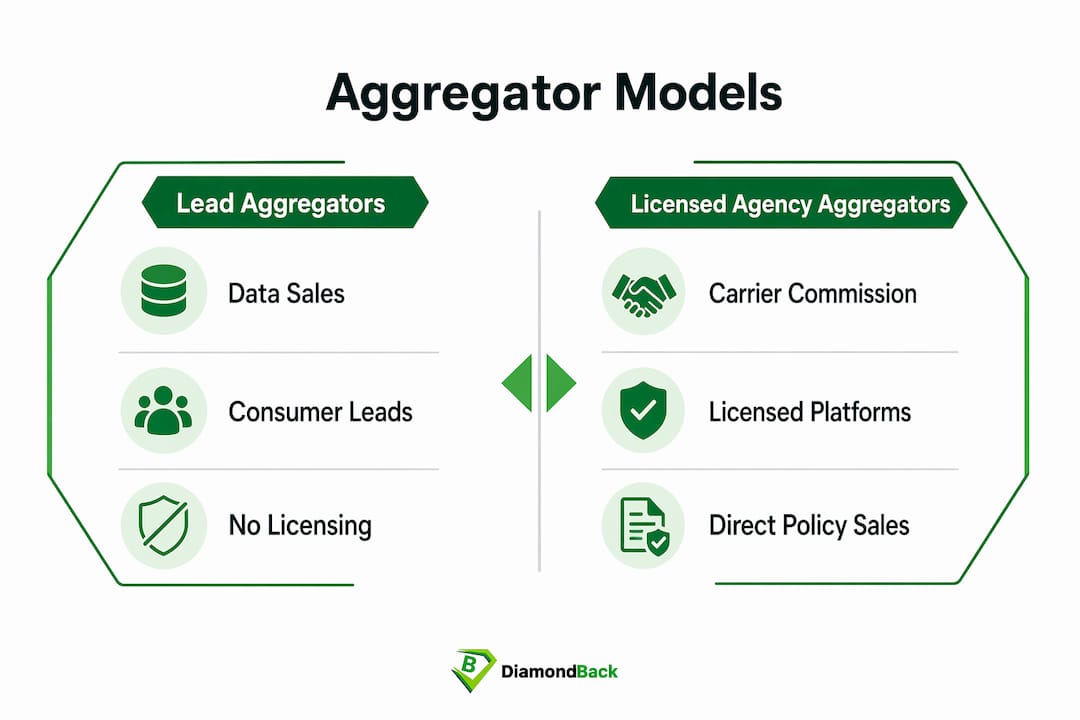
Consumers should understand one critical distinction before using any aggregator platform. Lead aggregators and licensed agency aggregators operate under different models with very different implications for you.
A lead aggregator collects your contact information and sells it to agents or carriers as a sales lead. You may receive multiple unsolicited calls after submitting your details. A licensed agency aggregator, by contrast, acts as a broker of record. It earns a commission only when a policy is actually sold, which aligns its incentives with your interests.
Checking the licensing status of any platform before submitting personal information is the single most effective way to protect yourself from unwanted marketing contacts. Licensed platforms are regulated and accountable in ways that pure lead generators are not.
Pro Tip: When using an insurance comparison platform, look for a state license number displayed on the website. A licensed agency aggregator is legally required to disclose it. If you cannot find one, treat the platform as a lead aggregator and expect follow-up calls.
For commercial transport buyers, platforms like Diamondbackins apply this same aggregator model to trucking and fleet coverage. You can review fleet insurance options across multiple carriers without contacting each one separately.
Aggregator business models: how do they generate revenue?
Two primary business models define how aggregators in the insurance industry earn money. Understanding both helps you evaluate any platform you use.
The first model is the lead aggregator. This type monetizes consumer data directly. When you submit a quote request, the platform sells your contact details to agents or carriers willing to pay for that lead. Revenue is triggered by the interaction itself, not by whether you buy a policy. Some platforms earn from clicks on quotes or from inbound calls generated by the listing.
The second model is the licensed agency aggregator. This type earns commissions from carriers on policies that are actually sold. The platform only profits when you purchase coverage. That structure creates a direct incentive to match you with the right policy rather than simply collect your data.
| Model | Revenue trigger | Consumer implication | Agent implication |
|---|---|---|---|
| Lead aggregator | Click, call, or data sale | Risk of unsolicited contacts | Pays per lead, no sale required |
| Licensed agency aggregator | Policy sale commission | Aligned incentives, regulated | Commission split on closed business |
The regulatory difference between these two models is significant. Licensed agency aggregators must hold valid state insurance licenses and comply with consumer protection standards. Lead aggregators face fewer regulatory requirements, which is why consumer experience varies so widely across platforms.
For agents, the distinction matters when evaluating which aggregator to join. A licensed agency model means the aggregator has skin in the game on every policy. A lead-based model means the aggregator profits regardless of whether the agent closes the sale.
Why are insurance aggregators important in today’s market?
The structural gap in insurance distribution explains why aggregators exist at all. Carriers prefer to work with fewer, larger partners because managing thousands of small agency relationships is administratively expensive. Independent agents, however, need access to many carriers to serve clients across different risk profiles and price points. Aggregators resolve that tension by acting as a single large conduit between many small agents and many carriers.
This structural role has three concrete effects on the market.
First, aggregators give small agencies credibility with carriers they could not access independently. A carrier that would not appoint a $300,000 premium agency directly will often work with that same agency through an aggregator representing $50 million in combined volume. The agency gains access; the carrier gains a manageable relationship.
Second, aggregators improve agency valuation. An agency with strong carrier appointments and a diversified book of business is worth more at sale than one dependent on a single carrier relationship. Aggregator membership directly supports that diversification.
Third, aggregators support niche market placement. Commercial transportation insurance, for example, requires access to specialty carriers that most general agencies cannot reach. Collective volume enables niche placement that benefits both the agent and the client seeking specialized coverage.
The technology and compliance support aggregators provide adds another layer of value. Many aggregators offer agency management systems, errors and omissions guidance, and continuing education programs. These resources help smaller agencies operate at a professional standard that would otherwise require significant internal investment.
The role of tech in insurance aggregation continues to expand. Real-time API connections, automated underwriting tools, and digital policy management are now standard features on leading platforms. Agents and consumers both benefit from faster decisions and fewer manual steps in the coverage process.
How to Apply for an Insurance Aggregator License: General Steps and Eligibility
- Entity registration: Form a qualifying legal entity (commonly an LLP or a company under applicable corporate law) with web aggregation named as its core business in the governing documents.
- Application and fee: Submit a standardized application form with a non-refundable fee and supporting documentation covering ownership structure, IT security, and operational plans.
- Eligibility review: Regulators assess capital adequacy and “fit and proper” standing for directors and principal officers, including relevant certification or industry experience.
- Regulatory review and inspection: Authorities evaluate the application and may conduct a site inspection before approval.
- Ongoing compliance: Licenses often carry a fixed term, commonly around three years, requiring periodic reporting and renewal to keep operating.
Key Takeaways
Insurance aggregators serve a dual function: they consolidate agent volume to unlock carrier access and commission improvements, while giving consumers a single entry point to compare multiple policies side by side.
| Point | Details |
|---|---|
| Agent commission gains | Aggregators improve agent commissions by 1.0–2.0 points while retaining 10–15% of the enhancement. |
| Consumer data protection | Check for a state license number before submitting personal details to any aggregator platform. |
| Independence preserved | Agents keep their brand, book of business, and operational control when joining an aggregator. |
| Structural market role | Aggregators resolve the gap between carriers wanting fewer partners and agents needing broad access. |
| Model matters | Licensed agency aggregators align incentives with buyers; lead aggregators monetize data regardless of sale outcome. |
Why I think most agents misread the aggregator decision
The most common mistake I see agents make is treating the aggregator decision as purely financial. They calculate the commission enhancement, subtract the aggregator’s cut, and stop there. That analysis misses the larger picture.
The real value of a well-chosen aggregator is market access over time. An agency that gains appointments with 20 additional carriers through an aggregator can serve clients it would have had to turn away before. Those retained clients compound in value over years. The commission math in year one rarely captures that.
The second misconception I encounter is the fear of losing independence. Agents worry that joining an aggregator means answering to someone else’s rules. In practice, aggregators do not impose the operational mandates that franchises do. You keep your name, your clients, and your processes. The aggregator provides infrastructure, not oversight.
For consumers, my practical advice is simpler. Use licensed agency platforms when you want genuine comparison shopping. Use courier and commercial transport resources when you need specialized coverage context before you compare. And always verify the license before you share your contact details.
The aggregator model will keep growing because it solves a real problem for every party involved. Carriers get scale. Agents get access. Consumers get choice. The platforms that execute this well, with real licensing, real-time data, and transparent pricing, will define how insurance is distributed over the next decade.
— Vladimir
Diamondbackins and aggregator-powered fleet coverage
Diamondbackins applies the aggregator model directly to commercial trucking and transportation insurance. Fleet managers and owner-operators can access quotes from multiple top carriers through a single online platform, without the back-and-forth of traditional broker appointments.
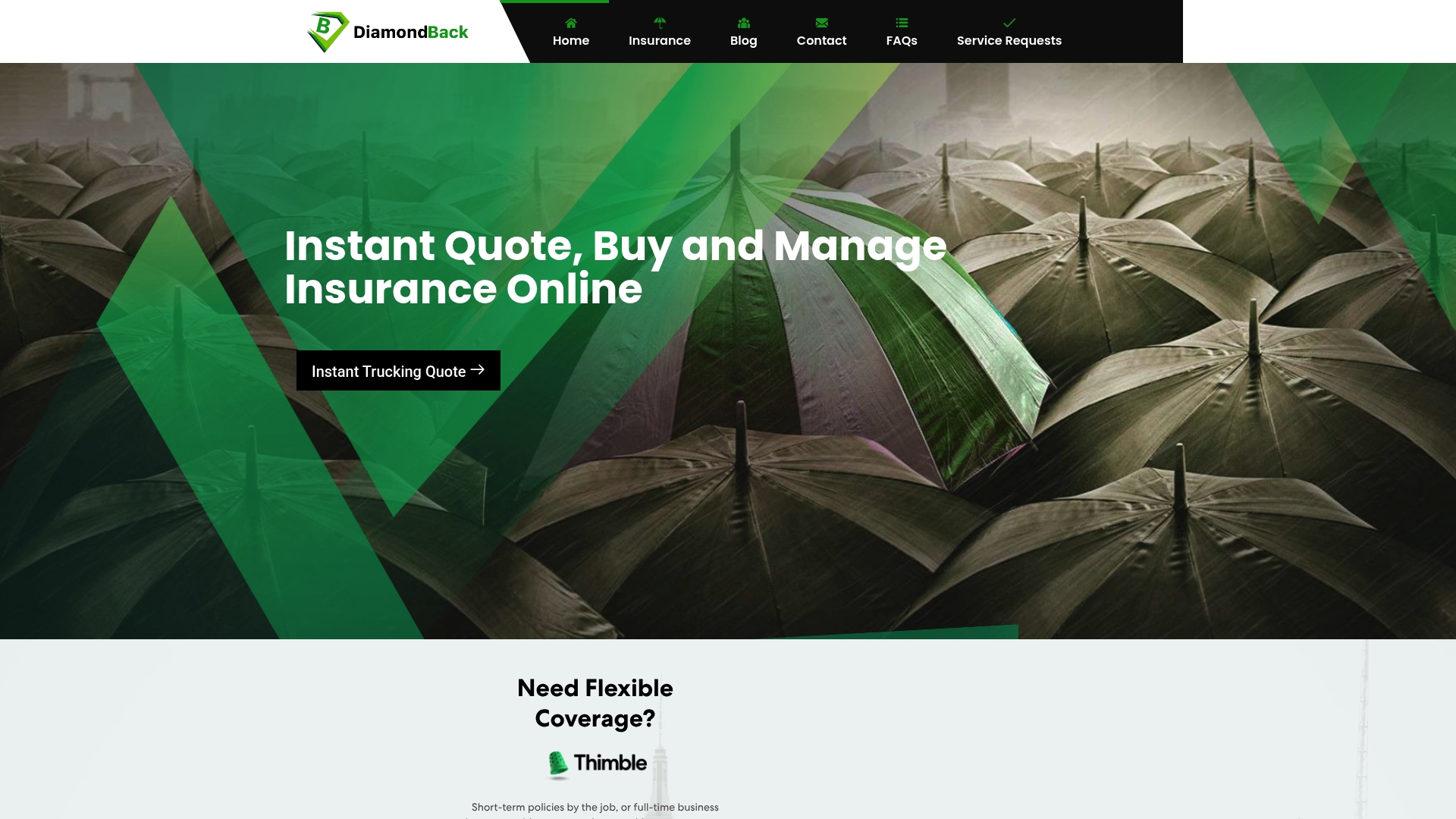
The platform delivers instant trucking quotes for commercial vehicles, pulling real-time pricing from carriers that specialize in transportation risk. That means you compare actual coverage terms, not ballpark estimates. For fleet managers who need to review coverage across multiple units quickly, Diamondbackins provides the speed and carrier breadth that manual quoting cannot match. You can also review trucking insurance options by carrier type to find the right fit for your operation.
FAQ
What is the role of aggregators in insurance?
An insurance aggregator pools agent premium volume or consumer data to provide broader carrier access, better commission terms, and simplified policy comparison. They serve as a distribution conduit between agents or consumers and insurance carriers.
How do insurance aggregators make money?
Aggregators earn revenue either by selling consumer contact data as leads or by collecting commissions from carriers on policies sold. Licensed agency aggregators only profit when a policy is purchased, while lead aggregators earn from interactions regardless of sale outcome.
Do agents lose independence by joining an aggregator?
Agents retain full ownership of their book of business, their brand, and their operational processes when joining an aggregator. Unlike franchises, aggregators do not impose branding mandates or operational controls.
How do I know if an aggregator platform is licensed?
A licensed agency aggregator is required to display a valid state insurance license number on its website. If no license number is visible, treat the platform as a lead aggregator and expect unsolicited follow-up contacts after submitting your information.
Are insurance aggregators better than going directly to a carrier?
For most consumers and small agencies, aggregators provide access to more carriers and better pricing than direct appointments alone. The comparison advantage comes from data normalization, which lets you evaluate policies on equal terms across multiple insurers simultaneously.