
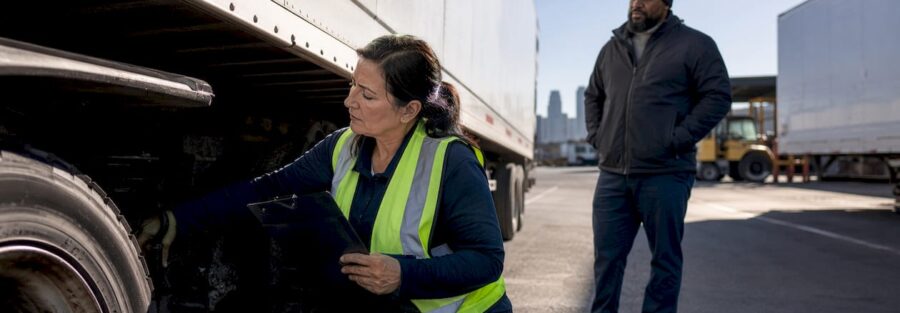
Commercial vehicle inspections are federally required at least once every 12 months under FMCSR Part 396.17, and every component listed in Appendix G of Subchapter B must pass that inspection before a vehicle can legally operate. Documentation confirming compliance must remain on the vehicle at all times. For fleet managers, this is not a formality. It is the foundation of a safe, legally protected operation.
The core regulatory mandates you need to know:
- Every commercial motor vehicle, including each unit in a combination vehicle, must be inspected by a qualified inspector at least once every 12 months.
- All components in Appendix G of FMCSR Subchapter B must pass inspection, covering brakes, tires, steering, lighting, fuel systems, and more.
- Inspection documentation must stay on the vehicle to demonstrate compliance during roadside checks.
- The Commercial Vehicle Safety Alliance (CVSA) establishes the North American Standard Inspection levels used by enforcement officers across all U.S. jurisdictions.
- Your state may impose additional requirements beyond the federal baseline, so checking state-specific rules is part of your compliance responsibility.
What regulatory framework governs commercial vehicle inspections in the U.S.?
Federal law sets the floor. Under 49 U.S.C. § 31142, the Secretary of Transportation is required to prescribe standards for annual or more frequent commercial vehicle inspections, and those standards are codified in FMCSR Part 396.17. States can go further. They may adopt more stringent inspection programs, and a state program that meets federal objectives is recognized as adequate in every other state for the period of that inspection.
The CVSA plays a central role in standardizing how those inspections actually happen on the ground. Its North American Standard Inspection levels give enforcement officers a consistent protocol regardless of jurisdiction.
| Inspection Level | Description | Key Focus Areas |
|---|---|---|
| Level I | Full North American Standard Inspection | Driver credentials, brakes, cargo securement, tires, lighting, steering, fuel systems |
| Level II | Walk-Around Driver/Vehicle Inspection | Same scope as Level I, excluding items requiring the inspector to go under the vehicle |
| Level III | Driver/Credential/Administrative Inspection | Driver’s license, medical certificate, hours of service, seat belt, duty status records |
| Level V | Vehicle-Only Inspection | Full Level I vehicle items, conducted without the driver present |
| FMCSR Part 396.17 | Federal Annual Inspection | All Appendix G components, documentation required on vehicle |
| State Programs | Varies by state | May exceed federal minimums; recognized across states when federally approved |
A GAO report identified a persistent gap: states operating inspection programs often lack a clear communication channel with NHTSA to get guidance on new vehicle technologies, such as tire pressure monitoring systems and LED brake lights. Without that guidance, states have adopted inconsistent pass/fail criteria, which can reduce the safety benefit of their programs. Fleet managers operating across multiple states need to track each state’s specific requirements, not just the federal baseline.
Key regulatory highlights for multi-state fleets:
- Federal standards preempt state programs only when a state fails to achieve federal safety objectives after a formal review and a six-month correction period.
- A valid inspection completed under an approved state program or federal standards is recognized as adequate in every state for the inspection period.
- States may conduct random roadside inspections at any time, regardless of a vehicle’s current inspection status.
How do periodic inspections reduce roadway fatalities?
The safety case for frequent vehicle inspections is backed by hard data. A panel data analysis covering all 50 U.S. states from 1980 to 2017 found that states with active inspection and maintenance programs had a 5.5% lower fatality rate than states without such programs. That is a statistically significant, causally supported reduction, not a correlation that could be explained away by other factors.
Safety Impact: States with active vehicle inspection programs experienced a 5.5% reduction in roadway fatality rates compared to states without programs, based on panel data from all 50 U.S. states over a 37-year period.
FARS data adds another dimension. Pre-existing manufacturing defects are a factor in 2.6% of fatal crashes, a figure that underscores why catching defects before a vehicle returns to the road matters. Inspections serve as the primary filter for identifying those defects before they cause harm.
Top safety benefits of regular commercial vehicle safety checks:
- Identification of brake deficiencies before they cause stopping failures at highway speeds.
- Detection of cargo securement failures that could result in load shifts or spills.
- Early discovery of manufacturing defects that drivers and daily checks typically miss.
- Removal of unsafe vehicles from service before a roadside officer issues an out-of-service order.
- Reduced liability exposure for carriers when documented inspections show proactive maintenance.
What mechanical issues do inspections most commonly uncover?
Brake problems are the leading cause of out-of-service violations during roadside inspections. Specifically, brake adjustment issues and worn brake components are frequently missed during daily driver checks but caught during formal inspections. Cargo securement failures are the second most common category, followed by lighting defects, coupling device problems, and tire condition issues.
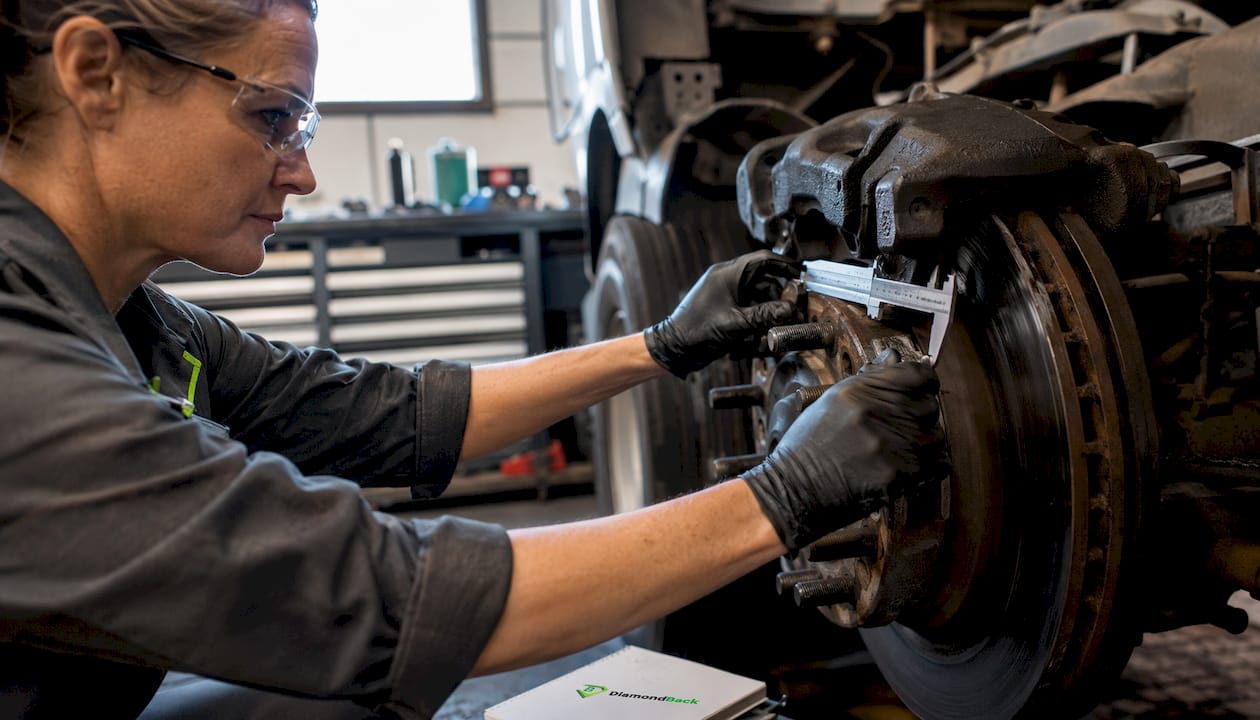
Each of these failure categories carries direct accident risk. A trailer with a defective coupling device can separate from the tractor at highway speed. A vehicle with a burned-out stop lamp creates a rear-end collision risk that no amount of driver skill can fully compensate for. Inspections catch these conditions while the vehicle is stationary, not after an incident has already occurred.
Pro Tip: Focus your internal pre-inspection audits on brake adjustment and cargo securement. These two categories generate the highest rate of out-of-service orders during CVSA roadside checks, and they are the areas where daily driver pre-trip inspections most often fall short.
Common mechanical issues found during commercial vehicle safety checks:
- Brake adjustment and lining wear beyond acceptable limits.
- Cargo securement violations, including improper tie-down methods and insufficient anchor points.
- Coupling device defects on fifth wheels, pintle hooks, and converter dollies.
- Lighting failures, including stop lamps, turn signals, and marker lights.
- Tire defects such as tread depth violations, sidewall damage, and improper inflation.
- Steering mechanism wear that affects vehicle control at speed.
- Exhaust system leaks that create cab contamination risks.
Best practices for fleet managers to stay compliant and safe
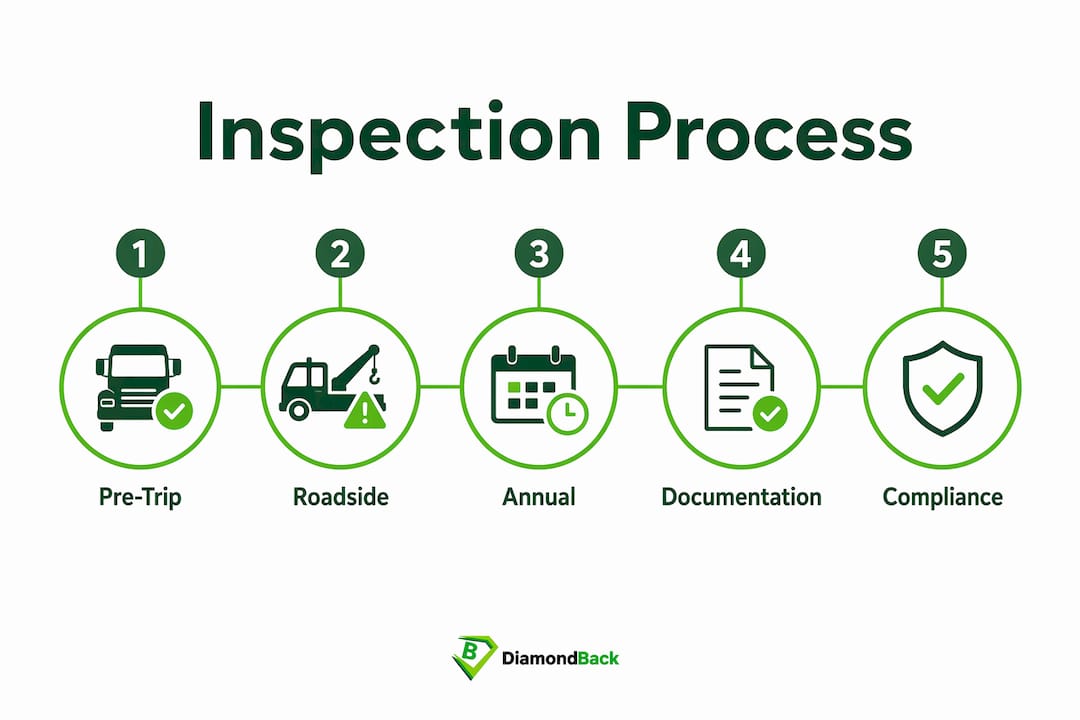
The federal minimum of one inspection per 12 months is a floor, not a target. Many well-managed fleets schedule inspections more frequently, particularly for high-mileage vehicles or those operating in harsh conditions. Staying ahead of the schedule reduces the probability of a roadside out-of-service order, which can disrupt delivery commitments and generate direct revenue loss.
Documentation is where many carriers fall short. Federal requirements mandate that inspection records certifying all Appendix G components have passed must remain on the vehicle. During a roadside inspection, that documentation acts as your first line of defense against an out-of-service order. Missing or incomplete records create the same compliance exposure as a failed inspection.
Pro Tip: Integrate your inspection records with a fleet maintenance software platform so that inspection due dates, component histories, and driver defect reports are all visible in one place. This makes regulatory audits faster and reduces the risk of a vehicle operating past its inspection date.
Key steps for proactive fleet inspection management:
- Schedule annual inspections well before the 12-month deadline to allow time for repairs without operational gaps.
- Use the CVSA Level I checklist as your internal inspection standard, since it mirrors what roadside enforcement officers use.
- Train drivers to complete thorough pre-trip and post-trip inspections and to document any defects in writing immediately.
- Maintain copies of all inspection reports on each vehicle and in a centralized fleet management system.
- Track state-specific inspection requirements for every state where your vehicles operate regularly.
- Review driver vehicle inspection reports (DVIRs) daily and address any noted defects before the vehicle returns to service.
- Conduct periodic internal audits of your inspection program to verify that documentation is complete and current.
Driver pre-trip and post-trip inspections are a daily safety check, but they are not a substitute for formal annual inspections. Drivers focus on obvious, visible conditions. Formal inspections go deeper, covering component wear rates, coupling integrity, and brake adjustment tolerances that require trained eyes and proper equipment to assess accurately. Both layers are necessary, and neither replaces the other. For more on aligning your insurance requirements with your inspection program, that connection is worth reviewing carefully.
Diamondbackins helps you protect a compliant fleet
Keeping your fleet inspection-ready is one side of the compliance equation. Having the right coverage in place is the other. Diamondbackins gives fleet managers instant access to tailored commercial vehicle insurance quotes from multiple top-rated carriers, all through a fully online platform that takes minutes, not days.
When your vehicles pass inspection and your documentation is current, your risk profile improves. Diamondbackins helps you translate that lower risk into competitive premiums by letting you compare coverage options side by side without the back-and-forth of a traditional broker. Whether you need service truck coverage for a specialized fleet or broad commercial trucking protection, the platform connects you to the right policy at a transparent price. You can also explore trucking insurance options that align with your compliance program and fleet size. A well-inspected fleet deserves coverage that reflects the care you put into it.
Key Takeaways
Commercial vehicle inspections are federally mandated at least annually under FMCSR Part 396.17, and states with active inspection programs show a measurable reduction in roadway fatality rates.
| Point | Details |
|---|---|
| Federal inspection frequency | FMCSR Part 396.17 requires inspections every 12 months covering all Appendix G components, with documentation on the vehicle. |
| CVSA inspection standards | North American Standard Inspection levels (I, II, III, V) provide consistent protocols used by enforcement officers across all U.S. jurisdictions. |
| Safety impact of inspections | States with active inspection programs had a 5.5% lower roadway fatality rate than states without such programs, based on panel data from all 50 U.S. states. |
| Top out-of-service triggers | Brake adjustment failures and cargo securement violations are the most common causes of out-of-service orders during roadside checks. |
| Diamondbackins coverage | Diamondbackins provides instant, tailored commercial vehicle insurance quotes that complement your fleet’s inspection and compliance program. |