
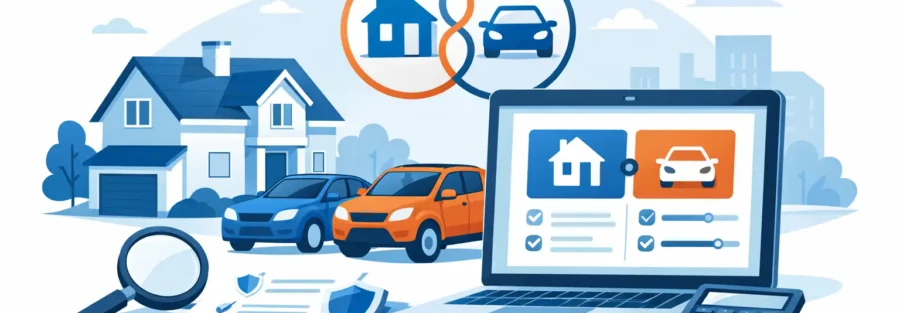
If you have ever filled out separate insurance forms for your house and your car, you already know the problem. Too much repetition, too little clarity, and no easy way to see whether online home auto bundle quotes actually save you money. For most shoppers, the real goal is simple: compare rates quickly, understand the coverage, and buy with confidence.
Why online home auto bundle quotes matter
Bundling home and auto insurance is not new. What has changed is how people shop for it. Instead of calling multiple carriers, repeating the same information, and waiting for follow-up emails, you can now review several options in one place and make a decision much faster.
That speed matters, but convenience is only part of the value. Online home auto bundle quotes help you compare more than the monthly premium. You can also look at deductible options, liability limits, policy features, and discount differences side by side. That is where smarter decisions happen.
A lower bundled rate is attractive, but it is not automatically the best deal. One quote may be cheaper because it offers less dwelling coverage on the home policy or lower liability limits on the auto policy. Another may cost a little more but give you stronger protection and fewer gaps. Comparing both price and coverage is what turns a fast quote into a useful one.
How bundled quotes are priced
Insurance companies do not all calculate bundle savings the same way. Some apply a clear multi-policy discount to both the home and auto policies. Others offer a stronger discount on one policy and a smaller adjustment on the other. In some cases, the bundled total looks better because one line is priced aggressively while the other is closer to market rate.
Your quote is usually shaped by a mix of factors that include your location, home value, construction type, roof age, claims history, vehicle type, driving record, mileage, and selected coverage levels. Credit-based insurance scoring may also affect rates in many states. Because each carrier weighs these factors differently, one company may be highly competitive for your home and only average for your auto, while another does the opposite.
This is why one bundled quote should never be treated as the market. Real comparison means looking across multiple carriers, not just accepting the first discount label you see.
What to check when comparing online home auto bundle quotes
The first number people notice is premium. That makes sense, but premium alone can be misleading. A useful comparison starts with whether the policies are built at similar coverage levels.
On the home side, check the dwelling amount, personal property coverage, loss of use, liability, and deductible. Also look for endorsements that may matter in your area or for your property type. Water backup, scheduled valuables, and extended replacement cost can change both value and price.
On the auto side, compare bodily injury liability, property damage liability, collision, comprehensive, uninsured motorist coverage, medical payments or personal injury protection where applicable, and deductibles. If one quote strips out physical damage coverage or drops liability to a lower level, it may look cheaper without truly being better.
You should also pay attention to how the bundle works operationally. Some shoppers want one carrier for both policies because billing and claims management feel simpler. Others are open to separate carriers if the pricing difference is meaningful. It depends on whether your top priority is convenience, price, or a balance of both.
When bundling makes the most sense
Bundling often works best when your home and auto risks fit cleanly within a carrier’s target profile. A standard single-family home, solid claims history, and clean driving record usually produce the most competitive results. In those situations, the discount can be meaningful and the process is straightforward.
It can also make sense if you want fewer moving parts. One account, one renewal cycle in some cases, and a clearer overview of your insurance can be worth a lot if you prefer a faster, more organized experience.
But bundling is not always the cheapest path. If your home has unique underwriting needs, such as older systems, prior losses, coastal exposure, or a high replacement value, one carrier may price the property conservatively. Your auto policy might still be affordable there, but the home premium can offset the bundle discount. The reverse can also happen if you have youthful drivers, a recent accident, or vehicles that are expensive to insure.
That is the main trade-off: bundling can simplify shopping and reduce cost, but only if both sides of the package are competitive.
Why quote results can vary so much online
Many shoppers are surprised by how far apart quotes can be. That spread usually comes from more than one issue. Data sources may prefill some details differently. Carriers may estimate replacement cost for your home in different ways. Coverage defaults may not match. Even small differences in deductibles can move the total premium.
There is also the question of underwriting appetite. One insurer may want more business in your ZIP code and price accordingly. Another may be limiting growth in that area due to weather exposure or recent loss trends. The same person, same house, and same car can receive very different offers depending on the carrier’s internal strategy.
That is why a comparison platform is valuable. It shortens the path to seeing those differences without making you start over each time.
How to get better quote accuracy the first time
Accurate inputs lead to more useful results. If your square footage is off, your roof age is wrong, or your vehicle usage is estimated loosely, the quote may change later. That does not mean online quoting failed. It usually means the original application details needed a closer review.
Before you start, have your current declarations pages nearby if possible. They can help you verify existing limits, deductibles, and policy features. For your home, know the year built, roof material and age, any recent renovations, and whether safety features like alarms or smart devices are installed. For your auto, confirm VINs, annual mileage, garaging address, and driver information.
The goal is not to make the process longer. It is to avoid false savings that disappear once the policy is reviewed for purchase.
The biggest mistake shoppers make
The biggest mistake is treating a bundle as a product instead of a pricing strategy. Home and auto are still separate policies with separate terms, exclusions, and claim considerations. The discount matters, but the policy details matter more.
A close second is shopping only when a renewal bill arrives. Rates can change because of market conditions, claims trends, construction costs, and carrier appetite, even if nothing major changed for you personally. Checking options periodically gives you more control.
For shoppers who want speed, a platform like Diamondback Insurance fits naturally because it brings multiple offers into one digital experience and makes it easier to compare and buy without the usual back-and-forth. That is especially useful when you are balancing affordability, time, and the need to see real choices instead of a single option.
What a good online buying experience should feel like
It should be clear, fast, and transparent. You should know what information is needed, what coverage is included, what can be adjusted, and what the next step is. You should not have to guess whether a low quote reflects a good discount or missing protection.
A strong online experience also gives you control. You can review options on your schedule, compare carriers without pressure, and move forward when the numbers and coverage make sense. For many homeowners and drivers, that level of control is just as valuable as the discount itself.
Should you bundle now or keep shopping?
If you can review multiple online home auto bundle quotes with matched coverage and clear pricing, you are in a strong position to decide now. If the quotes are inconsistent, the coverage details are unclear, or one policy looks strong while the other looks overpriced, keep comparing.
The right answer is not always the lowest premium. It is the option that gives you the best combination of price, protection, and ease. When you can see those pieces together in one place, insurance shopping gets a lot simpler and a lot more productive.
A good quote does not just save money. It saves time, reduces guesswork, and makes the next step feel easy.