

A single mishandled insurance claim can pull a truck off the road for weeks, freeze your cash flow, and create a legal exposure that follows your business for years. The trucking insurance claims process is genuinely complex, involving adjusters, regulators, attorneys, and multiple policy layers that interact in ways most fleet managers never anticipate until they’re already in the middle of a crisis. The good news is that understanding the process in advance changes everything. This guide walks you through preparation, execution, and resolution so you can protect your fleet, minimize downtime, and handle claims with the confidence of an operator who has been through it before.
Table of Contents
- What you need before filing a trucking insurance claim
- Step-by-step: The trucking insurance claims process explained
- Common challenges and mistakes in trucking insurance claims
- Proactive strategies for faster claims and fewer disruptions
- Why most fleets get trucking claims wrong—and the fix that actually works
- Get expert help with trucking insurance—move forward faster
- Frequently asked questions
Key Takeaways
| Point | Details |
|---|---|
| Start with full documentation | Gather incident details, insurance policy info, and evidence quickly for a faster claims process. |
| Follow a clear claims workflow | Understand each step, respond promptly, and know your partners—from adjusters to brokers. |
| Avoid common claim mistakes | Prevent delays by filing correctly, documenting everything, and escalating disputes properly. |
| Leverage tech and prevention | Telematics and strong safety records can accelerate claims and reduce your premiums. |
| Seek expert support when needed | A knowledgeable broker or advisor can help you navigate complex claims and regulatory issues. |
What you need before filing a trucking insurance claim
Once you know what’s at stake, the next step is gathering everything required for a smooth claim. Most denials and delays don’t happen because a fleet manager lacked coverage. They happen because the right documentation wasn’t ready at the right moment. Preparation is the single most controllable factor in how your claim unfolds.
The foundation is your policy documentation. You need your declarations page, your current certificate of insurance, and any endorsements attached to your policy. One endorsement that matters enormously for interstate carriers is the MCS-90. The FMCSA requires minimum $750K liability for interstate operations, with higher thresholds for hazmat loads, and the MCS-90 endorsement ensures a payout even when policy exclusions might otherwise apply. If you don’t have a copy of this endorsement on file, request it from your insurer today.
Beyond your policy, you need incident-specific records gathered as close to the event as possible. This includes photographs of all vehicles involved, the accident scene, cargo condition, and any visible road or weather factors. Driver statements should be collected in writing before memories fade. Police reports, witness contact information, and any dashcam or telematics data are equally critical. Having insurance documents for truckers organized and accessible before an incident means you won’t be scrambling while time-sensitive evidence disappears.
Pro Tip: Set up a digital claims folder on a shared drive that your drivers and dispatchers can access immediately after an incident. Include blank accident report templates, your insurer’s 24/7 claims hotline number, and a checklist of what to photograph at the scene.
The table below summarizes what to gather and why each item matters.
| Document or item | Why it matters |
|---|---|
| MCS-90 endorsement | Ensures coverage even when policy exclusions apply |
| Declarations page | Confirms active coverage and liability limits |
| Police/incident report | Establishes official record of the event |
| Driver statement | Documents driver’s account before it changes |
| Dashcam or telematics data | Provides objective evidence of speed, braking, and route |
| Photographs of scene and cargo | Supports damage and liability assessment |
| Witness contact information | Enables independent corroboration |
A detailed freight claim process guide can also help you understand what cargo-specific claims require, since those often follow a separate filing path from liability claims.
Reviewing your liability coverage for your fleet before an incident occurs is equally important. Knowing your limits, exclusions, and which policies are primary versus excess puts you in a much stronger position when you sit down with an adjuster.
Step-by-step: The trucking insurance claims process explained
With prerequisites in place, here’s how a claim typically unfolds from start to finish. The process has clear stages, but the pace and complexity vary significantly depending on the severity of the incident, the number of parties involved, and how quickly documentation is submitted.
Step 1: Report the incident immediately. Contact your insurer’s claims line as soon as the incident is safe to report. Most policies require prompt notification, and delays can complicate your position. Your insurance broker support team can help coordinate this notification if you work with a broker.
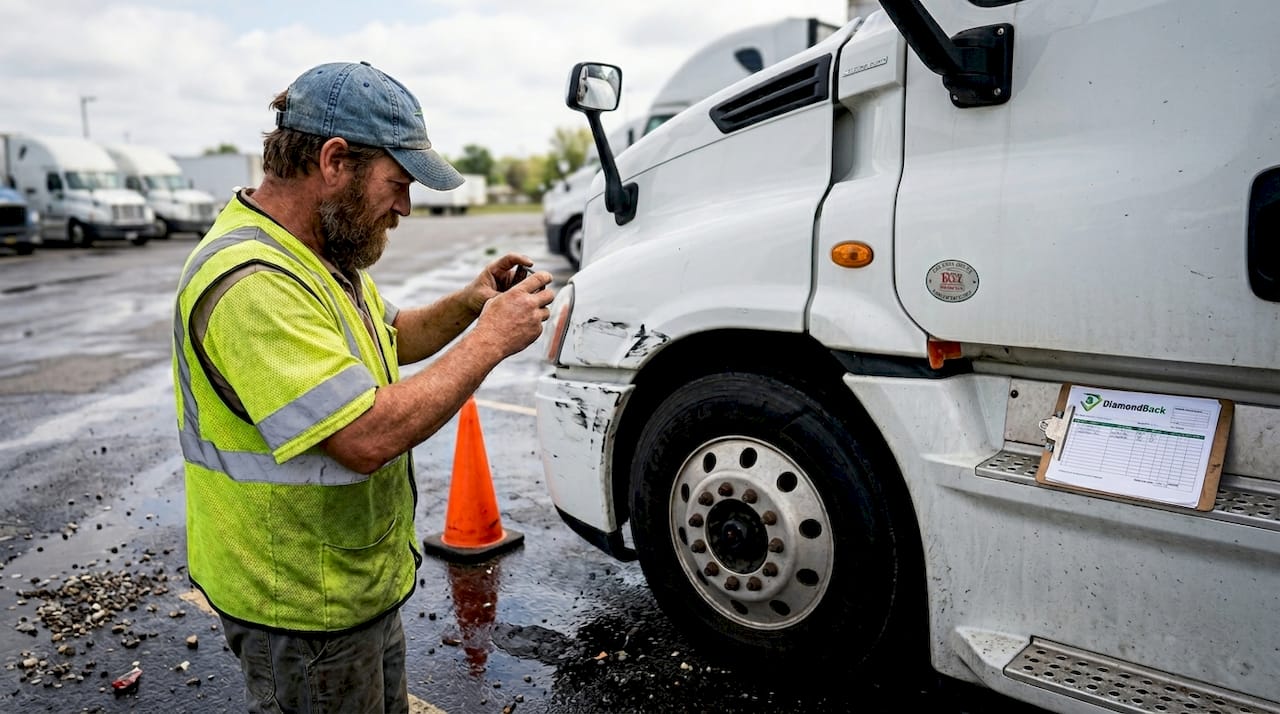
Step 2: Secure the scene and gather evidence. Your driver should document everything on-site before vehicles are moved. Photos, witness names, and a written account of events are non-negotiable.
Step 3: Submit your formal claim. Your insurer will assign an adjuster who becomes your primary point of contact. Provide all documentation upfront to avoid repeated follow-up requests that slow the process.
Step 4: Adjuster investigation. The adjuster reviews evidence, inspects the vehicle, and may interview your driver. This phase is where telematics data proves its value, giving objective context to what happened.
Step 5: Liability determination and negotiation. The insurer assesses fault and coverage applicability, then presents a settlement figure. Complex cases, particularly those involving injuries or contested liability, move to negotiation or litigation.
Step 6: Resolution and payment. Once both sides agree, settlement is issued. Gap insurance for fleets can cover the difference between actual cash value and outstanding loan balances if a vehicle is totaled.
Timing expectations matter here. Average truck settlements range from $103,000 to $650,000, with injury crashes costing approximately $200,000 and fatal crashes reaching $3.6 million in economic impact. Simple claims typically resolve in 30-90 days. Complex or litigated claims can take 6-16 months.
| Claim type | Typical timeline | Key variables |
|---|---|---|
| Property damage only | 30-60 days | Clear liability, quick documentation |
| Single-vehicle injury | 60-90 days | Medical records, fault assessment |
| Multi-party injury | 6-12 months | Disputed liability, multiple insurers |
| Fatal or nuclear verdict risk | 12-16+ months | Litigation, expert witnesses, appeals |
Innovations like 24/7 accident response teams are reducing early-stage delays by providing immediate triage and scene coordination.
Common challenges and mistakes in trucking insurance claims
Even with a clear workflow, unexpected complications are common. Understanding where claims break down helps you stay ahead of problems that derail even well-documented filings.
Cargo claims are a separate category that many fleet managers underestimate. If cargo is damaged, lost, or delayed, you must notify the responsible party within 9 months. Nuclear verdicts, defined as awards over $10 million, are a growing threat that can trigger excess policy involvement and dramatically reshape your insurance costs going forward. Multi-policy situations, where primary, excess, and cargo policies all apply, require careful coordination to avoid gaps in coverage.
Liability denials are among the most disruptive outcomes a fleet can face. Insurers may deny on grounds of disputed fault, policy exclusions, or coverage lapses. When an interstate carrier faces a denial, the MCS-90 endorsement becomes a critical backstop, requiring the insurer to pay public claims regardless of those exclusions. Knowing when and how to invoke it is a skill worth developing before you need it.
“The most common claims mistakes we see are late reporting, incomplete documentation, and treating adjusters as adversaries rather than partners in the resolution process.”
If your claim is denied, the escalation path starts with a formal written dispute to the insurer, supported by your documentation. From there, you may engage an attorney specializing in trucking liability, pursue subrogation (where your insurer recovers costs from the at-fault party’s insurer), or initiate litigation. Reviewing insurance liability denial recourse options specific to trucking can clarify which path fits your situation.
Pro Tip: Never accept an initial settlement offer without verifying it covers all costs, including vehicle repair, cargo loss, lost revenue during downtime, and any legal exposure. Request an itemized breakdown and compare it against your documented losses.
The most avoidable mistakes fleet managers make include filing late, submitting incomplete paperwork, failing to preserve digital evidence like dashcam footage, and not reviewing truck insurance mistakes before they become costly. Understanding why trucking policies differ from standard commercial auto policies also prevents assumptions that lead to coverage gaps.
Proactive strategies for faster claims and fewer disruptions
Knowing what can go wrong, here’s how the best fleets minimize problems and accelerate claim cycles. The highest-performing fleets don’t just react well to claims. They invest in systems that make claims faster, cheaper, and less frequent in the first place.
Telematics is the most impactful tool available right now. When an incident occurs, GPS tracking, hard-braking records, and dashcam footage give adjusters objective data that shortens investigation timelines significantly. Insurers actively prioritize fleets with telematics and safety technology when determining premiums and coverage terms, particularly as nuclear verdicts continue to drive market volatility.
Safety training programs deliver measurable financial returns. Strong safety records translate directly into better premiums and coverage terms in a hardening insurance market, and the prevention ROI is significant. Proper training can prevent incidents that would otherwise cost $500,000 or more in settlements and lost productivity.
Pro Tip: Document every safety training session, every vehicle inspection, and every maintenance record. This paper trail becomes leverage when negotiating premiums at renewal and evidence of due diligence if a claim escalates to litigation.
Here’s a practical framework for proactive claims readiness.
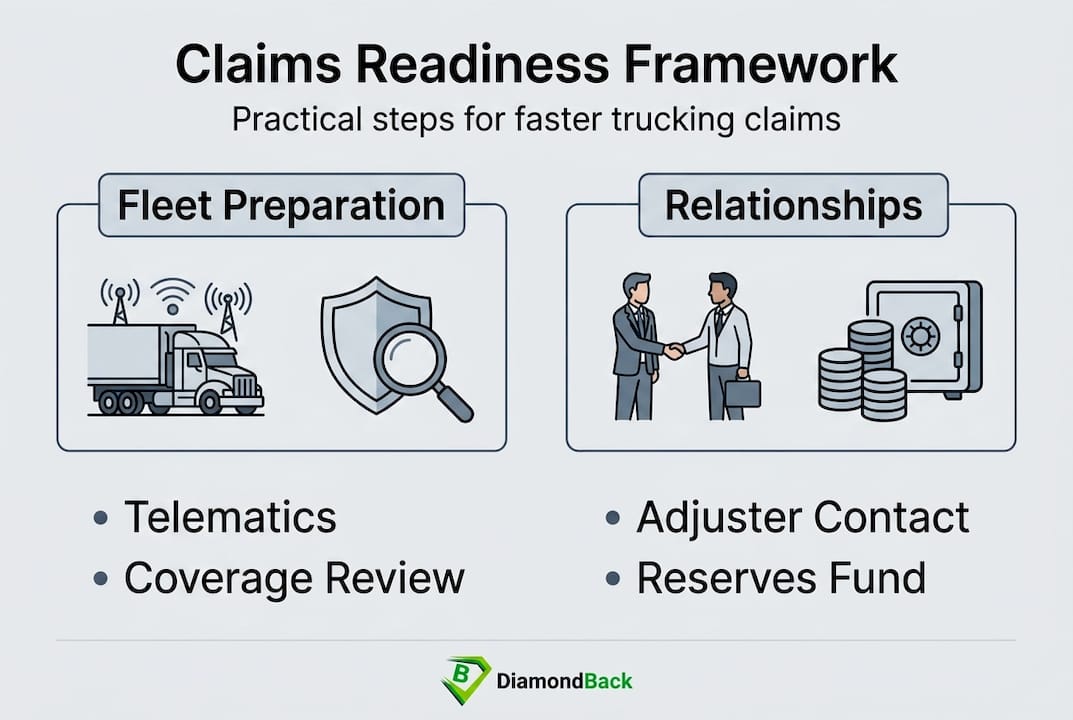
First, install and maintain telematics across your entire fleet, not just newer units. Consistent data across all vehicles protects you from selective scrutiny.
Second, conduct quarterly insurance reviews. Confirm that your coverage limits, endorsements, and policy terms reflect your current operations, including new routes, added vehicles, or changed cargo types. Reviewing factors affecting insurance rates helps you understand where your costs come from and where savings are available.
Third, build a direct relationship with your adjuster and underwriter before a claim occurs. Introducing yourself, sharing your safety record, and demonstrating operational discipline makes a measurable difference when an adjuster is assigning priority to open claims.
Fourth, keep downtime reserves funded. Even a 30-day simple claim resolution can leave a truck off the road for the full duration. Having financial buffer prevents operational disruption from compounding into business risk.
Why most fleets get trucking claims wrong—and the fix that actually works
To round out the guide, here’s a hard-won insight from years observing successful and struggling fleets. Most fleets focus exclusively on paperwork when a claim is filed. They gather documents, submit reports, and wait. That reactive posture is exactly what causes delays.
The fleets that resolve claims fastest treat their insurer and adjuster as operational partners, not bureaucratic obstacles. They share safety data voluntarily, communicate proactively between claim milestones, and flag potential issues before they escalate. That relationship-first approach consistently outperforms the paperwork-first approach, even when documentation is identical.
Technology adoption compounds this advantage. Fleets using telematics and digital claims platforms are not just faster. They’re treated differently by underwriters. Demonstrating low-risk operations through data earns you credibility that paper records alone cannot match. Switching to an online insurance platform also gives you access to multiple insurers who compete for your business, which shifts negotiating power back to you at both renewal and claims time.
The fix is simple: invest in relationships and technology before you ever need to file a claim. The fleets that do this spend less time in disputes and more time on the road.
Get expert help with trucking insurance—move forward faster
Ready to put these strategies to work? Here’s where to get qualified guidance and fast support.
Managing the trucking insurance claims process on your own is possible, but it carries real risk when stakes are high. Partnering with experienced support can mean the difference between a 45-day resolution and a 12-month dispute.
At Diamondback Insurance, we connect fleet managers and owner-operators with tailored quotes from top commercial carriers in minutes. Whether you need to review your current coverage, explore better liability options, or get instant insurance quotes before your next renewal, our platform makes it straightforward. Reach out to our insurance broker support team today for a policy review and start the next claim cycle from a position of strength.
Frequently asked questions
How long does a trucking insurance claim usually take to resolve?
Most trucking insurance claims resolve within 30-90 days, although complex or disputed cases involving litigation may take 6-16 months depending on the parties involved.
What is the MCS-90 and when does it apply in trucking claims?
The MCS-90 is a federally required endorsement for interstate carriers that ensures insurer payment to the public even when the policy itself would otherwise exclude the loss due to violations or other conditions.
How do I avoid delays or denials on trucking insurance claims?
Submit thorough documentation immediately after the incident, respond quickly to adjuster requests, and use your safety records and training logs to demonstrate operational responsibility and support your position.
What are nuclear verdicts and how do they affect my trucking insurance?
Nuclear verdicts are court awards exceeding $10 million against carriers, and their growing frequency drives premium increases and market volatility that affect all trucking operators regardless of their individual safety records.
Recommended
- Trucking Insurance Mistakes: 5 Pitfalls to Avoid
- Navigating the Process of a Workers Compensation Insurance Claim Insights from DiamondBack Insurance – Diamondback Insurance – Solutions with Instant Online Quotes
- Navigating Workers’ Compensation Insurance for Travelers with DiamondBack Insurance: Instant, Efficient, and Comprehensive – Diamondback Insurance – Solutions with Instant Online Quotes
- How to compare insurance quotes for trucking fleets efficiently
- Reduce trucking insurance costs: proven fleet strategies