
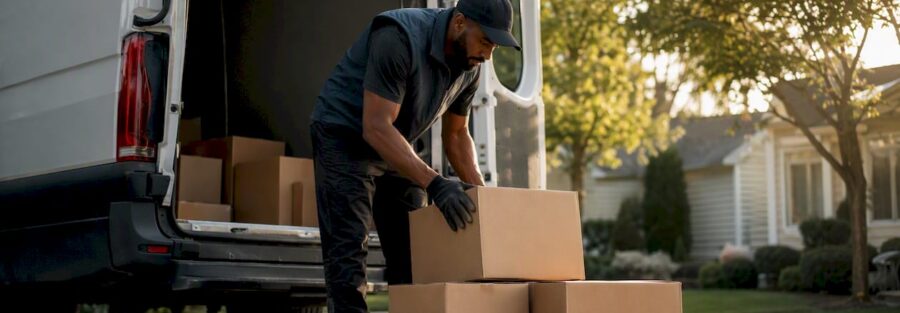
Last mile delivery insurance is a tailored commercial-vehicle and cargo insurance package that protects your fleet, drivers, and shipments from the moment a package leaves your facility to the moment it lands at a customer’s door. The core protections include commercial auto liability, auto physical damage, cargo/inland marine, hired and non-owned auto, workers’ compensation, and commercial umbrella coverage. As industry broker guidance confirms, tailored programs that combine these layers are the standard recommendation for delivery operations of any size.
You need this coverage if you operate any of the following:
- A fleet of vans, sprinter-style vehicles, box trucks, or light-duty trucks making residential or commercial deliveries
- A mix of employee drivers and independent contractors on delivery routes
- Operations that require you to carry a Certificate of Insurance (COI) for a retail, e-commerce, or logistics partner
Pro Tip: Before you request a quote, gather three things: your total vehicle count and types, your drivers’ license numbers and hire dates, and your average shipment value per load. Having these ready cuts underwriting time significantly.
To get started now, pull your fleet inventory and request an instant tailored quote from Diamondbackins. Most fleets can compare carrier options and bind coverage in minutes.
Key Takeaways
Last-mile delivery insurance requires a layered program combining commercial auto liability, cargo, hired and non-owned auto, workers’ compensation, and umbrella coverage to protect fleet operations from first pickup to final delivery.
| Point | Details |
|---|---|
| Core coverage layers | Every last-mile fleet needs auto liability, cargo/inland marine, HNOA, workers’ comp, and umbrella as a minimum program. |
| Contractor status matters | 1099 drivers require a hired and non-owned auto endorsement; a generic policy form may not cover them automatically. |
| Loss control lowers premiums | Telematics and continuous MVR monitoring are the two fastest ways to improve underwriting terms at renewal. |
| COI readiness wins contracts | Pre-authorized COI templates with additional insured and primary/non-contributory wording prevent partner activation delays. |
| Diamondbackins for instant quotes | Diamondbackins lets fleet managers compare multi-carrier quotes and bind last-mile coverage online in minutes. |
Table of Contents
- What does last mile delivery insurance actually cover?
- Which businesses need last-mile coverage and what vehicles qualify?
- What drives the cost of last-mile fleet insurance?
- What do partner contracts require on your COI?
- What loss-control programs do insurers expect from delivery fleets?
- How do claims work after a last-mile incident?
- How do you buy last-mile delivery insurance step by step?
- How Diamondbackins supports last-mile fleets
- What tailored programs actually deliver for last-mile operators
- Your last-mile fleet deserves coverage built for the job
- Sources
What does last mile delivery insurance actually cover?
The foundation of any last-mile logistics coverage program is commercial auto liability. This pays for bodily injury and property damage your drivers cause to third parties. Most contracts and state regulations require a minimum of $1 million per occurrence, and high-volume or urban fleets often carry $2 million or more. If a driver rear-ends a vehicle at a residential stop, this coverage responds first.
Auto physical damage (comprehensive and collision) protects your own vehicles. Collision pays for damage from accidents; comprehensive covers theft, vandalism, weather, and fire. For a fleet of newer sprinter vans or box trucks, skipping this layer is a meaningful financial risk.
Cargo and inland marine coverage protects the goods in transit. Standard carrier liability, like the limited indemnity USPS provides on basic services, often covers only a fraction of actual shipment value. USPS allows shippers to purchase insurance up to several thousand dollars per mailpiece and sets a roughly 60-day window for filing claims on lost or damaged items — a useful benchmark, but far below what most commercial fleets need for higher-value cargo. Commercial cargo policies can be written to match your actual declared values.
Hired and non-owned auto (HNOA) coverage fills the gap when drivers use personal vehicles or rented vehicles for deliveries. This is especially critical if you use gig-style contractors or allow drivers to use their own cars for overflow routes.
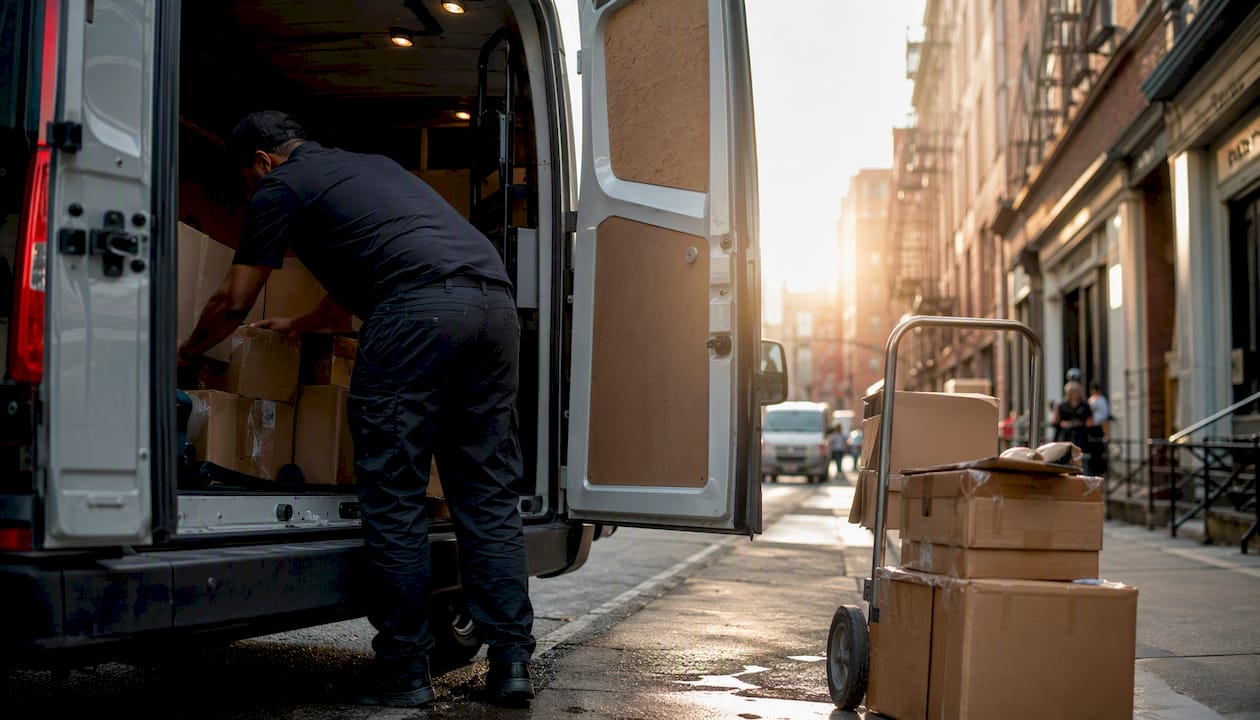
Workers’ compensation is legally required in most states the moment you have employees. It covers medical expenses and lost wages when a driver is injured on the job, whether that injury happens in a vehicle or while carrying a package to a front door.
A commercial umbrella policy layers above your primary auto and general liability limits. For fleets with significant contract exposure or high-value cargo, umbrella coverage in the $2 million–$5 million range provides the buffer that keeps a single serious accident from threatening the business.
General liability applies when your operations cause property damage or injury at a delivery site itself — a driver who damages a customer’s flooring during a white-glove appliance installation, for example. This coverage is often required separately by retail and e-commerce partners.
Which businesses need last-mile coverage and what vehicles qualify?
The businesses that most consistently need a dedicated last-mile program include e-commerce parcel delivery operations, furniture and appliance final-mile services, food and grocery delivery fleets, white-glove assembly and installation services, B2B small-parcel route operators, and reverse logistics or returns-handling companies. Each of these use cases carries distinct exposure: a white-glove crew entering a customer’s home faces premises liability that a standard parcel van route does not.
Vehicle eligibility is broad. Underwriters evaluate gross vehicle weight (GVW), cargo securement capability, and whether crew members ride along. Here is how common vehicle classes typically map to underwriting considerations:
| Vehicle Class | Typical GVW Range | Key Underwriting Notes |
|---|---|---|
| Cargo vans (Transit, ProMaster) | Lightweight vehicles | Lower premium tier; personal-use overlap requires clear business-use endorsement |
| Sprinter-style vans | Medium-weight vehicles | Common for parcel and grocery; crew-on-board increases liability exposure |
| Box trucks | Heavy-duty trucks | Higher cargo capacity; securement and loading practices scrutinized |
| Light-duty pickup trucks | Light vehicles | Often used for overflow routes; HNOA endorsement needed if driver-owned |
Contractor versus employee status is one of the most consequential underwriting questions you will answer. If your drivers are W-2 employees, your commercial auto policy covers them directly. If they are 1099 contractors using their own vehicles, you need hired and non-owned auto coverage on your policy, and you should verify that each contractor carries their own personal auto policy with adequate limits. Misclassifying drivers or leaving this gap unaddressed is a common reason claims get disputed.
Pro Tip: If you use a mix of employees and contractors, ask your broker to add a specific HNOA endorsement and confirm it covers contractors’ vehicles while on your routes. A generic policy form may not.
What drives the cost of last-mile fleet insurance?
Premium for last-mile delivery insurance is shaped by a combination of operational and financial factors. Understanding which levers matter most helps you budget accurately and prioritize the investments that reduce cost fastest.
- Fleet size and vehicle class. More vehicles mean more exposure. Box trucks cost more to insure than cargo vans, primarily because of higher cargo capacity and greater accident severity potential.
- Driver records. Moving violations, at-fault accidents, and DUI history on any driver’s Motor Vehicle Record (MVR) raise premiums. Continuous MVR monitoring programs can catch issues before renewal.
- Claims history. Three to five years of loss runs are standard in underwriting. A clean history is the single most powerful pricing lever you control.
- Operations radius and delivery density. Urban last-mile routes with high stop density carry more accident frequency risk than rural routes. Insurers factor in both radius and average daily stops.
- Hours of operation. Overnight or early-morning delivery windows increase fatigue-related risk in underwriter models.
- Cargo value and type. High-value electronics, appliances, or fragile goods require higher cargo limits and may trigger specialty underwriting.
- Contract indemnity requirements. If your contracts require you to name a large retailer as additional insured with primary and non-contributory wording, some carriers price that exposure separately.
- Telematics and loss-control programs. Fleets with active telematics, documented driver training, and maintenance logs consistently receive better pricing. Underwriters reward visible, repeatable safety programs with improved terms and binding flexibility.
For small last-mile van fleets operating within a typical urban radius usually face annual premiums across all core coverages in a moderate range. A 50-vehicle regional fleet with box trucks, white-glove crews, and high-value cargo will see premiums that are meaningfully higher, reflecting the broader exposure profile. These are illustrative shapes, not hard quotes — your actual premium depends on your specific loss history, driver roster, and contract requirements.
The fastest path to lower premiums is installing telematics before your next renewal. Carriers that see real-time speed, braking, and route data can price your fleet more accurately, and clean data almost always works in your favor. Pairing telematics with a documented driver training program and a preventive maintenance schedule gives underwriters three concrete reasons to offer better terms.
What do partner contracts require on your COI?
Most retail, e-commerce, and logistics partners will not activate your routes until they have a Certificate of Insurance in hand that meets their specific requirements. Preparing for these requests in advance prevents the delays that cost you contracts.
A standard partner COI checklist typically includes:
- Minimum auto liability limit of $1 million per occurrence (some large retailers require $2 million)
- Cargo/inland marine coverage with limits matching your average shipment value
- General liability of $1 million per occurrence / $2 million aggregate
- The partner named as additional insured on your auto and general liability policies
- Primary and non-contributory wording, meaning your policy pays before any coverage the partner carries
- Waiver of subrogation in favor of the partner
- Thirty-day notice of cancellation to the certificate holder
- Policy effective dates that cover the full contract term
Preparing standard endorsement language in advance is one of the most practical steps you can take to speed contract activation. Contract language around additional insured and primary/non-contributory wording is a common cause of binding delays when it is addressed at the last minute.
To speed COI issuance, work with a carrier or platform that supports pre-authorized COI templates. When a new partner sends their insurance requirements, you should be able to generate and deliver a compliant certificate within hours, not days. Diamondbackins’s platform is built for exactly this — fast COI and endorsement issuance without waiting for a broker to manually process each request.
What loss-control programs do insurers expect from delivery fleets?
Insurers evaluate your loss-control posture as part of underwriting, and the fleets that document their programs clearly tend to bind faster and at better rates. The core items underwriters look for include:
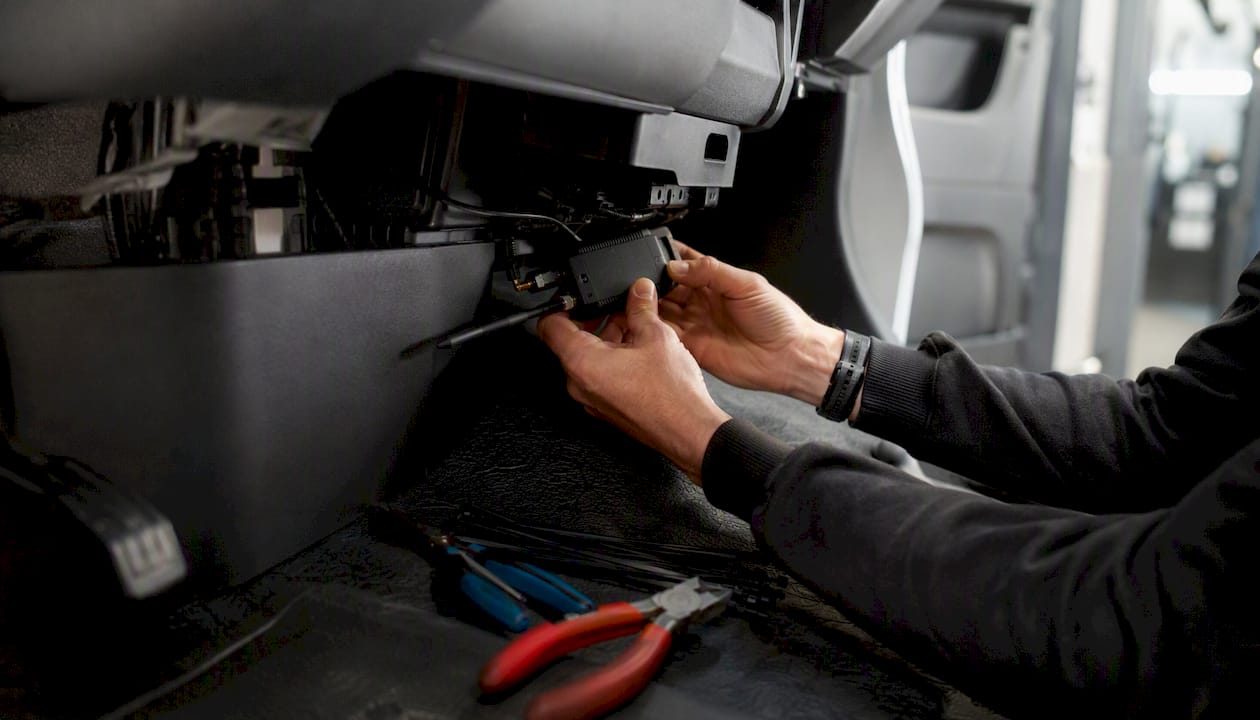
- Telematics and event reporting. GPS tracking with hard-braking, speeding, and distraction alerts gives insurers real-time evidence of driver behavior. Operational visibility tools like real-time tracking and analytics are features insurers use directly to evaluate risk quality.
- Driver screening and continuous MVR monitoring. Pre-hire MVR checks are table stakes. Continuous monitoring programs that flag violations between renewals are increasingly expected for fleets of any size.
- Documented safety training. Written training records, signed acknowledgment forms, and periodic refresher sessions demonstrate a culture of safety that underwriters can point to when pricing your account.
- Vehicle maintenance logs. Dated service records for brakes, tires, and lighting show that your vehicles are road-ready. A breakdown or accident tied to deferred maintenance can complicate a claim.
- Cargo securement and packaging standards. Written procedures for loading, securing, and handling cargo reduce both damage frequency and the cost of individual claims.
- Proof-of-delivery photos. Photo POD on every parcel reduces disputes about whether damage occurred in transit or at the delivery site. Carriers like LMS have made photo POD a standard operational feature precisely because it simplifies the evidence burden when a claim arises.
Pro Tip: Roll out telematics in phases — start with a pilot group of five to ten drivers, share the data transparently with your team, and address privacy concerns before fleet-wide deployment. Drivers who understand the program’s purpose are far more likely to accept it, and your retention numbers will reflect that.
For the largest underwriting credit, prioritize telematics first, followed by continuous MVR monitoring. These two programs address the two highest-frequency loss causes in last-mile operations: distracted or aggressive driving and undetected license issues.
How do claims work after a last-mile incident?
Speed and documentation quality determine how smoothly a claim resolves. When an incident occurs, your drivers and operations team should follow this sequence:
- Confirm everyone is safe and call emergency services if there are injuries.
- Secure the scene and prevent additional damage to cargo or vehicles.
- Photograph everything: vehicle positions, damage, road conditions, cargo state, and any visible injuries.
- Collect witness names and contact information.
- Obtain a police report number, even for minor incidents.
- Have the driver complete a written statement before the end of their shift.
- Notify your insurer or broker as soon as practicable — most policies require prompt reporting, and delays can complicate coverage.
When to report versus when to pay out of pocket: For minor customer property damage below your deductible, paying directly and documenting the resolution may be more cost-effective than filing a formal claim that affects your loss runs. For any bodily injury, significant vehicle damage, or cargo loss above your deductible, report immediately. Never delay reporting a bodily injury claim — late notice is one of the most common grounds for a coverage dispute.
To protect your subrogation rights, preserve all evidence of third-party fault: dashcam footage, delivery records, and any communications with the at-fault party. Your insurer may recover costs from a negligent third party, and that recovery can offset your loss history. Provide your carrier’s investigation team with complete documentation promptly, and instruct drivers not to admit fault or make settlement offers at the scene.
How do you buy last-mile delivery insurance step by step?
A well-prepared application moves through underwriting faster and produces more accurate quotes. Work through these steps before you submit:
- Inventory your fleet. List every vehicle by year, make, model, VIN, and GVW. Note which are owned, leased, or driver-owned.
- Compile your driver roster. Gather full legal names, license numbers, states of licensure, and hire dates for all drivers, including contractors.
- Pull Motor Vehicle Records. Most underwriters want MVRs for all drivers within the past three years.
- Summarize your claims history. Request loss runs covering three to five years from your current or prior carrier.
- List your contract and COI requirements. Note every partner that requires additional insured status, primary/non-contributory wording, or specific limits.
- Submit via an online quote platform or broker. Platforms like Diamondbackins let you enter fleet data, compare multiple carrier quotes side by side, and bind online.
- Review bind conditions. Underwriters may request additional documents before issuing a binder. Address these promptly to avoid coverage gaps.
- Obtain your COIs and endorsements. Confirm that all required additional insured endorsements are reflected on the issued certificates before your routes go live.
The documents underwriters most commonly request include vehicle registrations or titles, lease agreements, driver hire packets, sample partner contracts, loss runs, and proof of any telematics or safety program. For large-item or heavy-parcel operations, also prepare documentation of your cargo-handling procedures and any specialized equipment used for loading or delivery.
Pro Tip: Package your application as a single organized submission: fleet schedule, driver roster, loss runs, and a one-page summary of your operations (routes, cargo types, average daily stops, and any existing safety programs). Underwriters who receive complete files issue quotes faster and with fewer follow-up questions.
For a direct path to quotes, get your freight insurance quote through Diamondbackins’s online platform, where you can compare carriers and bind in minutes.
How Diamondbackins supports last-mile fleets
Diamondbackins is built for fleet managers who need coverage decisions made quickly, not after weeks of back-and-forth with a traditional broker. The platform’s core capabilities for last-mile operations include:
- Instant tailored quotes from multiple carriers, compared side by side on a single screen
- Specialty underwriting access for trucking, transportation, and last-mile delivery fleets
- Fast COI and endorsement issuance after binding, so you can meet partner requirements without delay
- A fully online process from data entry to policy binding, accessible any time
Here is how the process works for a fleet manager:
- Enter your fleet details, driver information, and coverage requirements on the Diamondbackins platform.
- Review tailored quotes from multiple carriers, with coverage terms and premiums displayed clearly.
- Select the program that fits your operations and bind online.
- Receive your policy documents, COIs, and endorsements digitally, ready to deliver to partners.
After binding, your account remains accessible for COI requests, endorsement changes, and renewal preparation. Claims support is available through the platform, and you can update fleet schedules or driver rosters as your operations grow.
Pro Tip: Use Diamondbackins’s multi-carrier comparison to evaluate not just premium but carrier financial strength ratings and claims-handling reputation. The lowest premium from a carrier with slow claims service can cost more in the long run than a slightly higher premium from a carrier with a strong track record.
For a broader view of trucking insurance solutions and how they apply to last-mile fleets specifically, Diamondbackins’s resource library covers coverage types, policy add-ons, and fleet management guidance in detail.
What tailored programs actually deliver for last-mile operators
Most fleet managers I speak with underestimate how much a tailored last-mile program changes their day-to-day operations, not just their risk profile. The difference between a generic commercial auto policy and a purpose-built last-mile program shows up in three concrete ways: COI delivery speed, claim severity, and renewal predictability.
When your policy is structured with the right endorsements from day one, a new partner’s COI request takes hours, not days. That speed is a competitive advantage in a market where retail and e-commerce partners move fast and expect their logistics providers to keep pace. Fleets that carry the right cargo limits and contractor endorsements also see lower out-of-pocket exposure when a claim does occur, because the coverage actually matches the operation. And at renewal, underwriters who have seen a full year of clean telematics data and documented safety training have a concrete basis for holding or improving your rates.
The right first step is a quick quote. It costs nothing, takes minutes with your fleet data in hand, and gives you a clear picture of what a properly structured program looks like for your specific operation.
Your last-mile fleet deserves coverage built for the job
Diamondbackins gives last-mile fleet managers a faster, more transparent path to the coverage their operations actually require. Instead of waiting days for a broker to manually shop your account, you enter your fleet details once and receive tailored quotes from multiple carriers, compared side by side, in minutes. COIs and endorsements are issued quickly after binding, so you can meet partner requirements and keep routes active without administrative delays.
The platform specializes in trucking and transportation coverage, which means the quote you receive reflects the real underwriting factors that matter for last-mile operations: vehicle class, driver records, cargo type, and contract requirements. For fleet managers who need trucking insurance explained in plain terms before they commit, Diamondbackins’s resource library walks through every coverage layer in detail.
Get your instant quote at Diamondbackins and have your COIs ready for your next partner contract.
Sources
- Shipping Insurance and Delivery Services | USPS
- Ryder Last Mile Delivery Solutions | Final Mile Logistics
This article is general information, not a substitute for advice from a qualified financial advisor. Consult a qualified financial professional about your own circumstances before acting on anything here.