
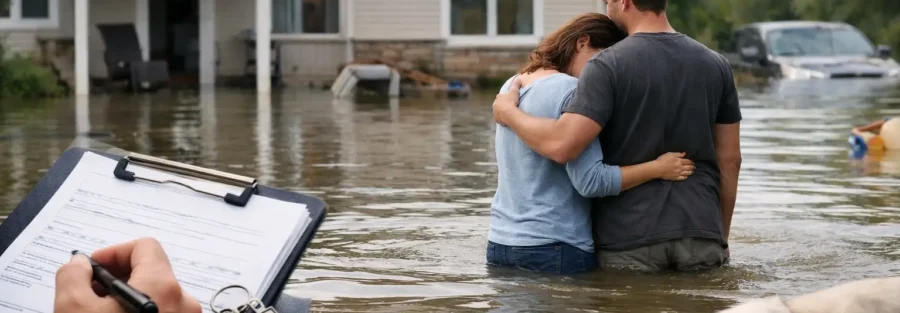
A few inches of water can cause thousands of dollars in damage to flooring, drywall, appliances, furniture, and electrical systems. Yet the answer to “is flood damage covered?” is often a surprise: standard homeowners insurance usually does not cover damage caused by a flood.
That distinction matters most when a storm is approaching, but that is also the worst time to find out your policy has a gap. Knowing what qualifies as a flood, what your current insurance may cover, and when to consider a separate flood policy can help you make a faster, more confident decision.
Is Flood Damage Covered by Homeowners Insurance?
In most cases, no. A typical homeowners policy excludes flood damage. Insurers generally define a flood as a temporary condition where water covers normally dry land and affects two or more properties or at least two acres. This can include water from overflowing rivers, storm surge, heavy rainfall, coastal waves, rapid snowmelt, or runoff that enters your home from outside.
For example, if heavy rain causes a nearby creek to overflow and water enters your first floor, that is generally flood damage. If a hurricane’s storm surge pushes water through your doors, that is generally flood damage too. Your homeowners policy may still pay for certain wind-related damage from the same storm, such as a roof damaged by wind, but it will typically not pay for the floodwater damage inside the home.
The source of the water is what matters. A storm does not automatically mean every type of loss is covered by the same policy.
Water Damage and Flood Damage Are Not the Same
Homeowners insurance can cover many sudden and accidental water losses. The key is that the water usually comes from inside the home or from a covered event affecting the structure.
A standard policy may cover a burst pipe, an overflowing washing machine, or water damage caused when wind-driven rain enters through a roof opening created by a covered storm. Coverage depends on the policy terms, the cause of the loss, and whether maintenance issues played a role.
Flooding is different because the water comes from outside and accumulates on the ground before entering the property. That is why a flooded basement after widespread rainfall may require flood insurance, even if the water damage looks similar to damage from a broken pipe.
Sewer or drain backup is another area where homeowners can get caught off guard. Many home policies do not automatically include this coverage, though it may be available as an endorsement for an added cost. A backup caused by a municipal sewer system or overwhelmed drainage system is not always treated as flood coverage, either. Read the policy language or ask before assuming one form of protection covers the other.
What Flood Insurance Can Help Pay For
A separate flood insurance policy is designed to cover physical damage caused directly by flooding. Policies vary by carrier and program, so limits, deductibles, exclusions, and optional features deserve careful attention.
Building coverage generally helps pay to repair the home itself and certain permanently installed items. Depending on your policy, this may include the foundation, electrical and plumbing systems, central air equipment, water heaters, built-in appliances, cabinets, and flooring.
Contents coverage is often purchased separately. It can help replace eligible personal belongings such as clothing, furniture, electronics, portable appliances, and some valuables. Choosing building coverage alone may protect the structure while leaving your possessions uninsured, so make sure your quote reflects what you actually need.
Basements require extra care. Flood policies may cover certain essential equipment and structural elements in a basement, but coverage for finished basement materials and personal property can be limited. If your basement is a living space, storage area, or home office, ask specifically how its contents and improvements would be handled after a flood.
Most flood policies also do not cover every expense associated with a loss. Temporary housing, lost income, landscaping, currency, and some belongings stored below ground level may have limited or no coverage. The right policy is not simply the lowest premium. It is the coverage that fits your property, risk, and financial exposure.
Who Should Consider Flood Coverage?
Flood insurance is often associated with high-risk flood zones, but flooding can happen well beyond those areas. Intense rain, blocked drainage, new construction, wildfire-scarred terrain, and changes in local development can all change how water moves through a neighborhood.
If you have a federally backed mortgage and your property is in a high-risk Special Flood Hazard Area, your lender may require flood insurance. That requirement is a clear signal to get coverage in place, but it is not the only reason to consider it.
Homeowners outside high-risk zones may still face significant losses from heavy rain or drainage failures. In some cases, their coverage may cost less than coverage for a higher-risk property. Risk is specific to the location, elevation, prior losses, building characteristics, and nearby water sources. A flood map is useful, but it is not a guarantee that flooding cannot happen at your address.
Renters and condo owners should consider coverage too. Renters generally need contents coverage for their belongings, since the building is insured by the owner. Condo owners may need coverage for personal property and for improvements inside their unit, depending on the association’s master policy. Small business owners should also review commercial flood options, particularly when inventory, equipment, or ground-floor operations could be exposed.
How Much Flood Insurance Do You Need?
Start with the cost to rebuild or repair the covered parts of your home, not its real estate market value. Construction costs, local labor rates, and the age of the property all affect the amount of building coverage that may make sense.
Then estimate what it would cost to replace your belongings. Walk room by room and think beyond large furniture. Electronics, clothing, kitchen items, tools, exercise equipment, and children’s belongings add up quickly. Photos, receipts, and a basic home inventory can make a future claim easier to document.
Your deductible also affects both your premium and your out-of-pocket cost after a claim. A higher deductible can reduce the cost of insurance, but you need enough savings to handle it if water enters your home. Compare options side by side instead of selecting a deductible based only on the lowest price.
Finally, ask about policy limits and whether excess flood coverage is available if your home’s rebuild cost or contents value is above the limits offered by a standard policy. Higher-value homes, coastal properties, and homes with finished lower levels may need a more customized approach.
Do Not Wait for the Forecast
Flood policies can have waiting periods before coverage begins. While exceptions may apply in specific situations, buying coverage after a named storm forms or after local flooding begins may be too late for that event. Waiting until water is already rising turns a coverage decision into a problem with very few options.
A practical review starts with your current homeowners declarations page. Confirm whether you have flood insurance, sewer backup coverage, and enough limits for your home and belongings. If you do not have a flood policy, compare quotes before the next weather alert puts pressure on the decision.
Diamondback Insurance makes it easier to compare flood insurance options online, so you can review available coverage and move forward without the usual back-and-forth. A few minutes spent checking your options now can give you more control when the forecast changes later.