
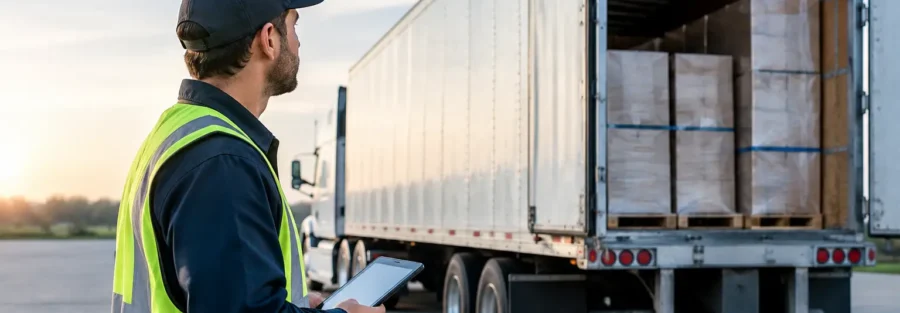
A load can disappear in the time it takes to stop for fuel, take a required break, or leave a trailer unattended at a crowded lot. Cargo theft is not only a freight problem. For a trucking business, it can mean missed delivery deadlines, unhappy shippers, damaged contracts, uninsured losses, and a sudden hit to cash flow.
The best response is not a single device or policy. It is a practical system: know where your exposure is highest, make theft harder to execute, train drivers to spot warning signs, and verify that your insurance matches the freight you actually haul.
Why cargo theft creates bigger business problems
Cargo theft includes more than a thief cutting a seal and taking product from a parked trailer. Criminals may steal an entire tractor-trailer, use fraudulent carrier identities to pick up a load, redirect freight through a fake broker arrangement, or obtain shipment details through compromised emails and load-board fraud.
The direct value of the cargo is often just the first loss. A carrier may also face detention, recovery, storage, towing, spoilage, customer chargebacks, legal expenses, and lost future business. If refrigerated goods, pharmaceuticals, electronics, alcohol, tobacco, or other high-value products are involved, the financial stakes can climb quickly.
The risk is not identical for every fleet. Long-haul operations face more overnight parking exposure. Small carriers may have fewer dispatch controls and less time to verify pickups. Owner-operators can be especially vulnerable when one driver is responsible for driving, paperwork, communication, and load security. The right prevention plan depends on your routes, commodity types, driver schedule, and operating model.
Where cargo theft risk is highest
Thieves look for predictable gaps. A loaded trailer parked close to a pickup location, a driver who shares location details publicly, or a rushed dispatch team that skips verification can create an opening. Theft is frequently concentrated around major freight corridors, warehouses, truck stops, unsecured drop yards, and locations where drivers must park because safe spaces are limited.
The first 24 to 48 hours after pickup can be particularly sensitive. Criminals know drivers may need fuel, food, or rest soon after loading. They also know that dispatch may not immediately notice a missed check-in when a load has just started moving.
Identity-based theft requires a different mindset. A thief may present convincing insurance certificates, carrier authority information, emails, or pickup documents. They do not need to break into a trailer if they can persuade a shipper, broker, or warehouse that they are the assigned carrier. Verification needs to happen before the load leaves the facility, not after a delivery appointment is missed.
Build a cargo theft prevention routine
A prevention routine should be simple enough to follow on a busy day. Complicated rules that drivers and dispatchers cannot use under pressure will not protect a load. Focus first on controls that reduce opportunity and improve visibility.
Secure the vehicle, trailer, and parking decision
Drivers should avoid leaving a loaded trailer unattended whenever possible, especially soon after pickup. When a stop is necessary, use well-lit, controlled parking with cameras, active foot traffic, and secure access when available. A destination parking plan should be part of trip planning, not a decision made after a driver reaches their hours-of-service limit.
High-security seals, kingpin locks, glad-hand locks, door locks, and tracking equipment can add layers of protection. None is foolproof. Their value is that they slow down theft, create evidence of tampering, and increase the chance that a driver or dispatcher catches a problem early. Equipment should be inspected before departure and at every stop, with irregularities reported immediately.
Keep load information on a need-to-know basis
Posting live load details, trailer numbers, delivery dates, or routes on public social media can expose a shipment. The same principle applies inside the business. Give drivers and employees the information they need to do their jobs, but do not circulate high-value shipment details unnecessarily.
Dispatch should use established contact methods for changes to delivery locations, pickup instructions, bank information, or carrier assignments. A last-minute email asking a driver to redirect a load deserves confirmation through a known phone number or another verified channel. Do not rely solely on the contact information included in the unexpected message.
Verify every handoff
For brokers, shippers, warehouses, and carriers, pickup verification is one of the strongest fraud controls. Confirm the carrier’s authority, contact information, truck and trailer identifiers, driver identity, and assignment details. Be cautious when a carrier suddenly changes its phone number, email domain, equipment, or payment instructions shortly before pickup.
Drivers should know that they can pause and call dispatch if paperwork, instructions, or a warehouse interaction does not match the assigned load. A short delay is better than releasing freight to an unauthorized party or following a fraudulent reroute.
Create clear check-in expectations
Regular check-ins are useful when they are meaningful. For higher-risk loads, dispatch may require confirmation after pickup, at scheduled stops, and when the driver is within a defined distance of delivery. GPS tracking and geofencing can flag unexpected movement or extended stops, but someone must be responsible for responding to alerts.
Avoid treating tracking as a substitute for communication. Devices can fail, batteries can die, and a location ping does not explain why a truck has stopped. A reliable process combines technology with a real person who knows when to escalate.
What drivers should do if theft or fraud is suspected
Speed matters. If a driver sees a broken seal, missing trailer, suspicious surveillance, or possible fraud, the first priority is personal safety. Drivers should not confront suspected thieves or attempt to recover freight on their own.
After moving to a safe location, notify law enforcement and follow company reporting procedures. Preserve evidence by taking photos when safe, recording the last known location and time, keeping bills of lading and communications, and noting truck, trailer, seal, or suspect vehicle details. Dispatch should notify the shipper or broker promptly, activate any tracking or recovery resources, and report the loss to the insurer or claims contact as required.
Fast, accurate reporting can support recovery efforts and prevent confusion later. Do not guess about the value, cause, or scope of the loss in early communications. Share what is known, document what is uncertain, and keep a clear timeline as facts develop.
Insurance considerations for cargo theft
A standard commercial auto policy is not designed to replace the value of a customer’s freight. Motor truck cargo coverage is commonly the policy type that addresses a motor carrier’s legal liability for cargo being transported, subject to its terms, limits, deductibles, exclusions, and conditions. Coverage can vary substantially between policies.
That distinction matters because the commodity, cargo value, temperature requirements, theft protections, and ownership of the goods may affect what coverage is available and how a claim is handled. Some policies may have limits for certain high-value goods or exclusions related to unattended vehicles, employee dishonesty, mysterious disappearance, or specific commodities. Freight left in a trailer or yard may create different questions than freight actively moving under a bill of lading.
Ask direct questions before binding coverage. Is the limit high enough for the largest load you haul, not just the average load? Does the policy cover the commodities and territories on your regular lanes? Are there security conditions for electronics, pharmaceuticals, or other targeted products? Does the deductible fit your business’s ability to absorb a loss? If you use subcontractors or owner-operators, how does the policy address their loads and equipment?
A lower premium can be attractive, but a policy with a limit that falls short of a typical shipment may leave the business exposed at the worst possible time. The goal is not to buy the most coverage blindly. It is to compare options based on the freight, contracts, routes, and risk controls your operation actually has.
Diamondback Insurance helps eligible trucking businesses compare coverage options and move toward an online quote and purchase process without the usual back-and-forth. Before choosing a policy, have your commodity list, typical shipment values, operating radius, prior loss history, and required shipper limits ready. Better information leads to more useful quotes.
Treat prevention as part of operations
Cargo theft prevention works best when it is built into dispatch, driver training, customer communication, and insurance review. Revisit procedures after a new customer, route, commodity, or subcontractor changes your exposure. A fleet that hauls local building supplies has different needs from one moving refrigerated food across state lines.
The practical next step is to identify your highest-value loads and your most vulnerable stops, then close the most obvious gaps before the next pickup. A few consistent habits can protect more than freight: they protect your customer relationships, operating authority, and the revenue your trucks work hard to earn.