

Yes, you can get a fully tailored cargo insurance quote online right now, and in most cases you can bind it without ever picking up the phone. Expect the platform to show you coverage limits, a premium estimate, and available endorsements within minutes. Have your DOT number, equipment list, lane footprint, and recent loss runs ready before you start, since underwriters move faster with clean documentation. Once you see bindable offers side by side, compare them and lock in coverage the same day.
TL;DR:
- Cargo insurance limits typically start at $100,000 for general freight, but higher-value loads like electronics or pharmaceuticals require endorsements and larger coverage.
- Endorsements such as reefer breakdown, hired auto cargo, and pollution cleanup are essential for high-value, temperature-sensitive, or contaminated cargo, and increase premiums accordingly.
- Preparing and submitting detailed documentation upfront, including loss runs and equipment lists, significantly speeds up the online quoting and underwriting process.
- Comparing quotes requires checking coverage limits, endorsements, deductibles, turnaround time for certificates, and carrier admitting status to ensure optimal protection.
- Using platforms like DiamondBack offers multiple tailored quotes side-by-side, simplifying the selection process and reducing delays caused by paperwork or insufficient risk documentation.
Table of Contents
- What Does Motor Truck Cargo Insurance Actually Cover?
- Who Actually Needs Cargo Insurance?
- Which Coverage Types and Endorsements Matter Most?
- What Drives Cargo Insurance Costs?
- How Does the Online Quote Process Work Step by Step?
- How Do You Compare Quotes Before You Bind?
- Why DiamondBack Insurance Simplifies the Cargo Quote Process
- Get Your Cargo Coverage Sorted Without the Runaround
- Why the Real Bottleneck Isn’t the Quote, It’s Your Paperwork
- Sources
What Does Motor Truck Cargo Insurance Actually Cover?
Motor truck cargo insurance protects the property you’re hauling for someone else while it’s in transit, not your truck or trailer. It’s a distinct product from primary auto liability, which covers bodily injury and property damage you cause to others on the road, and from cargo liability language buried in a broker or shipper contract, which sets a dollar threshold you’re contractually obligated to carry.
A standard policy typically responds to loss from collision, fire, theft, and load-shift or strike damage. It’s built around what happens to freight, not what happens to your rig.
Coverage isn’t unlimited, though. Carriers commonly exclude inherent vice, wear-and-tear, and reefer breakdown unless you’ve added a specific endorsement.
Common exclusions to watch for:
- Inherent vice or natural deterioration of the cargo itself
- Mechanical breakdown of refrigeration units without a reefer endorsement
- Certain pollution or contamination events
- Employee dishonesty, unless infidelity coverage is added
Who Actually Needs Cargo Insurance?
If you’re hauling freight that belongs to somebody else, this coverage isn’t optional in any practical sense. For-hire truckers and owner-operators sit at the center of the market, since they carry contractual exposure the moment a shipper’s goods load onto their trailer.
The vehicle type matters, too. Box trucks, dry van trailers, reefers, and car haulers each carry different risk profiles, and insurers price them accordingly.
Operations that should prioritize cargo coverage include:
- Owner-operators signing with brokers or shippers who require proof of coverage before dispatch
- Fleets running reefer units carrying temperature-sensitive freight
- Car haulers and flatbeds moving high-value, exposed cargo
- Any carrier whose broker contract sets a minimum cargo limit as a condition of the load
Most broker agreements spell out a minimum limit in the fine print, which means the contract itself makes coverage mandatory even when no law explicitly requires it for your specific operation.
Which Coverage Types and Endorsements Matter Most?
A primary motor truck cargo policy is the baseline, but the endorsements you layer on top are usually what determine whether a claim actually gets paid in full. Standard cargo limits often start around $100,000 for general dry-van freight, and that number climbs fast once specialty commodities enter the picture.
The endorsements worth understanding:
- Hired auto cargo covers freight moved in a vehicle you’ve rented or leased rather than one you own outright.
- Reefer breakdown picks up spoilage losses when refrigeration equipment fails, a gap the base policy typically won’t touch.
- Infidelity/dishonesty coverage protects against theft or fraud committed by your own drivers or staff.
- Pollution cleanup addresses contamination costs from a spill or leak during transport, which general cargo forms usually exclude.
You should raise your limits or add endorsements when the freight itself justifies it. Electronics, pharmaceuticals, and other high-value commodities routinely exceed the $100,000 baseline, and a single load could wipe out a policy that wasn’t sized for it. Reefer operators and auto haulers face similar math. Every endorsement you add typically raises the premium somewhat, but it also widens what the policy will actually pay when something goes wrong.
Pro Tip: When you fill out the quote application, name your highest-value commodities explicitly rather than lumping everything under “general freight.” Underwriters price to the risk they can see, and an unnamed high-value load is the fastest way to get a claim disputed later.
Some carriers also offer transactional, pay-as-you-go cargo coverage tied to load boards, which can work out cheaper for owner-operators who haul intermittently rather than running a consistent annual book of business.
What Drives Cargo Insurance Costs?
Premiums swing on a handful of variables, and understanding them helps you judge whether the quote in front of you is actually competitive. The type and declared value of your cargo matters most. Hauling produce is priced differently than hauling electronics or pharmaceuticals.
Other major cost drivers include:
- Operating radius and total annual mileage
- Loss history over the past three to five years
- Deductible level chosen
- Vehicle and trailer type, with reefers and auto haulers generally pricing higher
- Endorsements added, since each one widens the insurer’s exposure
Statistic Callout: Baseline general-freight cargo limits commonly start around $100,000, with premiums scaling from there depending on commodity risk and claims history rather than following one fixed rate.
You can bring the number down without gutting your protection. Bundling cargo with your primary auto liability policy often earns a discount, safety technology like telematics and dash cams can improve your risk profile over time, and accepting a higher deductible lowers your monthly cost if your operation can absorb more risk upfront. None of these guarantee a specific rate, since carriers weigh your full file, but they’re the levers that actually move the number.
How Does the Online Quote Process Work Step by Step?
Getting from a blank quote form to a bindable cargo policy usually takes three stages, and the speed depends almost entirely on how prepared you are before you start.
- Gather your documentation first. You’ll need your DOT number, a full equipment list with VINs and unit types, your operating radius or lane footprint, and loss runs from the past several years. Platforms that work with appointed producers can quote the full trucking stack once this information is in hand.
- Submit commodity and safety details. List the types of freight you haul, average cargo value per load, and any safety devices installed on your trucks. The quote screen should return an estimate that reflects these specifics, not a generic placeholder number.
- Understand the timeline before you bind. Instant quotes give you a preliminary estimate right away, but full underwriting to a bindable policy commonly takes one to three business days once a human reviews your file. Some brokers issue a certificate of insurance within minutes for lower-risk accounts, while higher-risk operations need that brief underwriting window.
Pro Tip: Upload your loss runs in the same session you request the quote, even if the form doesn’t require it upfront. Missing loss history is the single most common reason a “instant” quote turns into a multi-day delay.
Start the process on a dedicated freight insurance quote tool so the platform can route your equipment list and lane data straight to underwriting without a second round of paperwork.
How Do You Compare Quotes Before You Bind?
Once you have two or three bindable offers in front of you, the comparison shouldn’t take long if you know what to check. Start with the limits themselves, then work through the endorsements, deductible, and how fast a certificate actually shows up once you pay.
Run through this before signing anything:
- Does the limit match or exceed what your broker or shipper contracts require?
- Are reefer breakdown, hired auto cargo, or pollution cleanup endorsed if your freight needs them?
- What’s the deductible, and does it change meaningfully across the offers?
- How quickly is the certificate of insurance issued after binding?
- Is the underlying carrier admitted in your operating states?
- What does the platform’s claims process look like in practice?
| Comparison factor | Why it matters |
|---|---|
| Coverage limit | Must meet or exceed broker/shipper contract minimums |
| Endorsements included | Determines whether reefer, theft-in-terminal, or pollution losses are actually paid |
| Deductible | Affects your out-of-pocket cost per claim, not just your premium |
| Certificate turnaround | Same-day issuance keeps you dispatch-ready |
| Carrier admitted status | Non-admitted carriers can complicate claims in some states |
Ask directly whether the policy covers loading and unloading, theft while cargo sits at a terminal, and reefer breakdown specifically. A vague answer or a quote that arrives without a clear limit and deductible spelled out is a signal to ask more questions or look elsewhere.
Why DiamondBack Insurance Simplifies the Cargo Quote Process
DiamondBack Insurance built its platform around exactly the workflow described above. It asks for your DOT number, equipment list, and lane footprint, then returns multiple tailored trucking and cargo quotes pulled from a range of carrier options rather than a single locked-in rate.
That side-by-side format matters because cargo pricing varies so much by commodity and radius that a single quote rarely tells you whether you’re getting a fair deal. DiamondBack’s approach lets you see multiple bindable offers at once, compare limits and deductibles directly, and move forward with the one that actually fits your freight instead of guessing.
Once you submit your loss runs and equipment details, the platform routes that information straight into underwriting. Preliminary numbers appear almost immediately, and a full trucking company insurance quote with certificate issuance follows once underwriting confirms the details. For most for-hire operators, that means going from blank application to a certificate in hand within the same short window described earlier in this guide, rather than waiting on a callback.
Get Your Cargo Coverage Sorted Without the Runaround
If you’ve been putting off shopping your cargo policy because the process felt like it demanded a dozen phone calls and a week of waiting, that’s not how it has to work anymore. Diamondbackins built its platform specifically so for-hire truckers and owner-operators can submit their DOT number, equipment list, and loss runs once and see multiple bindable cargo options side by side, without chasing down separate quotes from separate producers.
That matters most if you’re running lanes with reefer units, high-value freight, or broker contracts that specify a minimum cargo limit, since a single generic quote often misses what your specific operation actually needs. Diamondbackins is built for exactly that kind of comparison. You see limits, deductibles, and endorsements laid out clearly, and you can bind the one that fits without waiting on a return call.
Head to the truck insurance quote page and enter your DOT number and equipment details to see your tailored cargo options today.
Why the Real Bottleneck Isn’t the Quote, It’s Your Paperwork
Everyone treats the online quote as the hard part of buying cargo insurance. It isn’t. The quote engines are fast, and multiple platforms can return a workable estimate in under a minute. The actual bottleneck sits with the trucker or fleet manager who hasn’t pulled their loss runs in two years and doesn’t have a clean equipment list ready to upload.
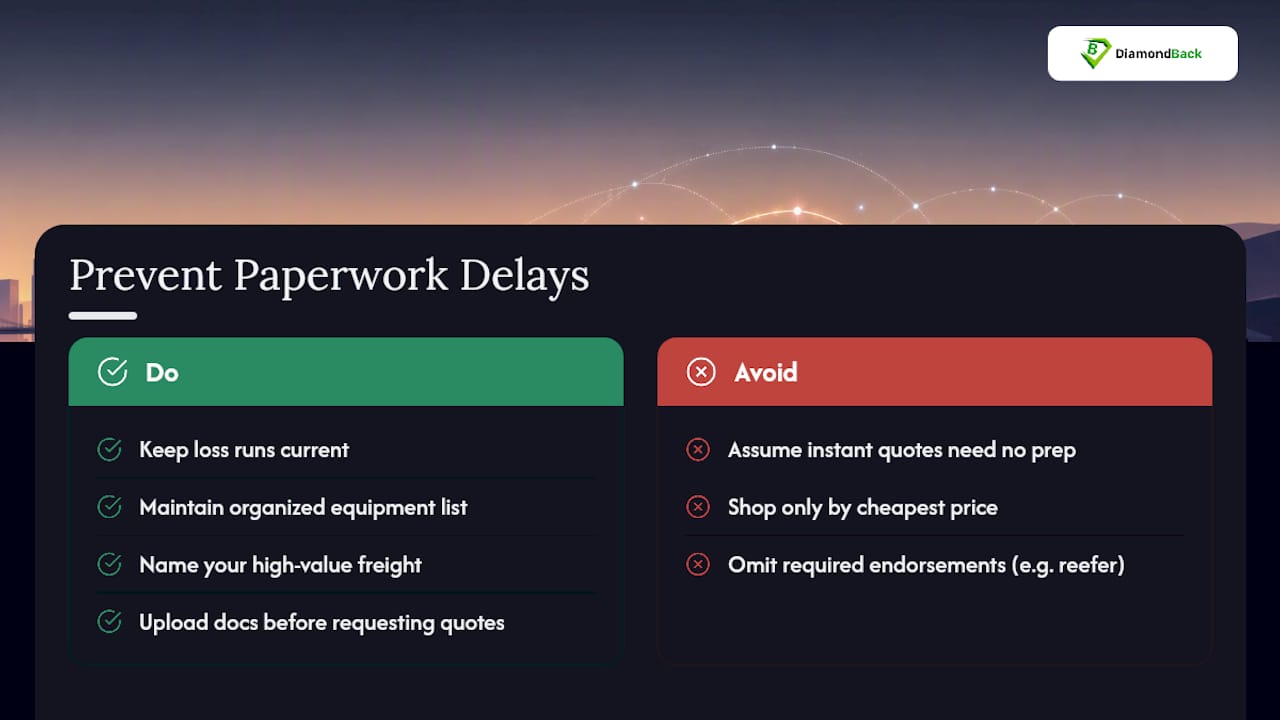
That gap explains why so many people complain that “instant” quotes turn into three days of back-and-forth. It’s rarely the platform’s fault. Underwriters need specific documentation to price risk accurately, and when that documentation shows up piecemeal, the timeline stretches every time. The fix isn’t a better algorithm. It’s a trucker who keeps loss runs current and equipment records organized before they ever open a quote form.
There’s also a quieter mistake worth naming: treating the cheapest quote as the best one. A policy that skips the reefer breakdown endorsement or caps out at the bare minimum limit your broker requires can look attractive on price and still leave you exposed on the one load that actually matters. The smarter move is to build your equipment and commodity list honestly, name your high-value freight, and let the endorsements follow from what you actually haul rather than shopping purely on the bottom-line number.
— Vladimir
Sources
- Commercial Trucking Insurance Quotes | Dispatched
- Commercial Truck Insurance Quotes | Insureon
- Truckinfo