
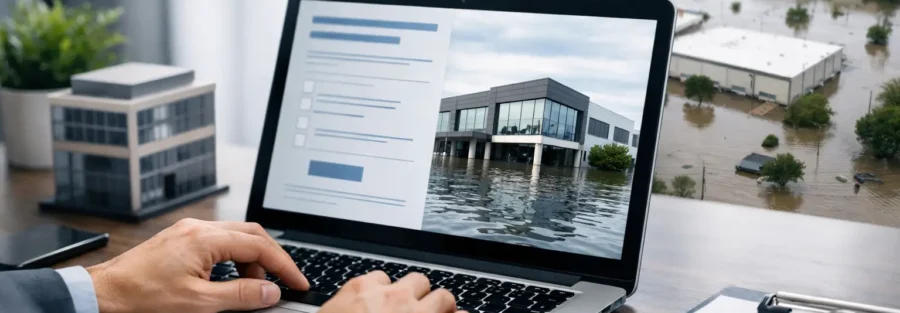
A flooded storefront, warehouse, office, or rental building can interrupt operations long after the water recedes. With flood insurance for commercial properties, quote and bind online options give business owners a faster way to review coverage, compare offers, and put a policy in place without waiting through a lengthy offline process.
For many commercial property owners, speed matters. A lender may require flood coverage before closing. A lease may shift insurance responsibilities to the tenant. Or a recent storm may make the risk feel far more immediate. The goal is not simply to buy a policy quickly. It is to get the right information, see available options, and make a clear decision before a flood creates an expensive gap.
Why Commercial Flood Coverage Needs Its Own Review
Standard commercial property insurance often does not cover damage caused by flooding. Water damage from a burst pipe may be covered under a property policy, but rising water, storm surge, overflowing waterways, and similar flood events are usually handled differently. Assuming a business owners policy will respond can lead to a costly surprise.
Commercial flood insurance can help protect the building, business personal property, or both, depending on the policy and the insured’s needs. For a retail shop, that may mean inventory, fixtures, and equipment. For an office, it may include furniture, computers, and other contents. For a landlord, the primary concern may be the building itself and the cost to repair it after a covered loss.
The right structure depends on who owns the building, what is inside it, whether the property is leased, and how easily the business could reopen after a flood. A restaurant with refrigeration equipment has a different exposure than a small professional office on an upper floor. A contractor storing tools and materials at a ground-level warehouse has different priorities than an investor with a vacant commercial unit.
How to Quote and Bind Commercial Flood Insurance Online
Online quoting reduces the back-and-forth that can make commercial insurance shopping frustrating. Instead of calling several carriers, repeating property details, and waiting for responses, you can provide key information once and view available offers in one place.
A typical quote request starts with the property address, building type, occupancy, construction details, year built, and the coverage limits you need. You may also be asked about the building’s foundation, number of floors, prior flood losses, mortgage requirements, and the value of business contents. Accurate information matters because even small property details can affect eligibility, pricing, and the coverage offered.
Once quotes are available, compare more than the premium. Look at the building and contents limits, deductible, coverage terms, exclusions, waiting period, and whether the policy meets a lender’s requirements. The lowest price can be a good value, but only if the policy provides protection that matches the exposure.
If you choose an option, binding online means completing the purchase process and submitting any required payment or documents electronically. Depending on the carrier and property, a policy may be available to bind quickly. Other situations may require additional underwriting review. Properties with unusual construction, significant prior losses, high values, or complex occupancy can take more time, so it is smart to begin before a deadline becomes urgent.
What Affects a Commercial Flood Insurance Quote?
Flood insurance pricing is not based on one factor. Location is a major consideration, but it is not the whole story. A building outside a high-risk flood zone can still flood, and a property in a higher-risk area may have different pricing depending on its elevation, construction, occupancy, and coverage selection.
The coverage amount you choose also drives cost. Insuring a building for too little can leave the owner responsible for repair expenses after a loss. Insuring more than the property’s eligible value may not add meaningful protection. For contents, think beyond desks and shelving. Include equipment, inventory, machinery, supplies, and other property that would need to be replaced to resume operations.
Your deductible is another practical decision. A higher deductible can lower the premium, but it increases the amount your business must pay before coverage responds. That trade-off may work for a business with strong cash reserves. It may be less comfortable for an owner who needs predictable post-loss costs.
Prior claims, property condition, and the purpose of the building can also affect availability and pricing. A commercial condominium unit, a warehouse, a medical office, and a mixed-use building should not be treated as identical risks. Clear, complete property information helps produce a quote you can rely on.
Compare Coverage, Not Just Monthly Cost
Fast online insurance shopping should still leave room for careful comparison. Before buying, confirm whether the quote covers the building, contents, or both. If you are a tenant, your landlord’s building policy may not protect your inventory and equipment. If you own the property, contents coverage may still be necessary if your business operates from the location.
Pay close attention to the deductible and the policy’s effective date. Many flood policies have waiting periods, and coverage generally cannot be purchased after water is already threatening the property and expected to cover that event. There can be exceptions in specific situations, including certain loan-related purchases, but you should review the terms before relying on a start date.
Also ask whether the building has below-grade areas, storage spaces, or improvements that need special attention. Some items and locations may have limited coverage or separate rules. Insurance works best when expectations are clear before a claim, not when an owner is standing in a damaged building trying to interpret policy language.
A Quick Pre-Quote Checklist
Have the property address, building details, estimated building value, contents value, and mortgage information ready. If you have an existing flood policy, keep the declarations page nearby so you can compare limits and deductibles accurately. For leased space, review your lease to understand what insurance you are required to carry.
It also helps to know your decision deadline. If a loan closing, lease requirement, or renewal date is approaching, start the quote process early enough to account for any carrier review or waiting period.
When Online Binding Makes the Most Sense
Online quote and bind tools are especially useful when the property details are straightforward and you need to move quickly. They are a practical fit for small business owners, landlords, and commercial operators who want to compare options without scheduling multiple calls.
They can also be valuable at renewal. A renewal is a natural time to check whether your current limits still reflect the building’s value, new equipment, added inventory, or changes to the way the space is used. If your business has grown, an old policy may no longer match the exposure.
That said, speed should not replace accuracy. If a quote seems unusually low, review what is included before purchasing. If the property is unusual or the coverage requirements are complex, more underwriting questions may be necessary. A clear online process is useful because it makes comparison easier, not because every commercial risk should be treated as simple.
Get Coverage Moving Before the Next Storm
Flood risk is not limited to coastal properties or designated high-risk zones. Heavy rain, overwhelmed drainage systems, nearby construction, creek overflow, and storm surge can affect commercial properties in many parts of the country. The financial impact can include damaged structures and contents, lost operating time, cleanup costs, and delayed reopening.
Diamondback Insurance helps businesses compare flood insurance options online so they can review coverage and move toward purchase without the traditional paperwork chase. Enter accurate property details, compare the offers available to you, and choose coverage based on your building, contents, budget, and timeline.
A flood policy is easiest to buy before it feels urgent. Take a few minutes to quote your commercial property now, while you have time to compare the details and make the decision on your terms.