

Figuring out how to choose transportation insurance can feel like a moving target. Coverage types overlap, legal requirements shift by cargo and route, and a single wrong decision can expose your operation to serious financial risk. Whether you manage a small fleet, drive as an owner-operator, or work as a freight broker, the policy you choose needs to match your actual operation, not just satisfy the minimum on paper. This guide walks you through every layer of that decision, from understanding your coverage options to avoiding the compliance mistakes that shut operations down overnight.
Table of Contents
- Key takeaways
- How to choose transportation insurance: coverage types explained
- Assessing your operation before selecting coverage
- Comparing providers and policies: what actually matters
- Filing, compliance, and maintaining coverage properly
- Common pitfalls when selecting and managing transportation insurance
- My take on what actually matters when choosing transportation insurance
- Find the right transportation insurance with Diamondbackins
- FAQ
Key takeaways
| Point | Details |
|---|---|
| Match coverage to operations | Select limits and endorsements based on your vehicle type, cargo, and routes, not just federal minimums. |
| Know your legal minimums | FMCSA minimums range from $300,000 to $5,000,000 depending on cargo, but industry standards frequently exceed those floors. |
| Continuous coverage is non-negotiable | A single day without an active filing suspends your operating authority automatically. |
| Specialize your provider search | Insurers with trucking expertise handle claims faster and file compliance forms correctly. |
| Document everything from day one | Complete records of incidents, cargo, and routes protect you when a claim is disputed. |
How to choose transportation insurance: coverage types explained
Before you can compare policies, you need a clear picture of what each coverage type actually does. Most transportation operations require a combination of coverages, not a single policy.
Commercial auto liability is the starting point for any motor carrier. It pays for bodily injury and property damage you cause to others in an accident. Physical damage coverage, which includes collision and comprehensive, protects your own vehicle from accident damage, theft, and weather events. These two work together, but they are priced and underwritten separately, so understand both before you commit.
Cargo insurance protects the freight you haul. It is not federally required for most carriers, but shippers and brokers routinely require coverage between $100,000 and $250,000 per load, and high-value freight often demands higher limits. Household goods carriers face federally mandated minimums. If you plan to haul regulated commodities, check those specific requirements before assuming a standard cargo policy covers you.
Beyond the basics, there are several specialized coverages worth knowing:
Hired and non-owned auto (HNOA) covers vehicles your business uses but does not own, including rented trucks or employee-owned vehicles driven for work purposes. Contingent cargo insurance is primarily used by freight brokers. It acts as a backup when a carrier’s policy is insufficient or denied, and legal changes have increased broker exposure to negligent carrier selection claims, making this coverage more relevant than ever. Occupational accident insurance provides benefits similar to workers’ compensation for independent contractors who are not covered under a traditional employer policy.
Pro Tip: Transportation expense coverage, which reimburses daily rental costs during a covered loss, typically caps at $30 to $50 per day with a 30-day maximum. Operating costs like fuel and tolls are excluded. Factor this into your planning if your operation cannot afford downtime.
Assessing your operation before selecting coverage
Selecting transportation coverage without first auditing your own operation is one of the most common and expensive mistakes in this industry. Your coverage needs are determined by what you haul, where you drive, who drives, and how often vehicles are on the road.
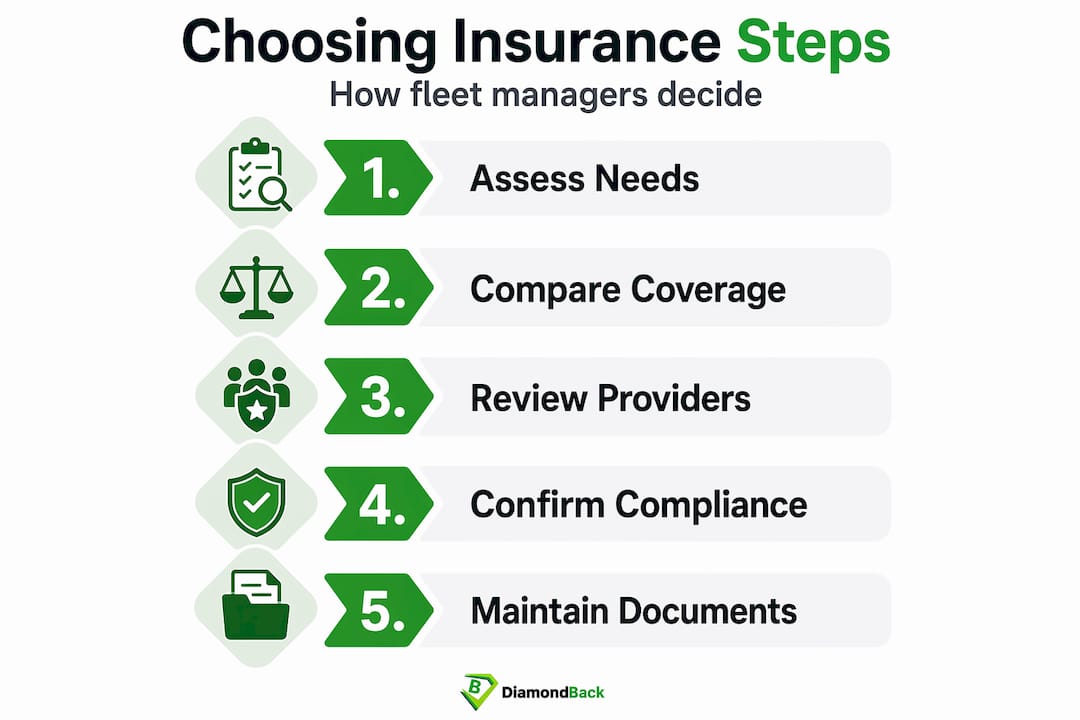
Start with a clear-eyed assessment by working through these questions in order:
- What vehicles are in your fleet? The type, age, weight, and value of your vehicles affect both what coverage you need and what it will cost. Review factors affecting truck insurance rates to understand how vehicle specifics translate directly into premium calculations.
- Who drives those vehicles? Driver age, years of experience, MVR history, and CDL status all affect your risk profile. Failing to disclose a driver with a poor record voids coverage the moment a claim involves that person.
- What cargo do you haul? Refrigerated goods, hazardous materials, electronics, and general dry freight all carry different risk profiles and may trigger different minimum coverage requirements.
- What routes do you operate? Interstate operations fall under FMCSA jurisdiction. Intrastate operations follow state-level rules, which vary significantly. Your routes determine which regulations apply to you.
- Is vehicle use personal or commercial? A personal auto policy will not respond to an accident that happens while a vehicle is being used for commercial purposes. Matching business use to your declared policy purpose is non-negotiable.
Pro Tip: If you use subcontracted drivers or lease operators, confirm in writing who carries primary coverage for each vehicle and under what circumstances. Assumed coverage arrangements are a leading source of uninsured gaps.
Evaluating cargo type and route together also matters for choosing the right liability limits. A carrier hauling bulk hazardous materials across state lines faces a regulatory and risk environment entirely different from a regional dry van operator. Your insurance needs to reflect that reality.
Comparing providers and policies: what actually matters
The most dangerous assumption in selecting transportation coverage is that the cheapest premium reflects adequate protection. Price matters, but it is one variable in a larger equation.

Providers with trucking industry expertise handle claims faster, file compliance forms correctly, and structure policies that account for the specific exclusions and endorsements your operation needs. A general commercial auto insurer may not understand how to handle a cargo claim under a bill of lading dispute, but a specialist does.
When you evaluate insurers, focus on these areas:
Claims handling speed and process. Ask how long average claims take to resolve and whether the insurer assigns a dedicated adjuster to transportation claims. A slow claims process means your truck sits idle longer. That is a direct revenue loss.
Financial stability ratings. Check AM Best ratings for any insurer you consider. A carrier rated A or better has the financial strength to pay large claims without dispute. Avoid unrated or poorly rated carriers regardless of how low their premium looks.
Coverage inclusions and exclusions. Read the policy language on exclusions carefully. Some policies exclude specific cargo types, certain geographic zones, or drivers under a certain age. An essential questions checklist can help you avoid signing a policy that leaves you exposed in exactly the scenarios you need coverage for.
Industry standard limits versus legal minimums. FMCSA minimums for general freight start at $750,000, with hazardous materials potentially requiring up to $5,000,000. But many brokers and shippers require $1 million in liability before they will assign loads to a carrier. Operating at the legal minimum can limit your freight access significantly.
Safe driving credits and loyalty programs. Some specialized trucking insurers offer premium credits for verified safety programs, dash cam use, and clean MVR histories. Over a 12-month policy period, those credits add up.
Filing, compliance, and maintaining coverage properly
Choosing the right policy is only half the work. The other half is managing it correctly so your operating authority stays intact and your claims get paid.
For interstate motor carriers, FMCSA requires active insurance filings at all times. The two primary forms are the BMC-91 (or BMC-91X for excess liability) and the BMC-84, which covers freight broker bonds. Your insurer files these on your behalf, but you are responsible for confirming they are active and accurate.
| Filing Form | Who It Applies To | What It Covers |
|---|---|---|
| BMC-91 / BMC-91X | Motor carriers (for-hire) | Primary liability insurance on file with FMCSA |
| BMC-84 | Freight brokers and forwarders | Surety bond or trust fund requirement ($75,000) |
| MCS-90 | Motor carriers (for-hire) | Endorsement ensuring public liability coverage meets minimums |
Continuous coverage without lapses is not just good practice. A single day without an active filing automatically suspends your operating authority. When switching insurers, your new policy must be filed and active before your old policy cancels. Never assume the timing works out on its own.
Documentation and prompt reporting also protect you when claims arise. Complete BOL records, damage reports, and invoices speed up claim resolution and reduce the chance of a dispute. Build a reporting process into your operations before you ever need to use it.
Common pitfalls when selecting and managing transportation insurance
Knowing what to look for in a policy matters. Knowing what to avoid matters just as much.
Underinsurance is the most common and costly mistake. Operating at federal minimums may be legal, but a serious accident involving injuries, cargo loss, and property damage can exceed those limits quickly. Reviewing how much insurance your operation truly needs gives you a clearer picture of where your real exposure sits.
Failing to disclose all drivers and uses is a policy-voiding mistake. Insurers underwrite based on the information you provide. If a driver not listed on your policy causes an accident, or if a vehicle is used in a way not disclosed on your application, the insurer has grounds to deny the claim entirely. Be thorough, and update your policy whenever your fleet or driver roster changes.
High deductibles can create cash flow problems. Reducing your premium by raising your deductible only makes sense if you have the reserves to cover that deductible when a loss occurs. A $10,000 deductible on a cargo claim is manageable for a large fleet. It can be financially damaging for a single-truck operator.
Pro Tip: If you are a freight broker, use contingent cargo coverage as a genuine backup, not as a replacement for requiring solid carrier insurance. Maintain detailed incident documentation from the moment a problem arises to maximize your recovery under contingent coverage.
My take on what actually matters when choosing transportation insurance
I’ve spent years watching operators make the same expensive decisions over and over, and the pattern is consistent. The first mistake is treating insurance as a compliance checkbox rather than a business protection tool. Operators find the cheapest policy that satisfies the legal minimum, file it, and move on. Then a serious accident happens and they discover their limits were insufficient, their documentation was incomplete, or a driver exclusion they never read left them uncovered.
What I’ve found is that the best transportation insurance decisions start with an honest operational audit. Not what you hope your operation looks like, but what it actually looks like. Every driver who touches a vehicle, every cargo type you haul, every route you run. The policy has to reflect that reality. A customized insurance fit for your specific fleet and operation is not a luxury. It is how you avoid paying out of pocket for a claim your insurer refuses to honor.
I’ve also seen how much the choice of provider matters in a real dispute. A specialist insurer who knows how cargo claims work under a bill of lading will resolve things faster and more fairly than a general commercial insurer piecing it together for the first time. The premium difference is rarely significant enough to justify going with the generalist.
My honest advice: spend as much time evaluating the insurer as you spend evaluating the premium. Ask about claims response times. Ask who files your FMCSA forms and how they handle a lapse if you switch. Ask for references from other trucking operations. The answers reveal far more than a quote sheet ever will.
— Vladimir
Find the right transportation insurance with Diamondbackins
Sorting through coverage options, compliance requirements, and provider comparisons takes time that most fleet managers and owner-operators simply do not have. Diamondbackins was built to remove that friction.
Through the Diamondbackins platform, you can get instant commercial truck quotes from multiple top-rated insurers in minutes, compare coverage details side by side, and purchase a policy entirely online. Whether you operate in Georgia, Virginia, or anywhere across the country, Diamondbackins connects you with specialized trucking coverage designed around the real demands of transportation businesses. The platform also supports compliance filings, so you stay protected from day one without the administrative headache.
FAQ
What are the FMCSA minimum insurance requirements for motor carriers?
FMCSA minimums start at $750,000 for general freight carriers, rise to $1,000,000 for oil and non-bulk hazardous materials, and can reach $5,000,000 for bulk hazardous materials. These are legal floors, not recommended limits.
Is cargo insurance required for trucking companies?
Cargo insurance is not federally required for most carriers, but shippers and brokers routinely require between $100,000 and $250,000 per load as a condition of doing business with them.
What happens if my transportation insurance lapses for even one day?
A single day without an active FMCSA insurance filing automatically suspends your operating authority. When switching providers, confirm your new policy is filed and active before your existing policy cancels.
How do I evaluate an insurance provider beyond the premium?
Check the insurer’s AM Best financial stability rating, ask about average claims resolution times, confirm they file compliance forms directly with FMCSA, and verify they have specific experience in trucking and transportation coverage.
What is contingent cargo insurance and who needs it?
Contingent cargo insurance is primarily used by freight brokers. It provides backup coverage when a carrier’s primary cargo policy is insufficient or denied, and it has become increasingly relevant as broker exposure to negligent carrier selection claims has grown.