

Workers’ compensation (Coverage A) pays your employees’ medical care and state-scheduled wage replacement on a no-fault basis; employers’ liability (Coverage B) pays your legal defense costs and damages when a workplace injury escalates into a lawsuit. These are not two separate policies you shop for independently. They are Part One and Part Two of a single standard form, with the NCCI standard policy structure governs how both parts work together in most states.
Two checks to run right now:
- Verify your state’s mandate. Most states require coverage from the moment you hire your first employee. Texas and South Dakota are notable exceptions for private employers. A handful of states operate monopolistic state funds, which changes how you purchase employers’ liability coverage.
- Pull your current certificate of insurance. Confirm that Part One shows “statutory” under limits and that Part Two shows an explicit dollar triplet for employers’ liability, such as $100,000 per accident / $500,000 policy limit / $100,000 per employee.
Key Takeaways
Workers’ compensation pays statutory employee benefits automatically on a no-fault basis, while employers’ liability protects you from litigation costs when a workplace injury leads to a negligence lawsuit, and both coverages travel together on a single NCCI-standard policy form.
| Point | Details |
|---|---|
| Two coverages, one policy | Part One (Coverage A) pays statutory employee benefits; Part Two (Coverage B) covers your legal defense with dollar limits you choose. |
| Monopolistic states require action | Ohio, North Dakota, Washington, and Wyoming use state funds for Coverage A only; buy Coverage B separately from a private carrier. |
| Standard EL triplet to verify | A typical limit is $100,000 per accident / $500,000 aggregate / $100,000 per employee; confirm your COI shows this explicitly. |
| Premium is driven by workers’ comp | Payroll, class codes, and your experience modification rate set the bulk of your cost; improving safety lowers both your EMR and your premium. |
| Diamondbackins simplifies the comparison | The platform aggregates multi-carrier quotes for workers’ comp and employers’ liability, letting you adjust EL limits and compare costs online before you buy. |
Table of Contents
- What workers’ compensation (Coverage A) actually pays
- What employers’ liability (Coverage B) covers and when it activates
- How workers’ comp and employers’ liability compare side by side
- Practical scenarios that show which coverage responds
- How the combined policy is structured and what state rules you need to check
- What drives your premium and how to buy or update coverage
- Instant workers’ comp and employers’ liability quotes through Diamondbackins
- Sources
What workers’ compensation (Coverage A) actually pays
Workers’ compensation is a no-fault benefit system. When an employee is injured on the job or develops a work-related illness, Coverage A pays regardless of who caused the incident. Your employee does not need to prove you were negligent, and you cannot deny a claim simply because the worker contributed to the accident.
The benefits covered under Coverage A include medical treatment and all reasonable, necessary care related to the injury; partial wage replacement, typically calculated as a percentage of the employee’s average weekly wage under your state’s formula; vocational rehabilitation when the injury prevents the worker from returning to their previous role; and death benefits paid to eligible dependents when a workplace fatality occurs. The specific benefit amounts and formulas are set entirely by state statute, which is why the limits column on your certificate reads “statutory” rather than a dollar figure you chose.
State mandate rules vary more than most owners realize. Most states require workers’ compensation coverage for employers with at least one employee, and several require it from the day you make your first hire. Texas and South Dakota stand out as states where private employers have more flexibility, though operating without coverage in those states still carries significant financial risk if an employee is injured.
Pro Tip: On your certificate of insurance, look for the workers’ compensation section labeled “Part One” or “Coverage A.” The limit column should read “Statutory,” not a dollar amount. If you see a dollar figure there, contact your carrier immediately to confirm the policy is structured correctly.
The premium you pay for Coverage A is calculated on your payroll, not your revenue. Your carrier assigns each job classification a code, and premium is driven primarily by payroll, class codes, and your experience modification rate. A lower experience mod, earned through fewer and smaller claims, directly reduces your workers’ comp cost.
What employers’ liability (Coverage B) covers and when it activates
Employers’ liability is the litigation-facing half of your policy. Even with a functioning workers’ comp system, employees can sometimes step outside that no-fault framework and sue you directly. Coverage B is what responds when that happens.
Employers’ liability covers your legal defense costs, settlements, and court judgments when an employee brings a negligence claim that falls outside the workers’ comp statute. Common triggers include:
- Negligence suits: An employee argues your failure to maintain safe equipment or provide adequate training caused their injury, and they sue for damages beyond what workers’ comp pays.
- Loss of consortium claims: The injured employee’s spouse sues you for the loss of companionship or household services resulting from the injury.
- Third-party over actions: A subcontractor’s employee is injured on your site, collects workers’ comp from their own employer, then sues you as the general contractor for negligence.
- Dual-capacity suits: Your company manufactured a product that injured one of your own employees, creating a products liability claim on top of the workers’ comp claim.
The standard employers’ liability limit is expressed as a triplet. A typical example is $100,000 per accident / $500,000 policy aggregate / $100,000 per employee for disease. The first number caps what the policy pays for a single accident involving multiple claimants. The second is the total the policy pays across all claims during the policy period. The third applies specifically to occupational disease claims per employee. Many commercial contracts, particularly in construction and transportation, require higher minimums, so confirm contractual requirements before you sign.
Pro Tip: If you operate in construction, trucking, or manufacturing, the standard $100,000 per accident limit may fall short of what a serious injury lawsuit costs to defend. Request a quote for higher EL limits, such as $500,000 per accident / $1,000,000 aggregate, and compare the incremental premium. The cost difference is usually modest relative to the litigation exposure.

Coverage B does not cover everything. Intentional acts by the employer, employment practices claims (those require a separate EPLI policy), and punitive damages in states where insuring them is prohibited are all excluded. Specialized statutes like the Federal Employers’ Liability Act (FELA) for railroad workers and the U.S. Longshore and Harbor Workers’ Compensation Act (USL&H) for maritime employees operate under different frameworks and are not automatically covered by a standard workers’ comp and employers’ liability policy.
How workers’ comp and employers’ liability compare side by side
The clearest way to understand the difference between workers’ comp and employers’ liability is to see how each coverage responds across the dimensions that matter for purchasing and compliance decisions.
| Dimension | Workers’ Comp (Coverage A) | Employers’ Liability (Coverage B) |
|---|---|---|
| What it pays | Medical care, partial wage replacement, rehab, death benefits | Legal defense costs, settlements, court judgments |
| Fault requirement | No-fault — benefits paid regardless of negligence | Fault-based — employee must allege employer negligence |
| Who it protects | The injured employee | The employer facing a lawsuit |
| Legal requirement | Mandatory in most states; statutory benefits set by law | Not separately mandated; bundled with workers’ comp |
| Limits | Statutory — set by state law, no dollar cap you choose | Dollar triplet you select (e.g., $100k/$500k/$100k) |
| When it activates | Any work-related injury or illness | When a claim falls outside the workers’ comp statute |
| Premium driver | Payroll, class code, experience mod | Small incremental cost added to workers’ comp premium |
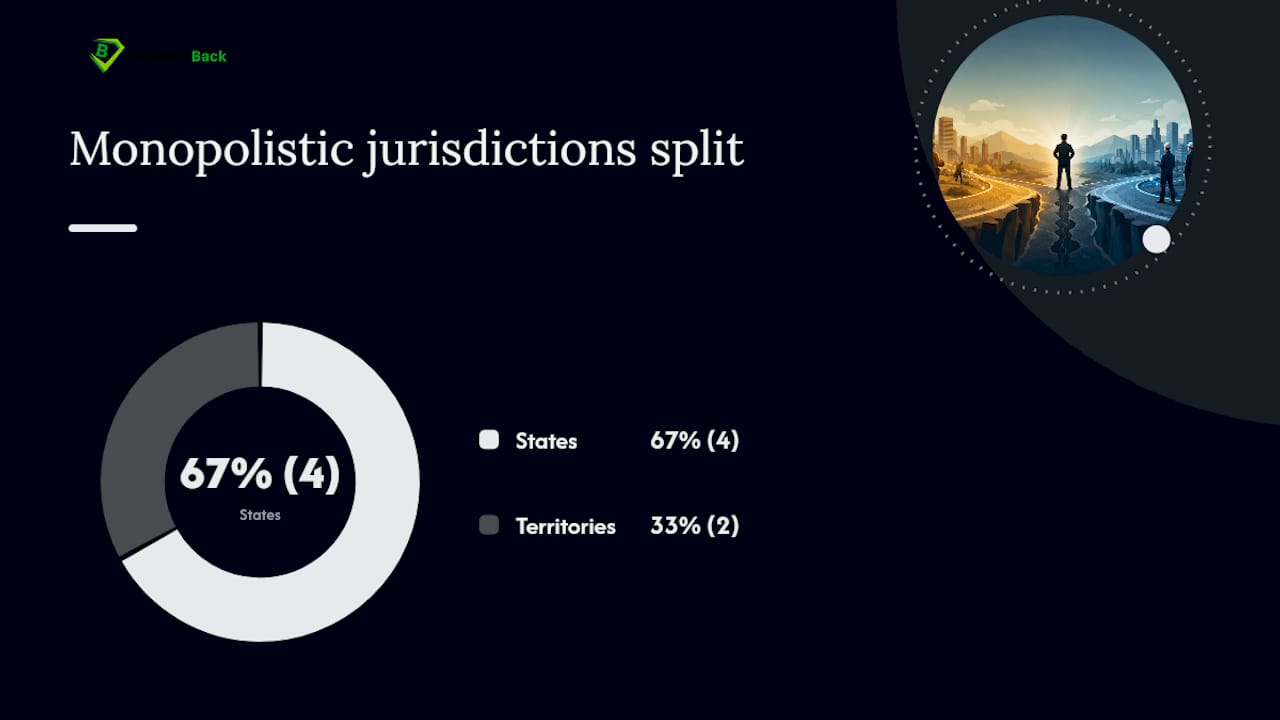
Monopolistic states require special attention. Ohio, North Dakota, Washington, Wyoming, and a few U.S. territories require employers to purchase workers’ compensation exclusively through the state fund. Because the state fund only provides Coverage A, employers in those states must purchase employers’ liability coverage separately through a private carrier. If you operate across state lines, this distinction can create a gap you may not notice until a claim arrives.
Practical scenarios that show which coverage responds
Abstract definitions only go so far. These four scenarios show how Coverage A and Coverage B each respond in real business situations.
-
On-site slip and fall with a straightforward workers’ comp claim. A warehouse worker slips on a wet floor and breaks their wrist. They file a workers’ comp claim. Coverage A pays the medical bills and partial wage replacement while they recover. No lawsuit is filed. Immediate owner actions: notify your carrier within 24 hours, preserve any incident reports and surveillance footage, and confirm the employee has access to your designated medical provider.
-
Employee sues for negligent training. A new driver is injured in a backing accident and argues that your company never provided adequate training on the vehicle. They collect workers’ comp benefits and then file a separate negligence lawsuit seeking additional damages. Coverage B responds to the lawsuit. Immediate owner actions: contact your carrier to open a Coverage B claim, preserve all training records and onboarding documentation, and do not discuss the lawsuit with the employee directly.
-
Loss of consortium claim by a family member. A manufacturing employee loses partial use of their hand in a press accident. Their spouse files a loss of consortium suit against your company. Workers’ comp does not cover the spouse’s claim. Coverage B responds. Immediate owner actions: notify your carrier immediately, confirm your EL aggregate limit is sufficient for a combined claim, and review your policy for any exclusions related to the specific injury type.
-
Third-party over action involving a subcontractor. A subcontractor’s employee is injured while working on your construction site. They collect workers’ comp from their own employer’s policy, then sue your company as the general contractor for negligence. Coverage B on your policy responds to that suit. Immediate owner actions: verify that your subcontract requires the sub to carry their own workers’ comp, check your EL limits against the potential damages, and notify your carrier.
A brief legal note: FELA governs injury claims for railroad employees, and USL&H covers maritime workers in certain roles. Both operate under federal statutes with different benefit structures and litigation rules than standard state workers’ comp. If your workforce includes employees in either category, confirm with your carrier that your policy is endorsed for those exposures, because a standard workers’ comp and employers’ liability form does not automatically extend to them.
For transportation businesses managing driver safety programs, reducing the frequency of incidents that trigger Coverage A claims also lowers your experience mod over time. Resources on oversize load routing and risk reduction can help fleet operators identify operational exposures before they become claims.
How the combined policy is structured and what state rules you need to check
The standard workers’ compensation and employers’ liability policy follows the NCCI form used in most states. Part One of that form is Coverage A, which obligates the carrier to pay all workers’ compensation benefits your state law requires. Part Two is Coverage B, which covers employers’ liability claims up to the dollar limits printed on the declarations page. Carriers sell both parts together on a single policy form in competitive states.
NCCI is the industry standard for policy forms and rating guidance across most of the country. When a claim involves both a workers’ comp component and an employers’ liability component, carriers report combined loss experience as a single incident, and that combined experience feeds into your experience modification rate.
Monopolistic states checklist. The following states and jurisdictions require employers to purchase workers’ comp through a state fund, which means Coverage B is not included and must be purchased separately from a private carrier.
- Ohio
- North Dakota
- Washington
- Wyoming
- Puerto Rico
- U.S. Virgin Islands
If you operate in any of these jurisdictions, confirm that you have a separate employers’ liability policy in place. Operating with Coverage A from the state fund but no Coverage B leaves you exposed to the full cost of any negligence lawsuit.
Reading your certificate of insurance. Your COI should show two distinct sections for workers’ comp. The Coverage A line lists limits as “Statutory.” The Coverage B section lists the three-part dollar limit. When a general contractor or client requests proof of coverage, they will often specify a minimum EL triplet, such as $500,000 per accident. Confirm the numbers on your certificate match or exceed what the contract requires before you sign.
What drives your premium and how to buy or update coverage
Premium for a combined workers’ comp and employers’ liability policy is calculated almost entirely on the workers’ comp side. The employers’ liability portion adds a relatively small incremental cost to the overall premium.
The primary drivers of your workers’ comp premium are:
- Payroll by class code. Each job classification carries a rate per $100 of payroll. A clerical worker and a roofing laborer carry very different rates. Misclassifying employees into lower-rated codes is a common audit finding that results in additional premium owed at year-end.
- Experience modification rate (EMR). Your EMR compares your actual loss history to the expected losses for your industry. An EMR below 1.0 earns a credit; above 1.0 adds a surcharge. A single serious claim can push your EMR above 1.0 for three years.
- Retrospective rating. Some larger employers choose a retrospective rating plan, where final premium is adjusted after the policy year closes based on actual losses. NCCI updates the Excess Loss Pure Premium Factors (ELPPFs) used in retrospective rating periodically, which means your retrospective premium adjustments can change from one policy year to the next. Employers using large-deductible or retro programs should plan for that variability.
Action checklist for buying or updating your coverage:
- Gather your payroll data broken down by job classification code. Your carrier needs accurate figures to rate the policy correctly.
- Identify the EL limit minimums in any active subcontracts or client agreements. Note the triplet required and confirm your current policy meets it.
- Request your current certificate of insurance and verify the Coverage B triplet is printed explicitly, not left blank.
- Confirm whether any of your operations fall in a monopolistic state and arrange separate EL coverage if needed.
- Compare sample policy forms from at least two carriers, focusing on Part One and Part Two declarations, exclusions, and any endorsements for specialized exposures like USL&H.
- Review your loss run report for the past three years. A pattern of small, frequent claims often signals a classification or safety issue that is inflating your EMR.
Pro Tip: When a contract asks for proof of specific EL limits, ask your carrier to issue a certificate that explicitly states the Coverage B triplet. Some certificates default to a generic workers’ comp notation without printing the EL numbers. A certificate that omits the triplet can hold up a contract signing even when your policy has the right limits.
Investing in workplace safety and accurate payroll classification consistently produces larger long-term premium savings than adjusting EL limits alone, because the workers’ comp side drives the bulk of the cost. Improving your EMR by even a fraction of a point can reduce your annual premium meaningfully across a multi-year period.
For fleet operators, connecting DOT compliance with your insurance program is a practical way to reduce both workers’ comp frequency and the regulatory exposure that can complicate claims.
Why this guidance is reliable
The policy structure described throughout this article reflects the standard NCCI workers’ compensation and employers’ liability form used in most U.S. states. NCCI (National Council on Compensation Insurance) is the primary advisory and rating organization for workers’ comp in the United States, and its standard form defines how Part One and Part Two operate. IRMI (International Risk Management Institute) provides widely cited definitions and explanations of the policy structure that align with what carriers and brokers use in practice.
Diamondbackins operates as an online comparison and quote platform for commercial insurance, including workers’ compensation and employers’ liability coverage. The platform aggregates quotes from multiple carriers, allowing business owners to compare policy options and purchase coverage directly online.
An honest perspective on where most business owners go wrong
Most business owners who call about a workers’ comp claim have never looked at Part Two of their policy. They know they have workers’ comp because their state requires it. They have no idea what their employers’ liability limits are, and they have never checked whether those limits meet the minimums in their own subcontracts.
The gap is not ignorance. It is structure. Workers’ comp gets attention because it is mandatory and audited. Employers’ liability sits quietly on the same form, rarely discussed until a lawsuit arrives. By then, a $100,000 per accident limit that seemed adequate at purchase looks very different against a six-figure defense bill before the case even reaches trial.
The practical fix is straightforward: pull your current COI today, find the Coverage B triplet, and compare it to the highest EL minimum in any contract you have signed in the past 12 months. If the numbers do not match, call your carrier before your next renewal. The incremental premium to raise EL limits is almost always modest. The cost of being underinsured is not.
Instant workers’ comp and employers’ liability quotes through Diamondbackins
Knowing the difference between Coverage A and Coverage B is the first step. Confirming you have the right limits in place is the next one, and that is where Diamondbackins makes the process faster and more transparent than working through a traditional broker.
Diamondbackins aggregates quotes from multiple top-rated carriers for workers’ compensation and employers’ liability coverage, so you can compare policy options side by side without calling multiple agents. You enter your payroll data and job classifications once, and the platform returns tailored quotes that reflect your actual risk profile. For fleet operators and small business owners who need to meet specific EL triplet minimums for contracts, the platform lets you adjust limits and see the premium impact in real time.
State laws and monopolistic-state rules vary, so coverage options differ by jurisdiction. Diamondbackins flags those differences during the quote process so you are not surprised at binding. To review your current coverage, compare EL limit options, and get an instant quote tailored to your payroll and industry, visit Diamondbackins’s trucking insurance quote page and start your comparison today.
Sources
For owners who want to verify rules for their state or go deeper on rating and retrospective programs, these sources are the most reliable starting points.
- Workers’ comp vs. employer’s liability — Brokly
- Employers’ Liability Insurance vs. Workers’ Compensation — MoneyGeek
- Financial call components and employers’ liability reporting — NCCI
This article is general information, not a substitute for advice from a qualified financial advisor. Consult a qualified financial professional about your own circumstances before acting on anything here.
Recommended
- Workers Compensation Insurance Protecting Your Business and Employees – Diamondback Insurance – Solutions with Instant Online Quotes
- Workers Compensation Insurance for Sole Proprietors What You Need to Know – Diamondback Insurance – Solutions with Instant Online Quotes
- Where to Get Workers’ Compensation Insurance A Guide for Business Owners – Diamondback Insurance – Solutions with Instant Online Quotes
- Protecting Your Business with General Liability and Workers’ Comp Insurance – Diamondback Insurance – Solutions with Instant Online Quotes