

Comparing insurers is defined as the practice of evaluating multiple insurance providers side by side to identify the best combination of price, coverage, and service quality for your specific needs. The benefits of comparing insurers extend well beyond finding a lower premium. Shoppers who actively compare can save $500 to $1,000 annually, and insurance shoppers now receive an average of 3.5 quotes per search, the highest number ever recorded. Whether you are protecting your family vehicle, your home, or a commercial trucking operation, the advantages of insurance comparison are measurable, practical, and available to anyone willing to spend time reviewing their options.
1. Benefits of comparing insurers: real savings on your premiums
Price variation across insurers for identical coverage is one of the most consistent findings in insurance research. Two drivers with the same profile, vehicle, and zip code can receive quotes that differ by hundreds of dollars per year from competing providers. That gap exists because each insurer uses its own proprietary pricing model, weighting factors like credit score, claims history, and vehicle type differently.

The annual savings potential of $500 to $1,000 by switching insurers is not a theoretical ceiling. It is a realistic outcome for drivers who compare at least three to four quotes at renewal time. For a family with two vehicles, that figure can double. The savings compound over time when you make comparison shopping a regular habit rather than a one-time event.
Timing your search matters. The best window to compare is 30 to 45 days before your current policy renews. Carriers often offer their most competitive rates to new customers during this window, and you avoid any lapse in coverage during the transition.
Shopping your insurance once a year at renewal is one of the highest-return financial habits available to any household. The time investment is typically under two hours, and the potential reward is four figures annually.
2. How loyalty penalties cost long-term policyholders money
Staying with the same insurer year after year feels like the safe choice, but it often costs you more. New customers frequently receive discounts while loyal policyholders face higher premiums through a practice known as price optimization. Insurers use behavioral data to identify customers unlikely to shop around, then gradually increase their rates.
Price optimization is legal in most states and widely practiced. The insurer is not penalizing you for filing claims. It is simply charging what the data suggests you will tolerate without leaving. The only effective counter is to demonstrate, through active comparison, that you are willing to switch.
This does not mean you should switch every year regardless of circumstances. Switching insurers mid-policy can signal financial instability to underwriters and may affect your rates at the next carrier. The correct strategy is to compare at renewal, not mid-term, and switch only when the new offer represents a genuine improvement in value.
3. Coverage quality differences that price alone cannot reveal
The insurance quote comparison benefit most consumers underestimate is the ability to compare coverage terms, not just premiums. Two policies priced identically can deliver dramatically different protection depending on their deductibles, liability limits, and exclusions. Consumers often underestimate the trade-offs in coverage quality when focusing only on price during shopping.
One of the most consequential distinctions is between Actual Cash Value (ACV) and Replacement Cost coverage. ACV pays out what your property is worth at the time of the claim, accounting for depreciation. Replacement Cost pays what it actually costs to replace the item at current market prices. A policy with a lower premium that uses ACV can leave you thousands of dollars short after a total loss.
Exclusions are equally important. Some policies exclude flood damage, certain vehicle uses, or specific cargo types without making those restrictions obvious in the summary documents. Reading the full policy declarations page before signing is the only way to identify these gaps. A side-by-side comparison worksheet, where you list coverage limits, deductibles, exclusions, and add-ons for each quote, makes these differences visible and comparable.
| Coverage factor | What to compare |
|---|---|
| Liability limits | Minimum required vs. recommended higher limits |
| Deductible amount | Higher deductible lowers premium but raises out-of-pocket cost at claim |
| ACV vs. Replacement Cost | Replacement Cost provides stronger protection after a total loss |
| Exclusions | Flood, cargo type, vehicle use restrictions vary by policy |
| Bundling discounts | Multi-policy discounts can offset higher base premiums |
Pro Tip: When comparing quotes, request the full declarations page from each insurer, not just the summary sheet. The declarations page lists every exclusion and coverage limit in binding legal language, which is the only version that matters at claim time.
4. Why insurer financial strength ratings matter
A policy is only as good as the insurer’s ability to pay the claim. Financial strength ratings like AM Best A or higher are the standard benchmark for evaluating an insurer’s long-term claim-paying reliability. An insurer with a lower rating may offer attractive premiums but carry meaningful risk of being unable to fulfill large or complex claims.
AM Best, Moody’s, and Standard and Poor’s each publish ratings that reflect an insurer’s capitalization, claims history, and financial reserves. Checking these ratings takes less than five minutes and should be a standard step in any comparison process. A carrier rated A or above by AM Best has demonstrated the financial depth to handle claims even during periods of high industry losses, such as after major weather events.
Insurer financial strength rating is a critical but often overlooked metric that predicts long-term claim-paying ability. For commercial trucking operators, where a single liability claim can reach seven figures, this metric is not optional. It is a baseline requirement before any other comparison factor is considered.
5. Claims handling and customer service quality
Price and coverage terms are visible before you buy. Claims handling quality only becomes apparent after a loss, which makes it one of the most important factors to research during comparison. J.D. Power rankings and Trustpilot reviews provide structured, volume-based feedback on how insurers actually perform when policyholders need them most.
Claims satisfaction scores vary significantly across major carriers. Differences in average claim resolution time, availability of digital claim submission tools, and quality of adjuster communication all affect your experience during an already stressful period. An insurer that resolves claims in 10 days versus one that takes 30 days represents a meaningful difference in financial and operational disruption, particularly for commercial vehicle operators.
Digital claim tools, including mobile apps with photo upload, real-time status tracking, and direct adjuster messaging, have become standard at top-tier carriers. If a carrier you are evaluating does not offer these features, that is a service quality gap worth factoring into your comparison. Reviewing insurer complaint ratios published by your state’s Department of Insurance provides additional objective data on service performance.
6. How modern digital tools make comparison faster and more accurate
48% of new auto insurance policies are now purchased digitally, up from 36% five years ago. This shift reflects both consumer preference and the genuine improvement in digital comparison tools available today. The insurance market has moved from crisis-driven purchasing to a more deliberate, AI-driven shopping process that gives consumers more confidence in their decisions.
AI-powered comparison platforms now do more than display price rankings. They flag coverage gaps, explain trade-offs between deductible levels, and alert users when a quoted policy excludes coverage they currently carry. This capability addresses the core risk of price-only comparison by making coverage differences visible in plain language. For trucking and commercial vehicle operators, platforms like Diamondbackins that specialize in commercial coverage provide more accurate quotes than general consumer comparison sites, which often lack the underwriting depth for commercial risks.
The distinction between comparison sites and independent brokers is worth understanding. Comparison sites provide speed and breadth, showing multiple quotes from multiple carriers in minutes. Brokers provide depth and advocacy, particularly for complex or high-value risks. For most personal auto and standard commercial policies, a reputable comparison platform delivers sufficient information to make a confident decision. For specialty risks, a broker adds value that algorithms cannot replicate.
Pro Tip: Use a comparison platform to establish your price baseline, then call one or two brokers who specialize in your coverage type to verify that the quoted terms are appropriate for your specific risk profile. The combination gives you both speed and accuracy.
For trucking businesses specifically, learning how to compare trucking fleet quotes efficiently can reduce both time and cost in the procurement process.
7. Spotting red flags in quotes that seem too good to be true
Quotes that are 30% or more cheaper than competing offers are a reliable indicator of missing coverage or inadequate limits. A significantly lower premium almost always reflects a trade-off: a higher deductible, ACV instead of Replacement Cost, lower liability limits, or excluded coverage categories that competitors include as standard.
Majorly cheaper quotes typically mean significant coverage gaps or the use of Actual Cash Value instead of Replacement Cost, which can leave policyholders underinsured at the worst possible moment. For commercial operators, an underinsured liability claim can exceed policy limits and expose personal or business assets to judgment. The premium savings are never worth that exposure.
The correct response to a suspiciously low quote is not to reject it outright but to request the full policy terms and compare them line by line against competing offers. If the low-priced policy matches the coverage terms of higher-priced alternatives, it is a genuine bargain. If it achieves its price by reducing limits or adding exclusions, the apparent savings are an illusion. Understanding insurer fit for truckers helps you recognize which trade-offs are acceptable and which represent unacceptable risk.
Key takeaways
Comparing insurers produces better outcomes on price, coverage quality, and claims service when done systematically at each renewal period.
| Point | Details |
|---|---|
| Annual savings potential | Active comparison at renewal can save $500 to $1,000 per year per policy. |
| Coverage terms over price | ACV vs. Replacement Cost and exclusions affect real-world payout more than premium differences. |
| Financial strength ratings | AM Best A or higher confirms an insurer can pay claims when it matters most. |
| Red flag quotes | Quotes 30% below competitors typically signal coverage gaps, not genuine savings. |
| Digital tools accelerate comparison | AI-powered platforms now flag coverage trade-offs, not just price differences. |
What I’ve learned from years of watching people shop insurance wrong
Most people approach insurance comparison the same way they approach buying a TV: they sort by price, pick the lowest number, and move on. That approach works for electronics. It fails for insurance, and the failure only becomes visible after a loss, when it is too late to correct.
The single most common mistake I see is treating the premium as the product. The premium is the cost of the product. The product is the coverage. Two policies at the same price can deliver completely different financial protection depending on their terms. A family that saves $400 per year by choosing ACV over Replacement Cost coverage may face a $6,000 shortfall after a total loss. That is not a good trade.
My practical recommendation is to compare at every renewal without exception, use both a digital platform and a specialist broker for any commercial or high-value risk, and always check AM Best ratings before finalizing a decision. I would also caution against switching mid-term for anything less than a significant coverage improvement. The short-term savings rarely justify the underwriting signal it sends. Treat comparison as a disciplined annual process, not a reaction to a price increase, and the results compound meaningfully over time.
— Vladimir
Compare commercial trucking coverage with Diamondbackins
Diamondbackins makes the comparison process direct and efficient for trucking professionals and fleet operators. The platform aggregates quotes from multiple top-rated commercial insurers, giving you side-by-side pricing and coverage details in minutes rather than days.
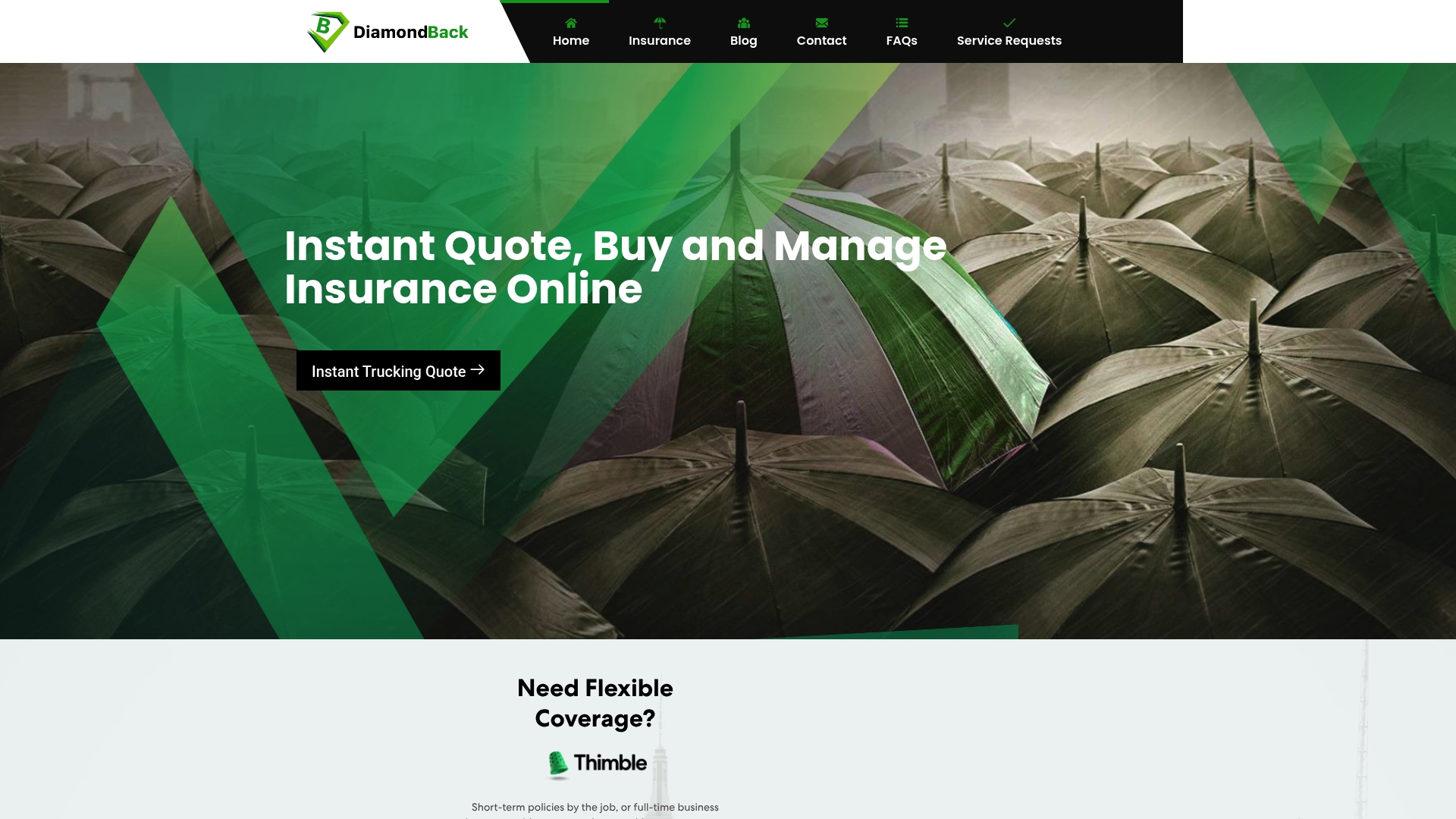
Whether you operate a single commercial vehicle or manage a growing fleet, Diamondbackins provides instant quotes tailored to your specific cargo type, routes, and liability requirements. The platform is built for commercial transportation, which means the quotes reflect real underwriting criteria rather than generic estimates. Explore commercial trucking insurance in Georgia and see how competitive, coverage-accurate quotes can protect your operation without overpaying. You can also review what trucking businesses need to know before selecting a policy.
FAQ
How much can you save by comparing insurers?
Active comparison at renewal can save between $500 and $1,000 annually per policy. Families with multiple vehicles or bundled policies can see proportionally higher savings.
How many quotes should you get when comparing insurers?
Insurance shoppers now receive an average of 3.5 quotes per search, according to J.D. Power’s 2026 U.S. Insurance Shopping Study. Getting at least three to four quotes gives you a reliable price range and coverage baseline.
What does insurer financial strength rating mean?
An AM Best rating of A or higher indicates the insurer has sufficient financial reserves to pay claims reliably, even during periods of high industry losses. It is a critical screening criterion before comparing price or coverage terms.
Why are some insurance quotes significantly cheaper than others?
Quotes priced 30% or more below competitors typically reflect lower liability limits, ACV instead of Replacement Cost coverage, or excluded categories. Always compare full policy terms before selecting a low-priced offer.
Is it better to use a comparison site or an insurance broker?
Comparison sites provide speed and breadth for standard personal and commercial policies. Brokers add value for complex or high-value risks where coverage nuance matters more than price speed. Using both gives you the most complete picture.