

Independent contractor trucking coverage is a specialized insurance suite designed to protect your truck, cargo, and income while meeting federal regulations and lease requirements. Standard commercial auto insurance does not cover the full scope of risks you face as an owner-operator. You need a layered policy stack that includes primary liability, motor truck cargo, physical damage, occupational accident, and non-trucking liability. Commercial truck insurance costs more than standard commercial auto policies because of higher risk, vehicle weight factors, and added cargo exposure. Knowing exactly which coverages apply to your situation is the first step toward protecting your assets and staying contract-eligible.
What is independent contractor trucking coverage?
Independent contractor trucking coverage refers to the full set of insurance policies an owner-operator or leased driver must carry to operate legally and protect their business. The industry term most professionals use is “owner-operator insurance,” though the two phrases describe the same concept. Your coverage needs depend on whether you operate under a motor carrier’s authority or hold your own Motor Carrier (MC) authority through the FMCSA.
Regulatory filings are a non-negotiable part of this picture. Forms like BMC-91X and MCS-90 are required for contractors operating under their own MC authority. These filings demonstrate compliance with federal insurance mandates and must be submitted by your insurer directly to the FMCSA. Missing or delayed filings can suspend your operating authority.

The federal minimum liability for most freight-hauling trucks is $750,000, but that number rarely satisfies real-world contract requirements. Freight brokers and shippers typically require $1,000,000 combined single limit liability coverage. That gap between the federal floor and the broker standard is one of the most costly surprises new contractors face.
What are the main coverage options for independent contractor truck drivers?
Owner-operator insurance is not a single policy. It is a stack of coverages, each addressing a different risk. Understanding each component helps you build a policy that protects you without overpaying.
Primary auto liability covers bodily injury and property damage you cause to others while on dispatch. This is the foundational coverage required by the FMCSA and by virtually every broker contract. Your liability limit should meet or exceed $1,000,000 to stay contract-eligible.
Motor truck cargo insurance covers the freight you haul against loss, theft, or damage. Cargo insurance is not included in general liability or auto policies and must be purchased separately. Coverage must match the commodity you haul. A driver hauling refrigerated food needs different cargo terms than one hauling dry goods. You can read a full breakdown in this motor truck cargo guide.
Physical damage insurance covers your truck and trailer against collision, fire, theft, and weather events. This coverage protects your single largest asset. Lenders typically require it if you are financing your rig.
Occupational accident insurance covers your medical expenses and lost wages if you are injured on the job. It substitutes for workers’ compensation for independent contractors, who are generally not eligible for traditional workers’ comp. It costs less than workers’ comp but carries coverage limits, so review the benefit caps carefully before purchasing.
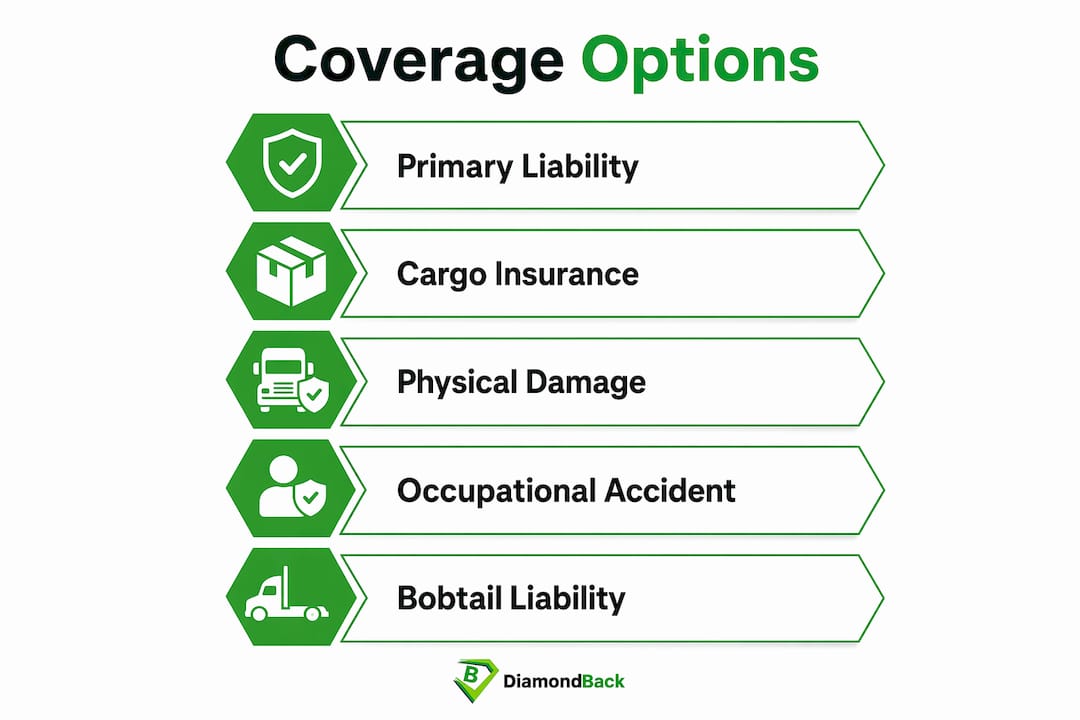
Non-trucking liability (bobtail) insurance covers you when you operate your truck off dispatch, such as driving home after a delivery. Bobtail coverage applies during personal use and is often required by lease agreements. Without it, you have no liability protection during those off-dispatch miles.
General liability and umbrella policies are optional but worth considering if you interact with customers at loading docks or manage any business operations beyond driving.
Pro Tip: Review your lease agreement line by line before purchasing coverage. Many lease agreements specify exact policy types and minimum limits, and buying the wrong coverage can void your contract protections.
How do costs differ between leased operators and own-authority owner-operators?
Your insurance costs depend heavily on your operating arrangement. Leased operators and own-authority operators face very different premium structures and coverage responsibilities.
Solo owner-operators under permanent lease pay $5,000–$9,000 annually, while those running under their own MC authority pay $9,000–$15,000. That gap reflects the additional policies own-authority operators must carry independently. It also reflects the higher risk profile that insurers assign to contractors without a motor carrier’s safety record behind them.
| Factor | Leased operator | Own-authority operator |
|---|---|---|
| Primary liability | Provided by motor carrier | Must purchase independently |
| Cargo insurance | Often provided by motor carrier | Must purchase independently |
| Occupational accident | Must purchase independently | Must purchase independently |
| Bobtail/non-trucking liability | Must purchase independently | Not typically required |
| Regulatory filings (BMC-91X, MCS-90) | Carrier handles filings | Contractor must file through insurer |
| Estimated annual premium | $5,000–$9,000 | $9,000–$15,000 |
Owner-operators under permanent lease rely on the motor carrier for primary liability and cargo coverage, but they still need occupational accident and bobtail insurance. Trip-leased operators face a more complex situation because coverage may shift between the carrier and the contractor depending on the dispatch status at the time of a claim.
Own-authority operators carry the full insurance burden. They must secure primary liability, cargo, physical damage, occupational accident, and file regulatory forms through their insurer. The insurance requirements for new authority operators are especially strict because FMCSA requires proof of coverage before granting operating authority.
Pro Tip: Many owner-operators start by leasing to a carrier to build a clean safety record and lower their risk profile before moving to own authority. A two-year clean record can meaningfully reduce your premiums when you make that transition.
What steps should you follow to obtain adequate trucking coverage?
Getting the right coverage requires a clear process. Skipping steps leads to gaps that surface at the worst possible moment, usually during a claim.
Step 1: Define your operation type. Identify whether you are leased to a carrier or operating under your own authority. This single factor determines which policies you must buy independently.
Step 2: Review your lease agreement and FMCSA requirements. Your lease will specify minimum liability limits, required policy types, and any carrier-provided coverages. FMCSA requirements set the federal floor. Both must be satisfied simultaneously.
Step 3: Confirm broker and shipper contract minimums. Failing to carry $1,000,000 combined single limit liability can disqualify you from high-paying freight contracts even if you meet federal minimums. Check every broker agreement before finalizing your policy limits.
Step 4: Request quotes from insurers that specialize in trucking. General commercial insurers often lack the underwriting expertise to price trucking risks accurately. Use specialized trucking insurance companies that understand FMCSA filings, cargo classifications, and owner-operator risk profiles.
Step 5: Build your full coverage stack. Confirm you have primary liability, cargo, physical damage, occupational accident, and bobtail where required. Do not assume any coverage transfers from a previous employer or carrier policy.
Step 6: Verify your insurer handles regulatory filings. Your insurer must file the BMC-91X or MCS-90 directly with the FMCSA. Confirm this in writing before your policy goes into effect.
“The right insurance stack is not the cheapest one. It is the one that keeps you on the road, contract-eligible, and financially protected when something goes wrong.”
What mistakes do independent contractor truck drivers most often make?
Coverage gaps rarely happen by accident. They happen because contractors make predictable, avoidable decisions when buying insurance.
Relying on state minimums. State minimum insurance limits are often far below what brokers and shippers require. Meeting the state minimum does not make you contract-eligible. It only keeps you legally licensed.
Skipping cargo insurance. Many contractors assume cargo is covered under their liability policy. It is not. Cargo insurance must be purchased separately and matched to the freight type you haul. A single uncovered cargo loss can exceed your annual premium many times over.
Overlooking occupational accident insurance. Many contractors underestimate the gap that occupational accident insurance fills. Without it, a serious injury puts your income and medical bills entirely on you. This coverage is especially critical for leased operators whose carriers do not provide workers’ comp.
Neglecting bobtail coverage. If your lease requires non-trucking liability and you skip it, you are personally exposed every time you drive off dispatch. That includes the drive home after every delivery.
Not confirming FMCSA filings. Your policy is not active for regulatory purposes until your insurer submits the required forms to the FMCSA. Confirm the filing date and get written confirmation.
Choosing the lowest premium without checking limits. Choosing insurance based solely on cost risks inadequate coverage and contract disqualifications. A policy that saves you $800 per year but carries a $500,000 liability limit will cost you far more when a broker rejects your paperwork.
Pro Tip: Ask every insurer for a coverage summary sheet before you sign. Compare the actual policy limits side by side, not just the premium totals. The difference between a $500,000 and $1,000,000 liability limit can mean the difference between winning and losing a freight contract.
Key takeaways
Independent contractor trucking coverage requires a layered policy stack that matches your operating arrangement, meets FMCSA requirements, and satisfies broker contract minimums of at least $1,000,000 in liability.
| Point | Details |
|---|---|
| Coverage stack varies by arrangement | Leased operators need bobtail and occupational accident; own-authority operators need the full suite. |
| Cargo insurance is always separate | Motor truck cargo coverage must be purchased independently and matched to your freight type. |
| Broker minimums exceed federal floors | Most freight brokers require $1,000,000 liability, which is higher than the FMCSA federal minimum. |
| Own-authority costs significantly more | Own-authority operators pay $9,000–$15,000 annually versus $5,000–$9,000 for leased operators. |
| FMCSA filings must be confirmed | Your insurer must submit BMC-91X or MCS-90 forms directly; verbal assurance is not enough. |
What I have learned about trucking insurance after years in this space
The single most common mistake I see independent contractors make is treating insurance as a compliance checkbox rather than a business protection tool. They buy the cheapest policy that keeps them technically legal, then discover during a claim or a broker audit that their coverage does not hold up.
The contractors who build sustainable operations do the opposite. They start by understanding their actual exposure, then build a policy stack that covers it. They review their coverage every time their operation changes, whether that means adding a trailer, switching carriers, or moving from a lease to their own authority. They also partner with insurers who specialize in trucking, because a general commercial insurer will not know how to handle an FMCSA filing dispute or a cargo claim involving a specialized commodity.
Starting under a carrier lease is genuinely smart for new operators. It reduces your upfront insurance costs and gives you time to build a clean safety record. That record becomes a real financial asset when you eventually apply for your own MC authority. Insurers price your risk based on your history, and a two-year clean record under a reputable carrier can lower your own-authority premiums considerably.
The uncomfortable truth is that the trucking insurance rates by state vary more than most contractors expect. A policy that costs $9,000 in one state might cost $13,000 in another for the same truck and the same routes. Shopping across multiple specialized insurers is not optional. It is the only way to know whether your current premium is competitive.
— Vladimir
How Diamondbackins helps independent contractors get covered fast
Independent contractors need coverage that fits their specific operation, not a generic commercial auto policy that leaves gaps. Diamondbackins specializes in trucking insurance for contractors, giving you instant access to quotes from multiple top-rated insurers in one place.
You can compare owner-operator coverage options side by side, review policy limits, and purchase coverage in minutes without calling a broker or waiting days for a callback. Diamondbackins handles state-specific requirements and FMCSA filing support, so you stay compliant from day one. Whether you are leased to a carrier or running under your own authority, you can get an instant truck insurance quote and get protected today.
FAQ
What is the minimum liability coverage for independent contractor truckers?
The FMCSA federal minimum for most freight-hauling trucks is $750,000, but most freight brokers and shippers require $1,000,000 combined single limit liability. Carrying only the federal minimum can disqualify you from high-paying contracts.
Do leased owner-operators need their own insurance?
Yes. Even if your motor carrier provides primary liability and cargo coverage, you still need occupational accident insurance and non-trucking liability (bobtail) coverage for off-dispatch periods. Many lease agreements require bobtail coverage explicitly.
What is bobtail insurance and when do you need it?
Bobtail insurance covers your liability when you drive your truck without a trailer and outside of dispatch. It applies during personal use, such as driving home after a delivery, and is often required by lease agreements to close the gap in carrier-provided coverage.
How much does independent contractor trucking insurance cost per year?
Leased owner-operators typically pay $5,000–$9,000 annually, while own-authority operators pay $9,000–$15,000. Costs vary based on your safety record, state, cargo type, and the specific policies in your coverage stack.
What are BMC-91X and MCS-90 filings?
BMC-91X and MCS-90 are regulatory forms that prove your insurance meets FMCSA requirements. Own-authority operators must have these filed by their insurer directly with the FMCSA before they can legally operate. Your insurer handles the submission, but you must confirm it is completed.