
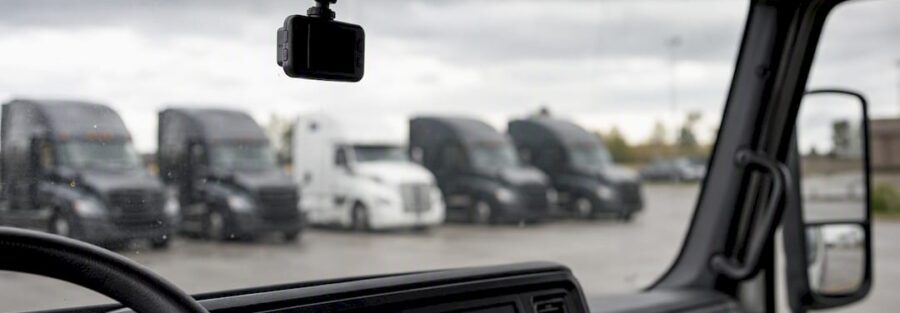
Short answer: generally no. A standalone dash cam rarely reduces your personal-auto premium on its own, since most U.S. insurers don’t offer a formal dash cam insurance discount. Real savings show up when the camera feeds a telematics or fleet safety program, and commercial operators now have a growing exception worth watching: Louisiana’s HB 549, which requires liability discounts for qualifying commercial vehicles running dash cams and telematics together.
TL;DR:
- Most U.S. insurers do not offer direct discounts for standalone dash cams; savings usually come from telematics or fleet safety programs instead.
- Clear video evidence can speed up fault determination, reduce liability disputes, and lower legal costs during claim processes.
- Louisiana HB 549 mandates liability discounts for commercial vehicles using compliant dash cams and telematics, establishing regulatory recognition of their value.
- For fleets, documented installation and usage records are key to securing insurance discounts, while individual drivers mainly benefit from avoiding surcharge costs.
- The true financial benefit lies in preventing long-term surcharges and fraud-related claims rather than obtaining a straightforward discount solely for camera ownership.
Table of Contents
- How Dash Cam Insurance Discounts Actually Affect Your Rates and Claims
- Which Insurers Offer a Dash Cam Discount for Drivers or Fleets?
- How Does Dash Cam Footage Help With Claims and Fraud?
- Standalone Dash Cam or Telematics Program: Which Actually Pays Off?
- How to Turn Dash Cam Footage Into a Real Insurance Advantage
- Is a Dash Cam Worth the Cost for Drivers or Fleets?
- What Fleet Managers Should Document When Shopping Dash Cam Discounts
- Why the “Just Buy a Dash Cam” Advice Misses the Point
- Turn Your Fleet’s Safety Tech Into a Better Quote
- Sources
How Dash Cam Insurance Discounts Actually Affect Your Rates and Claims
You won’t find “dash cam discount” as a line item on most personal auto policies. What you will find is a camera that changes how a claim gets decided. When footage clearly shows the other driver ran the light or rear-ended you at a stop, the adjuster has less room to split fault. That distinction carries real weight, because a single at-fault accident often triggers a rate surcharge that follows you for several years.
Here’s what footage typically changes once a claim is filed:
- Faster fault determination, since video evidence tends to settle claims faster than he-said-she-said statements.
- Fewer contested liability splits, which can mean avoiding a 50/50 fault assignment that can still raise your premium.
- Shorter legal back-and-forth, because insurers spend less on investigators and independent witness tracking.
- Lower risk of a bogus counterclaim, since footage removes the ambiguity that fraudulent claims depend on.
None of this shows up as a discount code.
Which Insurers Offer a Dash Cam Discount for Drivers or Fleets?
Direct, named discounts for owning a personal dash cam are still uncommon in the U.S. market. Compare that to the U.K., where dash cam discounts are a recognized underwriting factor that some insurers verify through approved device lists, because that market built the infrastructure to price it years ago. American carriers haven’t standardized anything close to that yet.
Where U.S. savings do exist, they almost always ride on a telematics or fleet program, not a standalone camera sitting on your windshield.
Commercial and fleet operations are the exception worth tracking closely:
- Fleet programs like the Sentry and Motive partnership tie premium discounts to shared dash cam and ELD data, not camera ownership alone.
- HDVI has advertised fleet savings tied to real-time risk monitoring systems.
- Louisiana HB 549 now requires insurers to give actuarially justified liability discounts to qualifying commercial vehicles running compliant camera and telematics setups.
That last one matters because it’s a statute, not a marketing promise. It tells you regulators already accept the actuarial case for camera-plus-telematics pricing, at least in the commercial lane.
How Does Dash Cam Footage Help With Claims and Fraud?
Footage earns its value in the moments a claim could otherwise go sideways. A few scenarios where it changes outcomes:
- Intersection collisions. Conflicting accounts are common at four-way stops and left-turn crashes; clear footage settles who had the right of way.
- Hit-and-run incidents. A license plate on video can turn an unrecoverable loss into an identified at-fault claim against the other driver’s policy.
- Staged accidents. Staged-crash fraud costs insurers and drivers real money, and a camera is one of the simplest deterrents against a scam built on false witness statements.
Not all footage carries equal weight. Adjusters trust clips with a visible timestamp, embedded GPS data, and an unobstructed view of the point of impact. A cracked lens or a dashboard clutter blocking the frame undercuts the evidence you’re relying on.
Standalone Dash Cam or Telematics Program: Which Actually Pays Off?
A standalone camera stores footage locally on an SD card, and nobody sees it unless you pull the file. A telematics-linked system does the opposite: it continuously reports speed, braking events, trip patterns, and sometimes driver-facing video back to the insurer or fleet manager.
- Standalone camera: private by default, cheap, gives you evidence but usually no discount.
- Telematics/UBI program: shares ongoing behavioral data, and that data-sharing is typically the actual trigger behind any premium reduction.
- Fleet safety systems: combine both, and are the segment most likely to see verified, contractual discounts today.
Pro Tip: If privacy matters more to you than a discount you’re unlikely to get as an individual driver, stick with a standalone camera. If you run a fleet, the calculus flips, since documented telematics data is often the price of entry for a meaningful rate reduction.
How to Turn Dash Cam Footage Into a Real Insurance Advantage
- Call your insurer before you need to. Ask directly whether any discount exists for camera or telematics participation, and get the answer in writing.
- Ask what data they’d require. Some programs want continuous feeds; others only want footage submitted after an incident.
- Confirm submission format. Insurers vary on accepted file types, resolution minimums, and whether they need the original file metadata intact.
- Document installation. For fleets, this often means installation certificates and telematics summary reports, not just a photo of the unit.
- Export and back up footage immediately after any incident, since most devices overwrite older clips automatically within days.
| Step | What to do | Why it matters |
|---|---|---|
| Notify insurer | Ask about discount eligibility in writing | Creates a paper trail if a rep later denies a benefit |
| Verify format | Confirm file type and resolution rules | Prevents a rejected submission during a claim |
| Preserve footage | Export within 24–48 hours | Most cameras loop and overwrite old clips |
| Label evidence | Tag with date, location, incident type | Speeds adjuster review |
Is a Dash Cam Worth the Cost for Drivers or Fleets?
A solid consumer dash cam runs somewhere between $50 and $200, with connected models adding a modest monthly fee for cloud storage or live alerts. Fleet-grade telematics systems cost considerably more per vehicle, but they’re priced against a different risk pool.
| Scenario | Upfront cost | Ongoing cost | Realistic financial benefit |
|---|---|---|---|
| Personal driver, standalone camera | $50–$200 | $0–$15/month for cloud backup | Avoided at-fault surcharge if footage proves you weren’t liable |
| Personal driver, telematics-linked | between $50 and $200 | a modest monthly fee | Possible modest UBI discount, plus fault protection |
| Small fleet, camera + telematics | Varies by vehicle count | Per-vehicle monthly fee | Documented discount eligibility, like Louisiana HB 549 compliance |
For an individual driver, the math is simple: one avoided at-fault surcharge over a few years usually covers the camera many times over, even without a direct discount. For a fleet operator, the telematics subscription is closer to a cost of doing business, since it’s often what unlocks the discount conversation with underwriters at all.
What Fleet Managers Should Document When Shopping Dash Cam Discounts
Diamondbackins aggregates quotes across carriers, and underwriters respond very differently to a fleet that shows up with proof versus one that shows up with promises. A verified safety program tends to move the conversation from “maybe” to a specific number on the quote sheet.
Underwriters typically want to see:
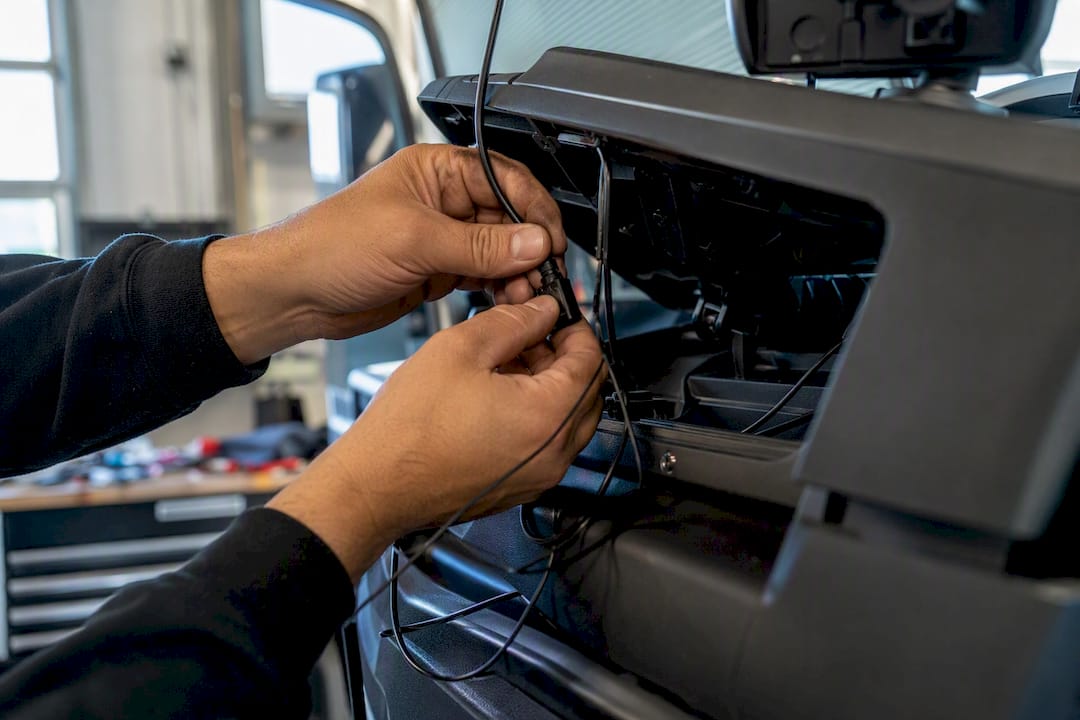
- Installation certificates confirming when cameras and telematics units went live across the fleet.
- Telematics summary reports showing months of speed, braking, and route data, not a single snapshot.
- Sample event reports demonstrating how footage was used to resolve a real incident.
Fleets that walk into a quote request with this paperwork ready tend to move faster through underwriting, since it turns safety technology into leverage during the application process rather than a footnote the underwriter has to chase down separately.
Why the “Just Buy a Dash Cam” Advice Misses the Point
The conventional advice treats a dash cam like a coupon: buy it, mount it, wait for a discount. That’s not how the U.S. market prices this technology right now, and the research backs that up plainly. What actually moves the needle is the ongoing data trail behind the camera, not the hardware itself.
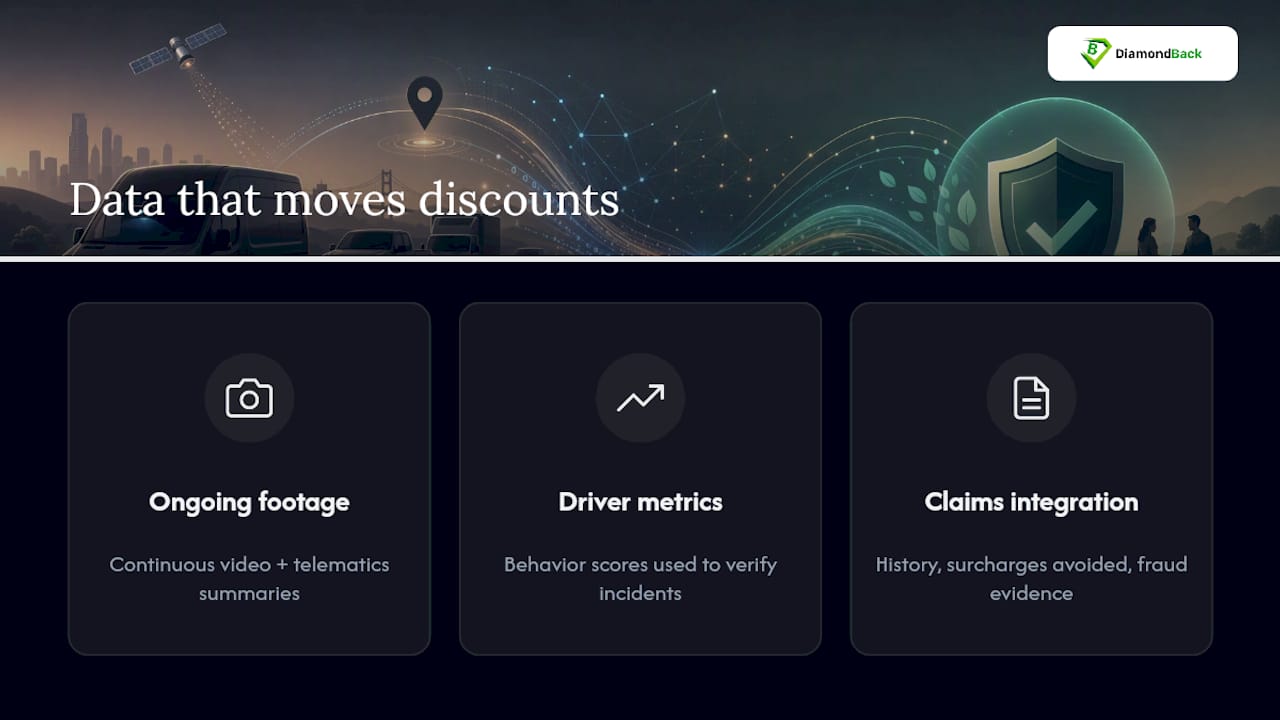
Where most guides get it wrong is treating the discount question as the whole story. It isn’t. The bigger financial lever is avoided damage: no multi-year surcharge after a disputed accident, no drawn-out legal fight over fault, no fraudulent claim sticking to your record. That’s harder to put a single number on, which is probably why it gets less attention than a flashy “save 10%” headline.
If you’re a fleet manager, the priority order should be documentation first, discount conversation second. Insurers respond to verified data, not device ownership. Get your telematics summaries and installation records in shape before you ever ask a carrier about pricing, because that paperwork is what turns a safety investment into a negotiating position instead of a nice-to-have gadget.
— Vladimir
Turn Your Fleet’s Safety Tech Into a Better Quote
Diamondbackins gives fleet managers a faster way to find out whether their dash cam and telematics investment translates into real savings, without calling five carriers one by one. Instead of guessing which insurer values your safety data, you compare offers side by side and let the underwriting responses do the talking.
Upload your installation certificates and telematics summaries when you request a quote, and ask directly whether any participating carrier offers a discount for verified camera and telematics data. If you’re ready to see what your fleet qualifies for, get an instant fleet insurance quote and attach your documentation so carriers can price your safety program accurately from the first quote, not after months of back-and-forth.
Sources
- Telematics plus dash-cam discounts: when savings means more data sharing
- PMC article on video evidence and incident investigation
- Louisiana HB 549 (enrolled)
- Rampant fraud in staged accidents (R Street commentary)
This article is general information, not a substitute for advice from a qualified financial advisor. Consult a qualified financial professional about your own circumstances before acting on anything here.