

For most U.S. drivers and small-business fleet owners, Diamondbackins is the strongest alternative to insuranceriddle.com — it delivers instant, tailored quotes across commercial trucking, auto, home, and specialty lines, and lets you bind a policy online without waiting for a callback. If your priority is speed, coverage transparency, and direct purchase, that’s where to start.
Two other platform categories are worth knowing:
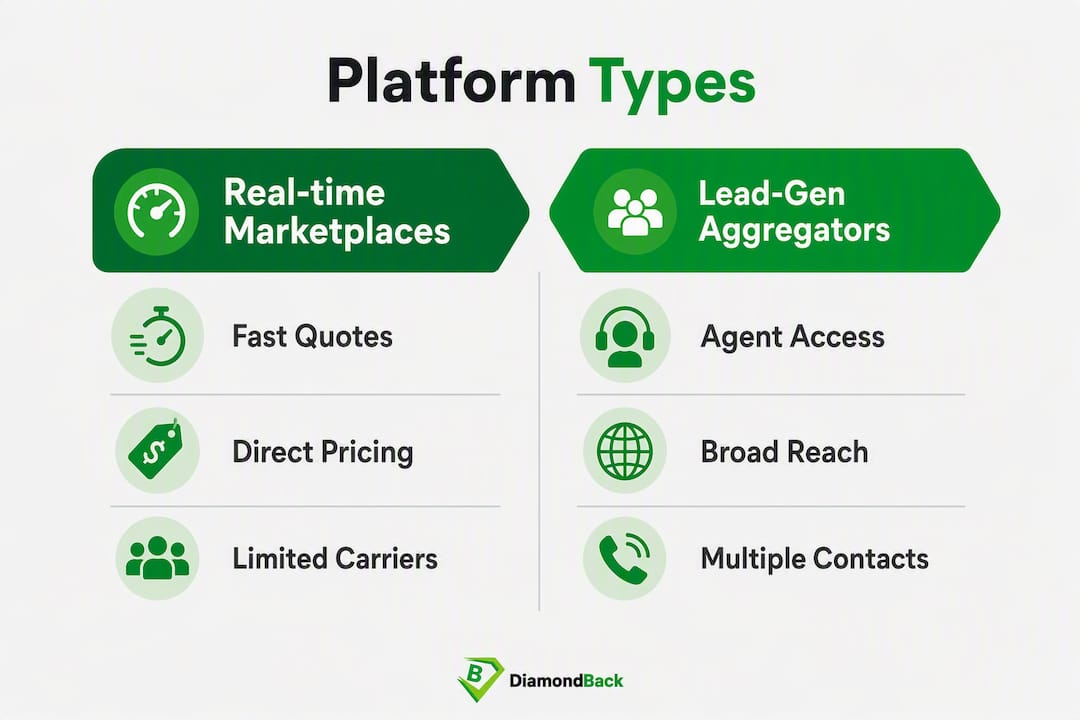
- Real-time quote marketplaces return insurer prices side-by-side the moment you submit your profile, so you can compare premiums, limits, and deductibles in one session. Speed is their defining advantage.
- Lead-generation aggregators collect your information and forward it to agents or carriers, who then follow up. Final pricing often shifts once a carrier verifies your details, and contact frequency can be high.
The right choice depends on what you’re insuring, how fast you need coverage, and how much you value keeping your contact information private.
Table of Contents
- Which insuranceriddle.com alternatives should you compare?
- What each platform type actually offers you
- How do these quote platforms actually work?
- How to choose the right alternative to insuranceriddle.com
- How long does it take, and what does it cost?
- What trust signals and privacy practices should you check?
- Diamondbackins: what the platform covers and how to get started
- Which alternative fits your situation?
- Key Takeaways
- The real gap most shoppers miss
- Get instant commercial and fleet quotes through Diamondbackins
- Useful sources for further reading
Which insuranceriddle.com alternatives should you compare?
| Feature | Diamondbackins | Real-Time Quote Marketplaces | Lead-Gen Aggregators |
|---|---|---|---|
| Best for / ideal user | Fleet managers, trucking businesses, commercial and personal buyers needing fast online coverage | Personal auto shoppers comparing standard carriers quickly | Buyers comfortable with agent follow-up and flexible on timing |
| Insurers / quotes shown | Multiple top carriers across commercial and personal lines | Varies by platform; typically 10–40 carriers | Varies; matches profile to carrier network |
| Real-time quotes vs. lead-gen | Real-time instant quotes | Real-time quotes | Lead-generation; final price confirmed by carrier |
| Buy online (bind policy)? | Yes — direct online binding available | Varies; some allow direct bind, others redirect | Typically no; purchase via agent or carrier |
| Coverage types | Commercial trucking, auto, home, flood, boat, yacht, workers comp, general liability, fitness, business owner | Primarily personal auto; some home and renters | Auto, home, life; specialty varies |
| Speed to quote | Under 5 minutes | Under 5 minutes | 24–72 hours for final confirmed quote |
| Fees to use | Free to compare | Free to compare | Free to compare |
| Trust signals | BBB-listed; transparent carrier partnerships; full coverage detail display | Verified user reviews (Trustpilot, Google); BBB presence varies | Reviews vary; BBB presence varies; data-sharing policies differ |
| Mobile app / UX | Web-based; mobile-optimized | Some offer dedicated apps | Web-based; varies by platform |
Results vary by user profile, vehicle type, and state. No single platform covers every carrier in every market.
Recommended pick: Diamondbackins — particularly for commercial trucking, fleet operators, and buyers who need to compare multiple carriers and bind coverage in one session.
What each platform type actually offers you
Diamondbackins
Diamondbackins aggregates quotes from multiple top insurers across a wide range of coverage lines: commercial trucking, transportation, auto, home, flood, boat, yacht, workers compensation, general liability, fitness, and business owner policies. You enter your details once and see carrier options side-by-side with full coverage detail, then can purchase directly through the platform.
The platform is built specifically for buyers who find the traditional broker process slow. Fleet managers and small trucking businesses benefit most, because the quoting forms support the commercial-specific inputs — vehicle class, driver history, cargo type — that generic comparison sites often skip. Customized insurance for trucking fleets matters precisely because those inputs change pricing more than standard demographic fields.
Best for: Fleet managers, owner-operators, small trucking businesses, and personal buyers who want instant quotes with full coverage detail and direct online binding.

Strengths: broad coverage types, commercial-grade forms, transparent carrier display, no waiting for agent callbacks.
One limitation: the platform’s deepest specialization is commercial and transportation coverage, so a buyer shopping only for basic renters insurance may find a general personal-lines marketplace equally sufficient.
Real-time quote marketplaces
These platforms partner directly with carriers and return live insurer rates the moment you submit your profile. You can compare premiums side-by-side and, on some platforms, bind a policy without leaving the site. Speed and convenience are genuine strengths.
The tradeoff is carrier reach. No single comparison site covers every insurer, and regional or specialty carriers may not appear. For straightforward personal auto coverage in a competitive state market, real-time marketplaces are efficient. For complex commercial or fleet risks, their forms often lack the detail needed for accurate commercial pricing.
Best for: Personal auto shoppers who want fast side-by-side rate comparisons and are comfortable making a purchase decision without agent guidance.

Strengths: speed, transparency, direct comparison.
Limitation: carrier coverage gaps; commercial and specialty lines are often thin or absent.
Lead-generation aggregators
Many comparison sites function as lead-generation marketplaces — they collect your profile and forward it to agents or carriers, who then contact you directly. The platform itself does not sell the policy. Final pricing can change once a carrier verifies your vehicle trim, mileage, or claims history, so the number you see on screen is often an estimate.
The practical tradeoff: you may receive multiple calls or emails from agents after submitting a single form. Aggregators earn commissions when a user purchases through their platform, and their incentive is to generate leads, not necessarily to show you the lowest confirmed rate. For buyers who want agent guidance and don’t mind follow-up contact, this model works. For buyers who want a confirmed price fast, it adds friction.
Best for: Buyers who prefer speaking with an agent before committing, or who are shopping for coverage types not available on direct-bind platforms.
Strengths: broad initial reach, agent access.
Limitation: final price often differs from the estimate; data-sharing and contact frequency vary widely.
How do these quote platforms actually work?
The most important distinction for any insurance shopper is whether a platform returns a real insurer price or simply forwards your data to someone who will call you back.
Real-time quote platforms connect directly to carrier rating engines. When you enter your vehicle details, driving history, and coverage preferences, the platform queries those engines and returns actual carrier rates. What you see is what the carrier is prepared to offer, subject to underwriting confirmation. Quote accuracy depends on precise inputs — vehicle trim level, annual mileage, and prior claims all affect the final premium. Enter approximate figures and the price at binding may shift.
Lead-generation platforms work differently. Your profile is matched against a carrier or agent network, and those parties then contact you with quotes. The platform’s job ends when it delivers your lead; the carrier’s job begins when it underwrites your actual risk. Final pricing can change when carriers verify details, which is why the headline number on a lead-gen site should be treated as a starting point, not a commitment.
Insurer partnerships also shape what you see. Different platforms have different regional and specialty carrier relationships, so the same driver profile can return meaningfully different rates on two sites. For commercial and fleet coverage, this gap is wider — specialized carriers that price trucking risk accurately may not appear on general-purpose comparison tools at all.
One more factor: regional independent agencies and online aggregators sometimes use similar brand names, which creates confusion about what kind of service you’re actually getting. Before you share your data, confirm whether the platform is a direct-bind marketplace, a lead generator, or a local agency with a web presence.
Pro Tip: Before you submit your final details on any platform, verify that the quote displays specific coverage limits, deductibles, and exclusions — not just a monthly premium. A lower number with no coverage detail is not a better quote.
How to choose the right alternative to insuranceriddle.com
A practical checklist keeps the decision straightforward. Work through these before you commit to any platform.
Verify these before submitting your information:
- Does the platform display full coverage details — limits, deductibles, and exclusions — not just a monthly premium? Experts recommend checking side-by-side coverage details to avoid surprises at claim time.
- Can you bind a policy directly online, or will you need to wait for an agent to contact you?
- How many carriers does the platform compare, and are specialty or regional carriers included for your coverage type?
- Does the platform have an explicit privacy policy, and does it offer an opt-out from marketing contact?
- Is there access to a licensed agent if you have questions during the quoting process?
Questions to ask or test during quoting:
- Does this quote show the liability limit, deductible, and any major exclusions on the same screen as the premium?
- Will the platform share my contact information with third parties beyond the carriers I’m actively comparing?
- If I don’t purchase today, how many times will I be contacted, and by whom?
Red flags to avoid:
- No coverage detail visible alongside the quoted price.
- A “guaranteed lowest price” claim with no supporting quote data from named carriers.
- Heavy robocall or email marketing immediately after submitting a form — a reliable signal that the platform’s primary business is lead generation, not direct comparison.
For commercial and fleet buyers, the fleet manager’s policy selection guide walks through the additional inputs — vehicle class, driver experience, cargo type — that separate an accurate commercial quote from a rough estimate.
How long does it take, and what does it cost?
Comparison platforms are free to use. The platform earns a commission when you purchase a policy through it; you pay the carrier’s premium, not a platform fee. Broker fees can appear for specialty commercial coverage arranged through an independent agent, but standard online comparison tools do not charge the shopper directly.
Time to quote varies by platform type:
- Instant (under 5 minutes): Real-time marketplaces and platforms like Diamondbackins that connect directly to carrier rating engines. You enter your details, see live rates, and can bind the same session.
- Short-fill forms (5–20 minutes): Some platforms require more detailed inputs for accurate commercial pricing. The extra time produces a more reliable premium, particularly for fleet and specialty coverage.
- Lead-follow-up (24–72 hours): Lead-generation aggregators pass your profile to agents or carriers, who then prepare and deliver quotes. Final pricing is confirmed only after carrier underwriting review.
From quote to bind, the timeline on a direct-bind platform can be under 10 minutes for standard personal lines. Commercial trucking and fleet coverage may take slightly longer because vehicle-specific and driver-specific inputs require more verification — but on a platform built for commercial lines, that process is still measured in minutes, not days.
Trucking insurance rates also vary by state, so the premium you see on a national comparison tool may differ from what a carrier quotes once it confirms your operating territory.
What trust signals and privacy practices should you check?
Before you share your name, phone number, and vehicle details with any platform, a short evaluation protects you from spam and unreliable quotes.
Trust signals worth confirming:
- Number of insurers compared and whether named carriers (such as GEICO, Allstate, Progressive, or regional specialists) are visible in the results.
- Verified user reviews on Trustpilot or Google, and a Better Business Bureau listing. Insurify, for example, carries a BBB profile and Trustpilot reviews that you can read before deciding whether to use the platform.
- The ability to see full coverage details — limits, deductibles, exclusions — alongside the quoted premium, not just a headline price.
- Access to a licensed agent if you need to customize coverage or ask questions before binding.
Privacy checks:
- Read the privacy policy before submitting. Look specifically for language about sharing your data with “marketing partners” or “third-party affiliates” — that language usually means your contact information will be sold.
- Confirm whether the platform offers an opt-out from marketing contact. Some well-known comparison sites promote explicit no-spam policies as a competitive differentiator; others do not.
- Understand whether the tool is a direct marketplace or a lead generator. The business model determines how your data is used after you submit.
Pro Tip: If you’re testing an unfamiliar aggregator for the first time, use a secondary email address and, where possible, a Google Voice number. Confirm the platform’s data-handling policy before you submit your primary contact details.
Diamondbackins: what the platform covers and how to get started
Diamondbackins is built for buyers who need accurate quotes fast, without trading coverage transparency for convenience. The platform aggregates quotes from multiple top carriers across commercial trucking, transportation, auto, home, flood, boat, yacht, workers compensation, general liability, fitness, and business owner lines — and lets you compare and purchase in a single online session.
Key features:
- Instant tailored quotes from multiple carriers, displayed with coverage detail.
- Direct online binding for core commercial and personal lines — no agent callback required.
- Commercial-grade quoting forms that support vehicle class, driver history, cargo type, and fleet-specific inputs.
- Coverage across a broad range of lines, from trucking and transportation to home, marine, and specialty business coverage.
Best for: Fleet managers, owner-operators, small trucking companies, and personal buyers who want confirmed rates with full coverage detail and the ability to bind online.
How to get started:
- Go to Diamondbackins and select your coverage type (commercial trucking, auto, home, or specialty line).
- Enter your vehicle details, driver information, and coverage preferences accurately — precise inputs produce the most reliable quotes.
- Review the carrier options side-by-side, comparing premiums alongside limits, deductibles, and exclusions.
- Select your preferred policy and bind it directly through the platform.
For commercial buyers, the trucking insurance questionnaire helps you organize the specific details you’ll need before you start.
Which alternative fits your situation?
The right platform depends on what you’re insuring and what you value most in the process.
- Shopping for personal auto coverage and want the fastest comparison: A real-time quote marketplace returns side-by-side carrier rates in minutes. Confirm it shows full coverage detail before you rely on the number.
- Comparing commercial trucking or fleet coverage: Diamondbackins is the clearest choice. Generic personal-lines marketplaces rarely support the commercial-specific inputs that produce accurate fleet pricing. Specialized trucking insurance requires forms built for it.
- Needing privacy-first, lead-free quotes with direct online binding: Diamondbackins and direct-bind real-time marketplaces both fit this need. Avoid lead-generation aggregators if you don’t want agent follow-up contact.
- Comfortable with agent guidance and flexible on timing: A lead-generation aggregator connects you with agents who can customize coverage. Expect 24–72 hours for a confirmed quote and multiple follow-up contacts.
For most readers comparing commercial or fleet coverage, Diamondbackins is the recommended starting point — instant quotes, full coverage detail, and direct binding in one session.
Key Takeaways
Diamondbackins is the strongest alternative to insuranceriddle.com for commercial trucking and fleet buyers who need instant, transparent quotes with direct online binding.
| Point | Details |
|---|---|
| Platform types differ fundamentally | Real-time marketplaces show live carrier rates; lead-gen aggregators forward your data to agents, and final pricing often shifts. |
| Coverage detail is the key check | Always confirm a quote displays limits, deductibles, and exclusions — not just a monthly premium — before relying on it. |
| No single site covers every carrier | Check 2–3 platforms for commercial or specialty coverage, since carrier partnerships vary by platform and region. |
| Privacy matters before you submit | Read the privacy policy and confirm opt-out options; lead-gen platforms often share your data with multiple third parties. |
| Diamondbackins for commercial and fleet buyers | Instant tailored quotes, commercial-grade forms, and direct online binding make it the recommended pick for trucking and fleet coverage. |
The real gap most shoppers miss
Most people shopping for insurance alternatives focus on the premium number. That’s understandable, but it’s also where the comparison process most often goes wrong.
The difference between a $180/month quote and a $210/month quote looks obvious on a comparison screen. What’s less obvious is whether the $180 policy carries a $5,000 deductible, excludes cargo damage, or caps liability at a level that leaves a fleet operator personally exposed after a serious accident. Analysts consistently recommend looking beyond the headline premium and confirming coverage limits and exclusions side-by-side — and that advice is more consequential for commercial buyers than for anyone else.
The second gap is platform type. Many shoppers assume every comparison site works the same way. They don’t. A platform that generates leads and a platform that returns real carrier rates are fundamentally different products. The lead-gen model isn’t dishonest, but the estimate you see is not a committed carrier price — it’s a starting point for a conversation that may take days and involve multiple agents. For a fleet manager who needs to bind coverage before a vehicle goes on the road, that distinction is the entire decision.
What makes a comparison platform genuinely useful for commercial buyers is whether it supports the inputs that actually drive commercial pricing: vehicle class, driver experience, cargo type, operating radius. Most general-purpose sites don’t ask those questions in enough detail to return a reliable commercial premium. Platforms built for trucking and transportation do.
Get instant commercial and fleet quotes through Diamondbackins
Diamondbackins gives fleet managers and commercial buyers something most general comparison sites can’t: instant, carrier-level quotes built on commercial-grade inputs, with the ability to bind coverage in the same session. No waiting for callbacks, no estimates that shift at underwriting — just confirmed rates across multiple carriers, displayed with full coverage detail.
To get the most accurate quote, have these details ready before you start: vehicle identification numbers (VINs), vehicle types and weight classes, annual mileage per vehicle, drivers’ license numbers for all listed drivers, and any prior loss or claims history from the past three to five years.
Get your instant fleet quote and compare carrier options side-by-side in minutes. If you’re covering a single commercial truck or a full fleet, the process is the same — fast, transparent, and fully online.
This article provides general information about insurance comparison platforms and is not professional insurance or legal advice. Confirm coverage requirements and current carrier terms with a licensed insurance professional before binding any policy.
Useful sources for further reading
- The Zebra: Instantly Compare Insurance Quotes — Covers how real-time quote marketplaces work, carrier partnership structures, and why quote accuracy depends on precise user inputs.
- MoneyGeek: Compare Insurance & Save — Explains the lead-generation model, how aggregators earn commissions, and what to expect from final carrier pricing.
- Cover: Compare Insurance Quotes for Free — Discusses no-spam policies, the importance of comparing coverage limits alongside premiums, and how to evaluate quote accuracy.
- BBB Profile: Insurify — Better Business Bureau listing for Insurify; useful for verifying trust signals and complaint history on a major comparison platform.
- Trustpilot Reviews: Insurify — Verified user reviews for Insurify; a practical reference for evaluating real-world platform experience.
- Best AI Insurance Platforms & Alternatives — Editorial roundup covering tradeoffs between marketplace speed and agent-led customization, with guidance on matching platform type to coverage complexity.
- Local Agency vs. Online Quote Platform Distinction — Explains how similar brand names between local agencies and online aggregators can mislead consumers about the service model they’re actually using.