

Many drivers and business owners believe that simply having an active insurance policy is enough. It is not. Understanding why you need proof of insurance is what separates people who sail through a traffic stop or land a contract from those who face fines, suspensions, or rejected bids. Proof of insurance is the document that makes your coverage verifiable and enforceable. Without it, your policy exists on paper but cannot be confirmed when it matters most. This article explains exactly what proof of insurance is, why it is legally required, and how to keep it ready at all times.
Table of Contents
- Key takeaways
- Why need proof of insurance: understanding the basics
- Legal requirements and the cost of noncompliance
- Proof of insurance for businesses and contracts
- Best practices for maintaining and presenting proof
- How proof of insurance supports claims and disputes
- My take: stop treating proof of insurance as an afterthought
- Get your commercial coverage in order with Diamondbackins
- FAQ
Key takeaways
| Point | Details |
|---|---|
| Proof confirms active coverage | A policy alone is not enough; you need documentation that verifies coverage to law enforcement or third parties. |
| Legal penalties for no proof | Failing to show proof can result in fines from $100 to $500 even when your coverage is current. |
| State rules vary significantly | Some states like North Carolina require printed proof; most others accept digital formats. |
| Businesses need COIs proactively | Contractors and vendors must manage certificates of insurance to avoid losing contracts or event access. |
| Proof speeds up claims | Having documentation on hand when an incident occurs reduces disputes and accelerates claim resolution. |
Why need proof of insurance: understanding the basics
Proof of insurance is a document that confirms your insurance policy is active and valid at the time it is presented. Its core purpose is verification: it turns the abstract fact of having coverage into something a police officer, DMV official, or business partner can actually check. Without that verification function, insurance requirements would be unenforceable in practice.
For individuals, the most common form is an insurance ID card, usually issued by your insurer and small enough to fit in a wallet. For businesses, the primary document is a certificate of insurance, often called a COI. Some situations call for a declarations page, which is the first page of your policy summarizing coverage limits, effective dates, and named insureds.
The difference between physical and digital proof matters more than most people realize. Most states now accept digital insurance cards displayed on a phone. However, some states like North Carolina require printed proof and do not accept digital formats at all. Accepted documents in North Carolina include insurance cards, policy forms, and the state-specific DL-123 form. Knowing your state’s accepted formats is not optional. It is part of compliance.
Pro Tip: Request both a digital and a physical insurance card from your insurer the moment you purchase or renew a policy. Store the digital version in your phone’s photo gallery, not just in an app, so it remains accessible without a data connection.
Legal requirements and the cost of noncompliance
Every state requires drivers to carry proof of insurance, but the specific rules and penalties vary. The necessity of insurance documentation goes well beyond just owning a policy. You must be able to produce it on demand during a traffic stop, after an accident, at a vehicle inspection, or when registering a vehicle.
Arizona provides a clear example of how serious these requirements are. The state requires submission of proof within 30 days of vehicle registration. Failure to comply can result in license suspension or vehicle registration suspension. Law enforcement also has the authority to demand proof during any traffic stop.
The financial consequences of not carrying proof are significant even when your coverage is current. Failing to present proof during a traffic stop can result in fines between $100 and $500. Courts may dismiss the fine after you show valid proof later, but the administrative burden and court appearance remain. That is time and money spent on a problem that was entirely avoidable.
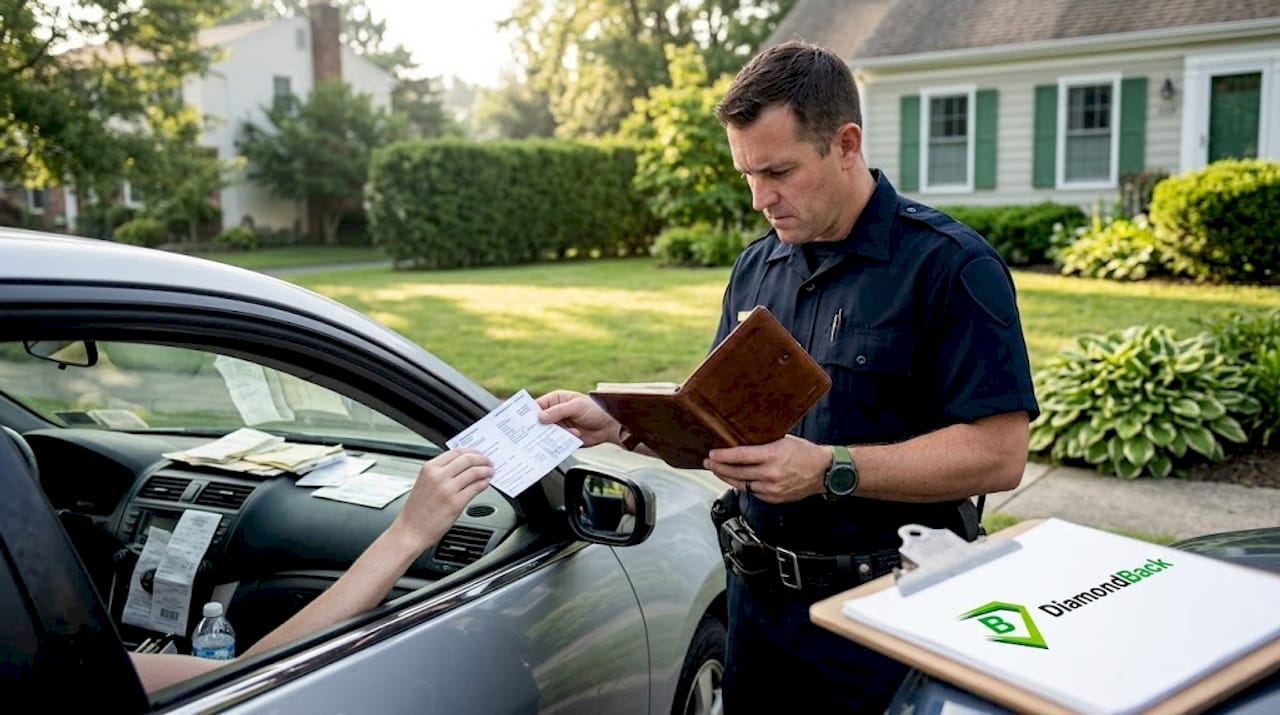
In more serious situations, consequences escalate. After accidents, serious traffic violations, or a prior suspension for not providing proof, the Indiana BMV can require proof directly from drivers. In some cases, your insurer must file an SR-22 certificate electronically with the state motor vehicle agency. An SR-22 filing confirms that required coverage is maintained and is typically required for a set number of years, during which any lapse in coverage triggers an immediate suspension notice.
The pattern across states is consistent. Proof of insurance requirements are not formalities. They are enforcement mechanisms with real financial and legal teeth.
Proof of insurance for businesses and contracts
For businesses, the importance of insurance proof extends far beyond traffic stops. Whether you are a contractor, vendor, event participant, or service provider, you will regularly be asked to provide proof of insurance before work begins or access is granted.
The standard document in the business world is the certificate of insurance. A COI summarizes your coverage type, limits, effective dates, and the insurer’s contact information. It tells the requesting party that you carry active coverage and that it meets their minimum requirements. Many contracts specify not just a coverage type but a minimum liability limit, such as $1 million per occurrence, and require that the requesting party be listed as an additional insured on your policy.
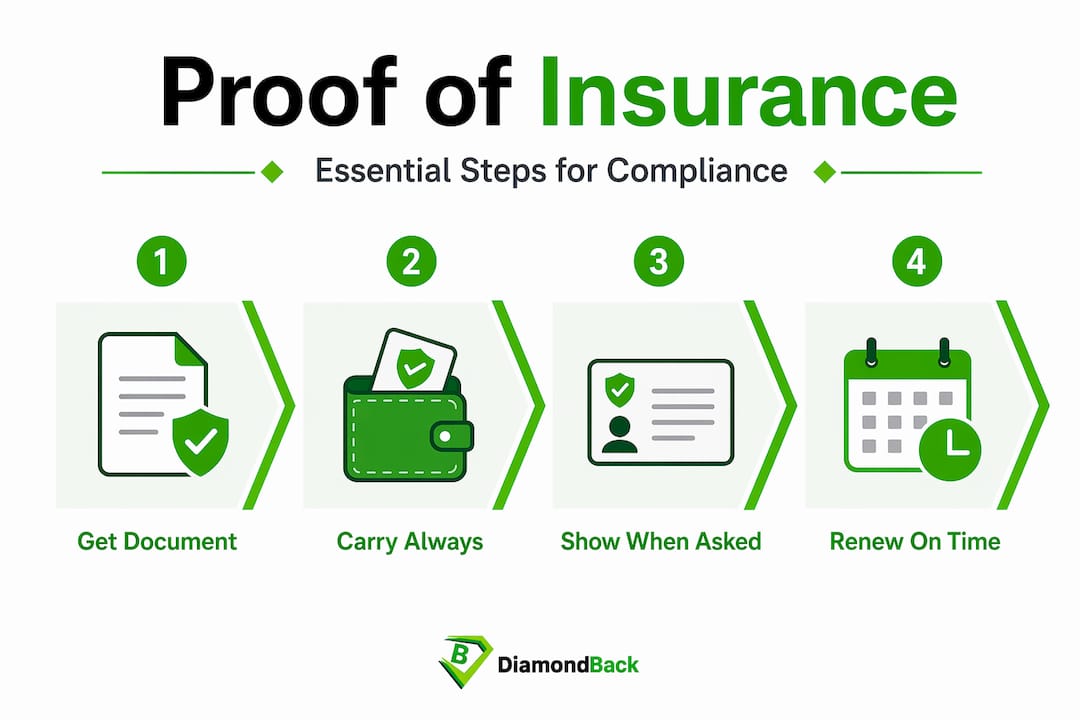
Event organizers frequently require vendors to provide a COI showing active coverage and, in many cases, an additional insured endorsement naming the event organizer. Without that proof, vendors can be denied access to the event entirely. That is a direct revenue loss, not just a compliance headache.
The table below compares the proof of insurance requirements across common business scenarios:
| Scenario | Document required | Common additional requirement |
|---|---|---|
| General contractor on a job site | Certificate of insurance | Additional insured endorsement |
| Vendor at a public event | Certificate of insurance | Specific liability limits |
| Commercial trucking contract | Commercial auto insurance proof | Motor carrier authority filings |
| Lease agreement for business property | Proof of liability coverage | Landlord listed as additional insured |
The benefits of having insurance proof in business go beyond avoiding rejection. Providing a COI quickly and without being asked signals professionalism and operational maturity. It tells clients and partners that your business is organized and that you understand risk management. That perception builds credibility, which directly affects whether you win contracts.
Proactively managing certificates of insurance means tracking expiration dates and renewing COIs before contracts or events require them. A lapsed certificate is just as damaging as having no insurance at all from a business perspective.
Best practices for maintaining and presenting proof
Knowing how to provide insurance proof correctly is as important as having coverage in the first place. The good news is that with a few disciplined habits, staying compliant becomes automatic.
-
Carry both digital and physical proof at all times. Most states accept digital insurance cards, but a physical backup is recommended because apps can fail, phones can die, and some states still require printed documents.
-
Know your state’s specific format requirements. Check your DMV website annually, because states update their accepted proof formats. If you operate across multiple states, as many trucking businesses do, review the requirements for each jurisdiction.
-
For businesses, assign one person to own COI management. That person should maintain a log of all active COIs issued to and received from partners, with expiration dates flagged for renewal at least 30 days in advance.
-
Save a copy of your proof in multiple locations. A photo saved to your phone’s camera roll, a printed card in your glove compartment, and a digital copy in your email drafts gives you three redundant access points.
-
If proof is unavailable during a stop, stay calm and explain the situation. Many courts will dismiss a citation if you can show valid proof within a set timeframe. Contact your insurer immediately after the stop to request documentation.
Pro Tip: For commercial operators, review your truck fleet insurance requirements each time you renew. State rules and contract requirements shift, and a policy that met compliance last year may have gaps today.
How proof of insurance supports claims and disputes
When an accident or incident occurs, proof of insurance does more than satisfy a legal requirement. It actively protects you throughout the claims process.
Clear proof of insurance accelerates claim processing and reduces disputes between parties about whether coverage was active at the time of the incident. When both drivers at an accident scene exchange insurance cards, the claims process can begin immediately rather than stalling while adjusters verify policy status.
Proof also protects you financially when the other party later claims you were uninsured. Having documentation of your coverage at the exact date and time of an incident closes that argument before it starts. For commercial operators, this is particularly relevant because disputes about coverage validity can delay settlements by weeks and expose businesses to out-of-pocket costs during that gap.
Insurance verification necessity in claims extends to communication between insurers. When both parties have accessible, accurate proof, insurers can coordinate directly and efficiently. That coordination reduces the chance of coverage disputes and helps settlements reach resolution faster. For fleet managers and trucking operators, where a delayed claim can mean a truck sitting idle, speed of resolution has a direct dollar value.
My take: stop treating proof of insurance as an afterthought
In my experience, the people who get burned by proof of insurance issues are almost never the ones without coverage. They are the ones who have coverage and simply cannot produce the document when it counts. That distinction matters a great deal.
I have seen operators with solid policies face suspensions because their insurance documents for truckers were not accessible at the right moment. Digital-only proof sounds modern and convenient, but phones lose charge, apps require logins, and not every jurisdiction is ready to accept a screen as legally sufficient. Relying on a single format is a genuine risk.
What I have found actually works is treating proof of insurance the same way you treat your driver’s license: you always know where it is, and you always have a backup. For businesses, that same discipline applied to COIs is the difference between landing a contract and watching it go to someone more prepared. The cost of preparation is near zero. The cost of being unprepared can run from a $500 fine to a suspended license to a lost contract worth far more than that.
— Vladimir
Get your commercial coverage in order with Diamondbackins
If you run a trucking operation or manage a commercial fleet, staying ahead of proof of insurance requirements means having the right coverage documented and ready before you need it. That starts with a policy built for your specific operation.

Diamondbackins makes it straightforward to compare quotes from multiple top insurers and access your documentation the same day. Whether you need commercial trucking insurance in Georgia or coverage for a fleet operating across multiple states, the platform gives you instant quotes with full transparency on limits, terms, and documentation. You can also get instant online coverage for commercial trucks with proof of insurance available immediately after purchase. Review your current policy, close any compliance gaps, and keep your fleet moving with confidence.
FAQ
What is proof of insurance and why is it required?
Proof of insurance is a document that confirms your policy is active and verifiable. It is required by law during traffic stops, vehicle registration, and accidents so that coverage can be confirmed on the spot rather than just assumed.
Do you need proof of insurance even if you have an active policy?
Yes. Having an active policy without accessible proof is legally insufficient in every state. Fines from $100 to $500 can be issued for failing to present proof even when coverage is current.
What documents count as proof of insurance for businesses?
Businesses typically use a certificate of insurance, which lists coverage type, limits, effective dates, and the insurer. Many contracts also require an additional insured endorsement naming the requesting party on the policy.
Can you use a digital insurance card as proof of insurance?
Most states accept digital insurance cards displayed on a phone. However, North Carolina requires printed proof and does not accept digital formats, making it important to check your specific state’s rules.
What happens if you cannot show proof of insurance after an accident?
Failing to show proof after an accident can result in citations, fines, and in some cases an SR-22 filing requirement. SR-22 certificates must be filed electronically by your insurer to confirm coverage and prevent license suspension.
Recommended
- Trucking Insurance Explained: What You Need to Know
- Essential insurance documents for truckers: complete guide
- Demystifying Workers’ Compensation Insurance: What You Need to Know and How to Get It Instantly – Diamondback Insurance – Solutions with Instant Online Quotes
- When is Workers’ Compensation Insurance Mandatory? Understanding the Legal Requirements and Simplifying Compliance – Diamondback Insurance – Solutions with Instant Online Quotes