

Fleet insurance has long been treated as a fixed cost of doing business, something you renew annually, tuck into your operating budget, and hope never becomes a problem. But that mindset is costing transportation companies far more than they realize. Insurers are not passive recipients of your premium checks. They are active participants in shaping your fleet’s risk profile, cost structure, and long-term operational viability. Understanding exactly how this works gives you the power to negotiate better terms, reduce preventable losses, and treat insurance as a genuine competitive tool rather than a line item you dread each year.
Table of Contents
- Why insurance costs are rising in the transportation sector
- How insurers assess and manage fleet risk
- The claims process and its effect on premiums
- Strategic role of insurance in fleet planning and operations
- Insider perspective: Why insurance is your most misunderstood fleet strategy lever
- Get the right partner for your fleet’s insurance needs
- Frequently asked questions
Key Takeaways
| Point | Details |
|---|---|
| Insurance cost drivers | Repair expenses, technology, and liability claims are the main factors pushing premiums up. |
| Underwriting best practices | Fleets that document safety practices and submit prompt, clear evidence see better insurance terms. |
| Claims process impact | How you report and document claims directly affects your future insurance pricing. |
| Strategic fleet planning | Integrating insurance planning boosts operational flexibility and helps secure stable capacity. |
| Insurer partnership value | Collaborating with insurers can turn coverage from a cost center into a business advantage. |
Why insurance costs are rising in the transportation sector
The pressure on trucking and fleet insurance premiums is real, measurable, and not going away soon. Multiple forces have converged to push costs upward, and knowing what they are helps you respond strategically rather than simply absorbing the increases.
Repair costs are one of the most significant contributors. Modern commercial vehicles are loaded with sensors, cameras, advanced driver assistance systems, and proprietary electronics. When a truck is damaged, even in a minor collision, those components can be extraordinarily expensive to replace. Parts shortages and extended lead times mean vehicles sit idle longer, adding downtime costs on top of repair bills. According to rising repair and tech costs, insurance cost pressures are caused by rising repair costs, advanced technology, downtime, and liability claims, all of which compound each other in ways that accelerate premium growth industry-wide.
The legal environment is the second major force. Nuclear verdicts, which are jury awards exceeding $10 million in trucking accident litigation, have become alarmingly common. Plaintiff attorneys increasingly target commercial carriers, knowing that juries view large transportation companies as deep-pocketed defendants. These verdicts ripple through the entire market because insurers must account for the possibility of catastrophic litigation exposure in every policy they write. This is not theoretical. It directly affects the liability limits available to your fleet and the cost of securing them.
| Factor | Impact on premiums | Trend direction |
|---|---|---|
| Vehicle repair costs | Higher claim severity | Increasing |
| Advanced tech replacement | Higher parts and labor costs | Increasing |
| Nuclear verdicts | Higher liability reserves | Increasing rapidly |
| Extended vehicle downtime | Larger loss of use claims | Increasing |
| Distracted driving incidents | Higher accident frequency | Elevated |
“The transportation insurance market is under sustained pressure from multiple directions at once. Fleets that understand these dynamics can make smarter decisions about risk retention, safety investment, and coverage structure.”
The result of all these pressures is higher loss ratios across the industry. Loss ratio refers to the percentage of premium income that an insurer pays out in claims. When that ratio climbs, insurers have no choice but to raise premiums, tighten underwriting criteria, or both. For fleet managers, this means the insurance market is more selective and more expensive regardless of your individual claims history. However, your individual record still matters enormously, which leads directly to the question of how insurers actually assess your risk.
How insurers assess and manage fleet risk
Now that we know why costs are up, it’s essential to understand how insurers actively judge and manage your fleet’s risk. Underwriting, the process by which insurers evaluate your fleet and decide what to charge, has grown considerably more sophisticated in recent years.

Gone are the days when a loss history report and a list of your drivers was sufficient. Modern underwriters want documented evidence that your organization takes risk management seriously and has the systems to back it up. Underwriters focus beyond loss history, including documented safety programs and telemetry or video evidence, when assessing a fleet’s true risk level. This means your telematics data, dashcam footage, driver training records, and safety policy documentation are now genuine underwriting assets.
Telematics systems track driver behavior in real time, capturing speeding events, hard braking, sharp cornering, and hours of service compliance. When you can present an insurer with six to twelve months of clean telematics data showing your drivers operate safely and within legal limits, that data directly supports a more favorable premium calculation. Dashcam footage serves a complementary purpose. It can exonerate your driver in a disputed accident, dramatically reducing legal costs and settlement exposure. Fleets that have used dashcam footage to defeat fraudulent claims report significant reductions in their claims costs year over year.
Understanding comprehensive fleet coverages is also part of the process, since underwriters will review whether your coverage structure reflects the actual exposure your operations carry. A mismatch between coverage limits and your cargo values or route risks can raise flags during the underwriting review.
What underwriters typically evaluate:
First, your fleet’s accident frequency and severity history over the past three to five years carries the most weight in any underwriting conversation. Second, the quality and consistency of your driver hiring and screening process shows whether safety is embedded in your culture or just written on paper. Third, your maintenance records demonstrate that vehicles are roadworthy and mechanically sound, reducing the likelihood of breakdowns that lead to accidents. Fourth, documented safety training programs, including regular driver refreshers, tell underwriters that your safety culture is active rather than passive.
Pro Tip: Before your next renewal, prepare a one-page safety summary document that highlights your telematics performance scores, training completion rates, and any proactive safety investments made in the past year. Presenting this voluntarily signals to the underwriter that you are a low-risk partner worth retaining.
You can also work with advisors who understand the underwriting guidelines insurers apply to trucking fleets, which helps you prepare a submission that addresses their criteria directly rather than leaving gaps for them to fill with assumptions. Reviewing insurance savings strategies gives you a structured framework for identifying where your fleet can improve its risk profile before the renewal conversation begins.
The claims process and its effect on premiums
Beyond underwriting, how you handle accidents and losses can deeply reshape your insurance pricing and options. The claims process is not simply about getting repairs paid. It is a critical signal to your insurer about how professionally your organization responds under pressure.
Same-day claims notification and quality evidence collection are what insurers expect in order to counter social inflation and costly litigation. When a driver is involved in an accident and waits 24 or 48 hours to report it, the insurer loses critical response time. Witnesses become harder to locate. Physical evidence degrades or disappears. Opposing counsel has more time to build a narrative before your insurer can establish the facts.
The right post-accident sequence makes a measurable difference. Your driver should notify dispatch immediately after ensuring safety. Dispatch should then contact the insurer on the same day, even if full details are still being gathered. Photographs of all vehicles, the surrounding scene, road conditions, and any visible injuries should be collected before vehicles are moved when possible.
“Fleets that build a formal post-accident response protocol and train drivers on it consistently see fewer claims escalate into litigation, which directly reduces both claim severity and long-term premium pressure.”
Documentation goes beyond photos. Preserving telematics data, dashcam footage, and driver hours of service logs from the incident window is essential. This evidence can demonstrate that your driver was operating legally, within speed limits, and without distraction at the time of the incident. When insurers have strong evidence, they can defend claims more effectively and avoid costly settlements that would otherwise inflate your loss history.
The downstream effect of good claims management is significant. Fleets with low severity losses and clean claims histories are viewed as preferred risks by insurers. This translates directly into more stable premiums at renewal, access to broader coverage options, and in some cases the ability to self-insure a portion of risk through higher deductibles in exchange for lower premiums. Working with experienced advisors, including insurance brokers, who specialize in trucking and fleet coverage helps you navigate both the claims process and the renewal implications with confidence.
Strategic role of insurance in fleet planning and operations
With a clearer picture of claims and underwriting, here’s how insurance fits into your broader business decisions every year. Most fleet managers treat the renewal cycle as a reactive event, something that happens to them. The most successful fleets treat it as a strategic planning milestone.
Insurance is a strategic variable for operational planning, renewal stability, and capacity decisions. That means the quality of your coverage, your relationship with your insurer, and your loss history can determine which contracts you can bid on, which shippers will work with you, and how quickly you can expand your fleet when opportunity arises. Shippers and brokers increasingly review carrier insurance certificates as part of their vendor qualification process. Insufficient limits or a history of serious accidents can disqualify you from lanes or partnerships entirely.
The renewal process is the most important inflection point in this cycle. Approximately 90 days before your policy renews, you should begin reviewing your current coverage against your operational changes from the past year. Have you added vehicles? Expanded into new geographic regions? Changed the cargo types you haul? Each of these shifts affects your risk profile and should be communicated to your insurer proactively.
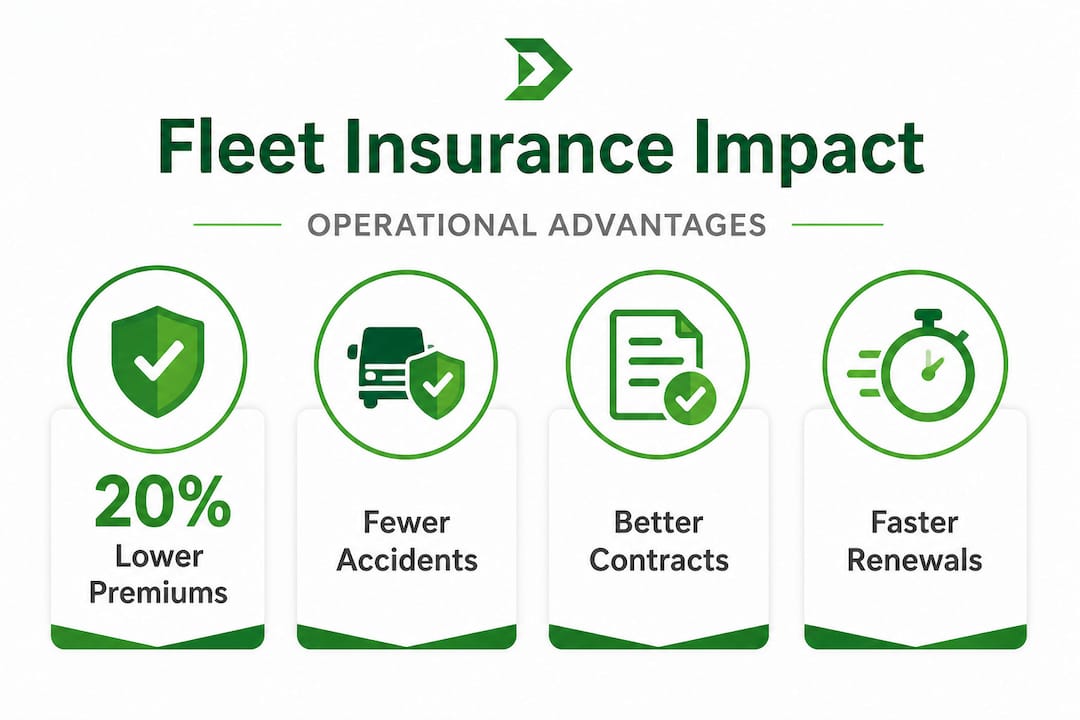
Fleets with strong safety and claims track records enjoy measurable operational advantages. They secure more favorable premiums, which directly reduces their cost per mile. They gain access to higher liability limits, which opens doors to higher-value freight contracts. They often have greater stability with their insurer, meaning fewer last-minute coverage surprises at renewal time. And they can use their risk management story as a differentiator when competing for shipper relationships.
Streamlining how you buy insurance matters because the renewal period is time-sensitive and complex. Platforms that allow you to compare insurance quotes across multiple carriers quickly ensure you are not locked into a single insurer’s pricing without any market context. Reviewing your cargo insurance options as part of this process also ensures your coverage aligns with the actual value of freight you carry rather than leaving gaps that could expose your business to uninsured losses.
Insider perspective: Why insurance is your most misunderstood fleet strategy lever
Here is an uncomfortable truth that most fleet operators discover only after it costs them: the fleets struggling most with insurance costs are almost always the ones treating it as an afterthought. They call their broker 30 days before renewal, accept whatever quote arrives, and move on. That cycle quietly undermines their competitiveness year after year.
The fleets that consistently secure better rates and broader coverage do something fundamentally different. They treat their insurer as a risk management partner rather than a vendor. They schedule mid-term reviews to share safety improvement data. They ask their underwriter directly what changes would most improve their renewal outcome. They use the insurer’s feedback to drive real operational and cultural improvements across their fleet.
This approach transforms the insurer relationship from transactional to collaborative. Insurers want to write profitable, long-term accounts. When you make their job easier by presenting clean data, proactive safety documentation, and a demonstrated commitment to risk reduction, they respond with better pricing and greater flexibility. Ignoring those dynamics usually costs more over time, not just in premiums but in reduced access to coverage options and business opportunities.
We have seen fleet managers use reviewing insurance for savings as the starting point for a broader operational review that identified safety training gaps, outdated equipment, and hiring practices that were quietly driving claims costs. Insurance, in that sense, becomes a diagnostic tool for the entire operation. The fleets that unlock this perspective consistently outperform those treating coverage as a necessary annual expense and nothing more.
Get the right partner for your fleet’s insurance needs
Putting these lessons into practice starts with having the right insurance partner, one that understands the operational realities of trucking and fleet management and can connect you with coverage options built for your specific risk profile.
At Diamondback Insurance, we built our platform specifically for fleet managers and transportation businesses who need fast, transparent, and tailored coverage solutions. You can compare trucking insurance providers side by side without spending days on the phone with individual agents. Our platform lets you get an instant truck insurance quote in minutes, so your renewal preparation starts with real market data rather than guesswork. If you manage multiple vehicles, our streamlined fleet insurance quotes workflow makes it straightforward to review coverage across your entire operation efficiently and confidently.
Frequently asked questions
What factors increase fleet insurance premiums most in 2026?
Rising repair costs, sophisticated vehicle technology, higher liability claims, and industry-wide increases in accident severity are the main drivers of higher premiums in 2026. Each factor compounds the others, pushing loss ratios and insurer reserves higher simultaneously.
How can fleets improve their insurance terms?
Implementing disciplined, documented safety programs and providing insurers with detailed telematics or video evidence will strengthen underwriting outcomes and support more favorable premium negotiations at renewal.
Why is prompt claims reporting important to insurers?
Same-day claims notification allows insurers to respond quickly, preserve evidence, manage litigation risk, and prevent runaway legal expenses from social inflation and nuclear verdict exposure.
Does insurance affect which contracts or partners fleets can work with?
Yes. Insurance as a strategic variable directly affects access to business opportunities, contract eligibility, and partnerships, since shippers and brokers review coverage quality as part of their carrier qualification process.
Is advanced vehicle technology helping or hurting fleet insurance costs?
While advanced tech can reduce accident rates over time, it also leads to significantly higher repair costs when vehicles are damaged, so insurance premiums may still increase even as safety metrics improve.